Introduction
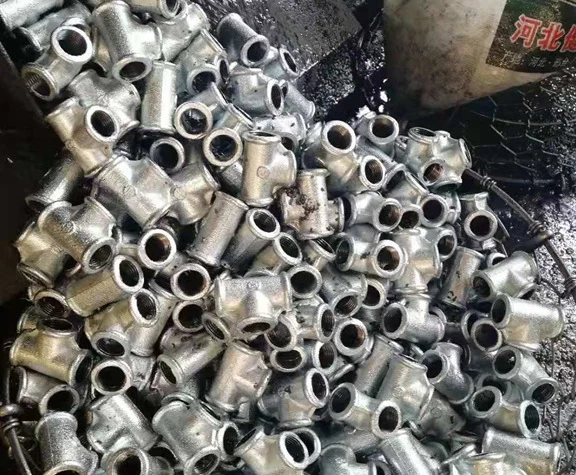
Galvanized steel, specifically utilized in gas line applications, represents a critical component of natural gas distribution infrastructure. This technical guide provides an in-depth analysis of its material science, manufacturing processes, performance characteristics, potential failure modes, and relevant industry standards. Galvanized steel’s primary function is to provide a durable, corrosion-resistant pipeline capable of safely transporting natural gas from source to consumer. The galvanization process, typically hot-dip galvanizing, applies a protective zinc coating to the underlying steel, mitigating corrosion and extending service life. This is paramount in gas line applications, where leaks can pose significant safety and environmental hazards. Within the industry chain, galvanized steel pipes and fittings constitute a mid-stream product, bridging the gap between steel production and final infrastructure deployment. Core performance metrics include tensile strength, yield strength, corrosion resistance (measured in coating thickness and zinc consumption rate), and pressure-withstanding capacity, all vital for long-term operational integrity.
Material Science & Manufacturing
The foundation of galvanized steel for gas lines is low-carbon steel, typically ASTM A53 Grade B or equivalent. This steel possesses adequate ductility and weldability, essential for pipeline construction. Raw material properties are critically monitored, including carbon content (typically ≤0.25%), manganese content (≤1.35%), and sulfur/phosphorus levels (kept minimal to enhance weldability and ductility). The galvanization process itself predominantly utilizes hot-dip galvanizing, whereby the steel is immersed in a molten zinc bath (typically 98% pure zinc) at approximately 450°C (842°F). This process creates a metallurgically bonded zinc coating. Pre-treatment is vital and comprises several stages: degreasing to remove oils and contaminants, pickling with hydrochloric acid to remove mill scale and rust, and fluxing to promote zinc adhesion. Key parameter control during hot-dip galvanizing includes bath temperature, immersion time, and cooling rate. Excessive temperature can lead to zinc alloy layer thickening, potentially embrittling the coating. Insufficient immersion time results in inadequate coating thickness. Post-galvanization treatments can include passivation (chromate conversion coating for enhanced corrosion resistance – though increasingly restricted due to environmental concerns) and inspection for coating uniformity and thickness. Alternative galvanization methods, such as electrogalvanizing and zinc spraying, are less commonly employed for gas lines due to coating thickness and adhesion limitations.
Performance & Engineering
The performance of galvanized steel gas lines is dictated by several critical engineering considerations. Force analysis focuses on the pipe's ability to withstand internal pressure (gas pressure) and external loads (soil pressure, traffic loads, and hydrostatic pressure). Hoop stress calculations, adhering to ASME B31.8 standards for gas transmission and distribution piping systems, are essential. Environmental resistance is paramount; the zinc coating acts as a barrier against corrosion, but its effectiveness diminishes over time due to galvanic corrosion (especially in acidic soils) and atmospheric exposure. Soil resistivity, pH levels, and moisture content are crucial factors influencing corrosion rates. Compliance requirements are stringent, dictated by local and national regulations such as DOT (Department of Transportation) regulations in the US, and EN 10255 (Europe) for coated steel tubes for pipelines. Functional implementation involves proper joint design (welded, threaded, or flanged connections). Welding requires qualified welders and adherence to specific welding procedures to ensure joint integrity and prevent localized corrosion. Cathodic protection, using sacrificial anodes or impressed current systems, is frequently employed to supplement galvanization and mitigate corrosion in particularly aggressive environments. Consideration must also be given to thermal expansion and contraction of the pipeline due to temperature fluctuations, requiring appropriate expansion loops or flexible joints to prevent stress buildup.
Technical Specifications
| Parameter | ASTM A53 Grade B (Typical) | Galvanization (Typical) | Relevant Standard |
|---|---|---|---|
| Tensile Strength (MPa) | 400-550 | Unaffected by galvanization | ASTM A53 |
| Yield Strength (MPa) | 250-310 | Unaffected by galvanization | ASTM A53 |
| Coating Thickness (µm) | N/A | 50-85 (Hot-dip galvanized) | ASTM A123 |
| Zinc Coating Weight (g/m²) | N/A | 490-780 | ASTM A123 |
| Minimum Burst Pressure (MPa) | Varies with pipe size & wall thickness | Unaffected by galvanization | API 5L |
| Corrosion Resistance (Salt Spray Test - hours) | < 24 (Uncoated) | >1000 (Hot-dip galvanized) | ASTM B117 |
Failure Mode & Maintenance
Galvanized steel gas lines are susceptible to several failure modes. Uniform corrosion, although mitigated by galvanization, still occurs over extended periods, especially in harsh environments. Pitting corrosion, localized corrosion initiated at defects in the zinc coating, is a significant concern. Galvanic corrosion, occurring when the galvanized steel is in contact with dissimilar metals in a conductive environment, accelerates corrosion rates. Hydrogen embrittlement, caused by the absorption of hydrogen into the steel during corrosion, can lead to brittle fracture, particularly in high-strength steels. Fatigue cracking can occur under cyclic loading (e.g., due to ground movement or traffic vibrations). Delamination of the zinc coating, caused by poor adhesion or corrosion products accumulating beneath the coating, reduces its protective effectiveness. Maintenance solutions include regular visual inspections for signs of corrosion, coating damage, or leaks. Cathodic protection monitoring and maintenance are crucial. Periodic pressure testing verifies pipeline integrity. Protective coatings (e.g., epoxy coatings) can be applied over the galvanized coating to enhance corrosion resistance. In cases of significant corrosion or damage, pipeline sections should be replaced or repaired by qualified personnel using appropriate welding procedures. Soil resistivity surveys identify areas prone to accelerated corrosion, allowing for targeted mitigation efforts.
Industry FAQ
Q: What is the typical lifespan of a galvanized steel gas line under normal operating conditions?
A: The lifespan of a galvanized steel gas line varies significantly depending on environmental factors (soil conditions, moisture levels, atmospheric pollution). However, under normal conditions, a properly installed and maintained galvanized steel gas line can have a service life of 50-100 years, often exceeding expectations when supplemented with cathodic protection.
Q: How does the presence of chlorides in the soil affect the corrosion rate of galvanized steel gas lines?
A: Chlorides significantly accelerate the corrosion rate of galvanized steel. They penetrate the zinc coating, disrupt the passive layer, and promote pitting corrosion. High chloride concentrations require enhanced corrosion protection measures, such as increased zinc coating thickness, application of protective coatings, or implementation of more aggressive cathodic protection systems.
Q: What are the advantages and disadvantages of using threaded versus welded connections in galvanized steel gas lines?
A: Threaded connections are easier to install and disassemble, offering flexibility for repairs. However, they are more prone to leaks due to thread imperfections and corrosion. Welded connections provide a stronger, more leak-tight joint, but require skilled welders and are more difficult to modify or repair. The choice depends on the application, accessibility, and criticality of the connection.
Q: Is it permissible to use dissimilar metals in contact with galvanized steel gas lines? If so, what precautions should be taken?
A: Contact between dissimilar metals (e.g., copper, aluminum) and galvanized steel can lead to galvanic corrosion. If unavoidable, it's crucial to electrically isolate the dissimilar metals using insulating sleeves or couplings. Furthermore, the more noble metal (e.g., copper) should be minimized in contact area to reduce the galvanic current and corrosion rate.
Q: What inspection methods are commonly used to assess the condition of underground galvanized steel gas lines?
A: Common inspection methods include close interval surveys (CIS) using intelligent pigging technology to detect corrosion and defects, direct current voltage gradient (DCVG) surveys to identify coating holidays, and visual inspections of exposed pipeline sections. Soil resistivity measurements and cathodic protection potential surveys are also essential for monitoring corrosion control effectiveness.
Conclusion
Galvanized steel remains a widely utilized material for gas line construction due to its combination of strength, durability, and cost-effectiveness. However, long-term performance is critically dependent on proper material selection, meticulous manufacturing processes, and diligent maintenance practices. Understanding the material science of galvanized steel, the mechanisms of corrosion, and the applicable industry standards is paramount for ensuring the safe and reliable operation of gas distribution infrastructure.
Future trends will likely focus on enhanced corrosion protection technologies, such as advanced coatings and improved cathodic protection systems, along with the exploration of alternative materials with superior corrosion resistance. Regular inspections, coupled with predictive maintenance strategies, will be essential for maximizing the service life of existing galvanized steel gas lines and mitigating the risk of failures. Continuing research and development in materials science and corrosion engineering will be vital to address the evolving challenges of gas distribution infrastructure.
