
Introduction
Galvanized Iron (GI) pipe, specifically 2-inch diameter with a 20-foot length, represents a foundational element in fluid and gas conveyance systems across numerous industrial and commercial applications. This technical guide provides an in-depth examination of its material science, manufacturing processes, performance characteristics, potential failure modes, and relevant industry standards. GI pipe, produced through the hot-dip galvanization of carbon steel, offers a cost-effective solution providing corrosion resistance superior to bare steel. Its prevalence stems from its robustness, ease of installation utilizing threaded connections, and established legacy within infrastructure projects. This specification, 2” Schedule 40 GI pipe, is frequently specified for water distribution, fire sprinkler systems, structural support, and various plumbing applications. Understanding its limitations regarding temperature, pressure, and corrosive environments is crucial for ensuring long-term system integrity and preventing premature failure. The “price” aspect is heavily influenced by steel market fluctuations, galvanizing coating thickness, and regional demand, but this guide focuses on the underlying engineering principles rather than dynamic pricing.
Material Science & Manufacturing
The foundation of 2-inch GI pipe lies in its substrate material – carbon steel, typically ASTM A53 Grade B. This steel comprises primarily iron (Fe) with controlled amounts of carbon (typically <0.30%), manganese (Mn), phosphorus (P), sulfur (S), and silicon (Si). The mechanical properties of the base steel, including yield strength (typically 36,000 psi), tensile strength (typically 58,000 psi), and elongation, are critical parameters. Following the formation of the steel pipe through processes like Electric Resistance Welding (ERW) or seamless extrusion, the galvanization process commences. Hot-dip galvanizing involves immersing the steel pipe in a molten zinc (Zn) bath (typically 98% pure) at a temperature of around 840°F (450°C). This metallurgical reaction forms a series of zinc-iron alloy layers, providing cathodic protection to the underlying steel. The coating thickness is a critical parameter, typically measured in ounces per square foot (oz/ft²) and complying with ASTM A123 standards. Key process controls include surface preparation (pickling to remove mill scale), fluxing to promote adhesion, immersion time, cooling rate, and post-treatment passivation. Variations in cooling rates affect the microstructure of the zinc coating, influencing its ductility and corrosion resistance. Proper manufacturing also demands precise dimensional control adhering to ANSI/ASME standards (e.g., wall thickness, outer diameter, straightness) to ensure compatibility with standard fittings and threading tools.
Performance & Engineering
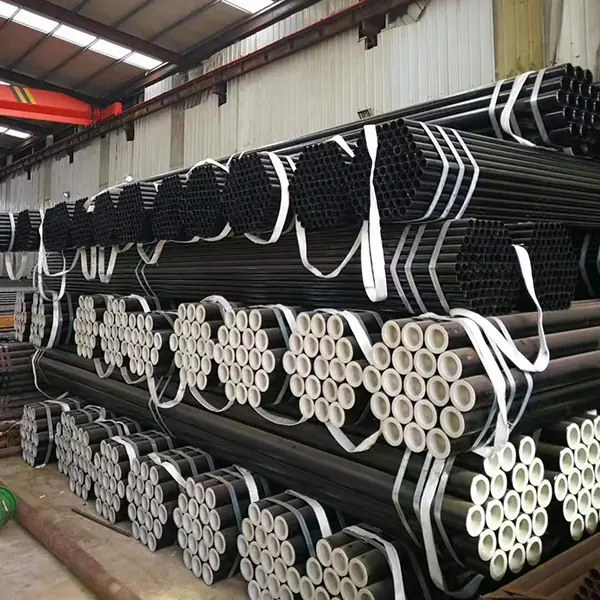
The performance of 2-inch GI pipe is governed by several engineering considerations. Firstly, hydrostatic pressure testing, as per ASTM A1065, is crucial to verify the pipe's ability to withstand internal pressure without failure. The design pressure rating is dependent on the pipe’s wall thickness (Schedule 40 being common) and material properties. Force analysis considers hoop stress resulting from internal pressure, axial stress from weight and external loads, and bending moments. Corrosion resistance, while improved by galvanization, isn’t absolute. Exposure to acidic or saline environments accelerates corrosion, leading to zinc depletion and eventual steel degradation. Galvanic corrosion can occur when GI pipe is connected to dissimilar metals (e.g., copper) without proper dielectric isolation. Temperature limitations are significant. The zinc coating’s protective properties decrease at elevated temperatures (above 200°F/93°C). Furthermore, the strength of the steel itself diminishes with increasing temperature. Code compliance (e.g., NFPA 13 for fire sprinkler systems, UPC/IPC for plumbing) mandates specific installation requirements, including support spacing, joint preparation, and permissible welding procedures (though welding is generally discouraged with galvanized pipe due to fume toxicity). Soil conditions are also critical where buried; stray electrical currents can accelerate corrosion. Finite element analysis (FEA) is often employed in critical applications to model stress distributions and optimize pipe support designs.
Technical Specifications
| Parameter | Specification (Typical) | Test Standard | Units |
|---|---|---|---|
| Nominal Pipe Size | 2 inches | ANSI/ASME B36.10M | inches |
| Schedule | 40 | ANSI/ASME B36.10M | - |
| Outside Diameter | 2.375 | ANSI/ASME B36.10M | inches |
| Wall Thickness | 0.154 | ANSI/ASME B36.10M | inches |
| Minimum Yield Strength (Steel) | 36,000 | ASTM A53/A53M | psi |
| Minimum Tensile Strength (Steel) | 58,000 | ASTM A53/A53M | psi |
| Zinc Coating Thickness (Minimum) | 1.2 oz/ft² (30.48 g/m²) | ASTM A123 | oz/ft² or g/m² |
Failure Mode & Maintenance
Several failure modes are prevalent in 2-inch GI pipe. Corrosion, as previously discussed, is a primary concern. Uniform corrosion reduces wall thickness, diminishing pressure capacity. Pitting corrosion, localized attack due to imperfections in the zinc coating, can lead to rapid perforation. Threaded connections are susceptible to galling and stripping due to improper tightening or dissimilar metal contact. Fatigue cracking can occur under cyclic loading, particularly at joints or points of stress concentration. Impact damage from external forces can cause denting and localized thinning. Hydrogen embrittlement, a less common but severe failure, can occur due to exposure to acidic environments and can lead to sudden brittle fracture. Maintenance involves regular visual inspections for signs of corrosion, leaks, or physical damage. Protective coatings (e.g., epoxy paint) can be applied to extend service life, particularly in harsh environments. Periodic testing of coating integrity (e.g., zinc thickness measurements) is recommended. Damaged threads should be repaired or replaced. Cathodic protection systems can be implemented for buried pipelines. For fire sprinkler systems, regular flow testing and valve inspections are critical. Proper drainage is also vital to prevent standing water, which accelerates corrosion. Avoid using abrasive cleaners that can damage the zinc coating.
Industry FAQ
Q: What is the expected service life of a 2-inch GI pipe in a typical freshwater distribution system?
A: The expected service life varies significantly based on water quality, soil conditions (if buried), and the presence of aggressive chemicals. In relatively benign freshwater systems, a properly installed and maintained GI pipe can last 50-70 years. However, highly chlorinated water or acidic soil can significantly reduce this lifespan, potentially to 20-30 years.
Q: Can GI pipe be directly connected to copper piping without causing corrosion issues?
A: No. Direct connection of GI pipe to copper creates a galvanic couple, with copper being the more noble metal. This results in accelerated corrosion of the GI pipe at the connection point. A dielectric union or insulating fitting must be used to electrically isolate the two metals.
Q: What is the effect of temperature on the performance of galvanized pipe?
A: Elevated temperatures (above 200°F/93°C) reduce the effectiveness of the zinc coating and can accelerate corrosion. Furthermore, the steel’s tensile strength decreases at higher temperatures. The pipe is generally not suitable for high-temperature applications like steam distribution.
Q: Is welding GI pipe recommended? What are the potential hazards?
A: Welding galvanized pipe is generally discouraged. The heating process vaporizes the zinc coating, releasing toxic fumes containing cadmium. These fumes are hazardous to human health. If welding is unavoidable, specialized ventilation and respiratory protection are essential. Furthermore, the heat alters the metallurgical properties of the zinc coating and surrounding steel, reducing corrosion resistance.
Q: What are the key differences between Schedule 40 and Schedule 80 GI pipe?
A: Schedule 40 and Schedule 80 refer to the pipe’s wall thickness. Schedule 80 has a thicker wall than Schedule 40, providing greater pressure capacity and physical robustness. Schedule 80 is typically used for applications requiring higher pressures or greater resistance to mechanical damage, but it also results in a higher cost and increased weight.
Conclusion
2-inch galvanized iron pipe remains a ubiquitous material in a broad spectrum of industrial and plumbing applications due to its balance of cost-effectiveness, corrosion resistance, and ease of installation. However, its long-term performance is critically dependent on understanding the underlying material science, manufacturing quality, and potential failure modes. Proper selection, installation, and maintenance are paramount to maximizing its service life and ensuring the integrity of the conveyance system. The inherent limitations concerning temperature, corrosive environments, and compatibility with dissimilar metals must be carefully considered during the design phase.
Future advancements in coating technologies, such as duplex systems combining galvanization with organic coatings, may further enhance the corrosion resistance and longevity of GI pipe. The development of more robust thread sealing compounds and improved manufacturing processes will also contribute to reducing the incidence of leaks and failures. Ongoing research into hydrogen embrittlement and its mitigation strategies is essential for ensuring the continued reliability of GI pipe in challenging environments.
