Introduction
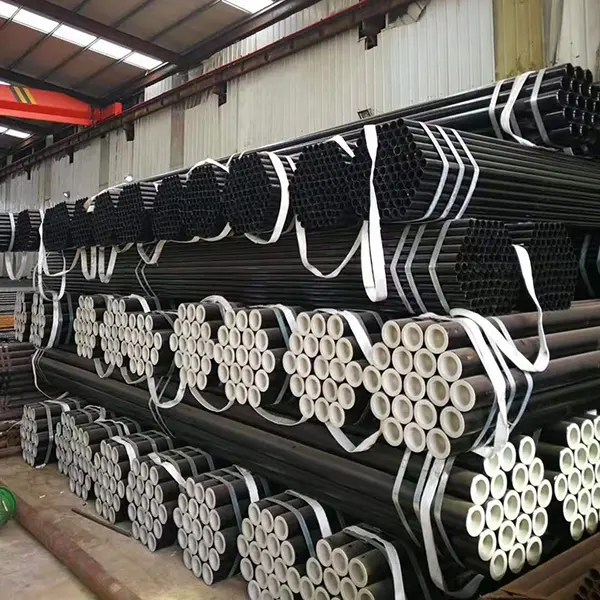
Non-galvanized pipe, typically manufactured from carbon steel, is a fundamental component in fluid conveyance systems across a broad spectrum of industrial applications. Unlike galvanized steel pipe, which receives a zinc coating for corrosion resistance, non-galvanized pipe relies on the inherent properties of the steel alloy itself, often coupled with internal coatings or external protective measures depending on the service environment. Its position within the industry chain is critical, serving as the backbone for infrastructure in sectors including water distribution, oil and gas, chemical processing, and mechanical engineering. Core performance characteristics encompass tensile strength, pressure rating, and weldability, with considerations for long-term durability influenced by the internal fluid characteristics and external atmospheric exposure. A key industry pain point lies in managing corrosion, necessitating careful material selection based on fluid composition, temperature, and potential electrochemical interactions. The absence of a zinc sacrificial layer demands proactive corrosion mitigation strategies.
Material Science & Manufacturing
The primary raw material for non-galvanized pipe is carbon steel, with varying grades (e.g., A53, A106, API 5L) dictating specific mechanical properties. Carbon content typically ranges from 0.05% to 2.1% by weight, influencing hardness, ductility, and weldability. Manufacturing begins with steel billet production, followed by hot rolling to form seamless or welded pipe. Seamless pipe is produced through mandrel piercing of a solid billet, creating a hollow tube. Welded pipe utilizes processes like Electric Resistance Welding (ERW) or submerged arc welding (SAW). ERW involves joining edges of steel strips through high-frequency electric current and pressure, while SAW employs a continuously fed welding electrode beneath a granular flux covering. Critical parameters during manufacturing include temperature control during rolling and welding to achieve desired grain structure and minimize residual stresses. Post-welding heat treatment (PWHT) is frequently employed to relieve stress and enhance ductility. Internal coatings, such as epoxy or polyurethane, are often applied to enhance corrosion resistance, particularly for water applications. Chemical compatibility of the coating with the conveyed fluid is paramount; improper selection can lead to coating degradation and subsequent corrosion of the steel substrate. Surface preparation before coating application (e.g., sandblasting) is crucial for adhesion.
Performance & Engineering
Performance analysis of non-galvanized pipe centers on its ability to withstand internal pressure and external loads. Hoop stress, calculated using the Barlow’s formula (σ = PD/2t, where P is pressure, D is diameter, and t is wall thickness), determines the pipe’s pressure-bearing capacity. Force analysis considers axial loads from weight, thermal expansion/contraction, and external forces from connected equipment. Environmental resistance is a significant concern; exposure to corrosive atmospheres, particularly in marine environments or industrial facilities with acidic emissions, can lead to accelerated corrosion. Compliance requirements vary depending on the application. For potable water systems, pipes must meet standards like NSF/ANSI 61, ensuring the absence of harmful leachates. Oil and gas pipelines are governed by API 5L specifications, dictating material strength, toughness, and weld quality. In seismic zones, pipe systems require engineering design to accommodate ground motion and prevent failure. Finite Element Analysis (FEA) is frequently used to model stress distributions and optimize pipe support configurations. Cathodic protection, utilizing sacrificial anodes or impressed current systems, is a common technique to mitigate corrosion in underground pipelines.
Technical Specifications
| Parameter | ASTM A53 Grade B (Typical) | API 5L X42 (Typical) | EN 10208-2 S235JR (Typical) | Units |
|---|---|---|---|---|
| Yield Strength | 36,000 | 345 | 235 | psi |
| Tensile Strength | 58,000 | 485 | 360 | psi |
| Elongation (2" gauge) | 22 | 21 | 21 | % |
| Wall Thickness | Schedule 40/80 | Variable | 3.2 - 6.0 | mm |
| Outside Diameter | 0.5" - 4" | Variable | 21.3 - 660.4 | mm |
| Corrosion Rate (in 3.5% NaCl) | 0.001 – 0.005 | 0.001 – 0.005 | 0.001 – 0.005 | in/year |
Failure Mode & Maintenance
Non-galvanized pipe is susceptible to several failure modes. Uniform corrosion, driven by electrochemical reactions, leads to gradual material loss. Pitting corrosion, a localized form of corrosion, creates small holes that can propagate through the pipe wall. Stress corrosion cracking (SCC) occurs in the presence of tensile stress and specific corrosive environments (e.g., chlorides, hydroxides). Fatigue cracking results from cyclical loading, leading to crack initiation and propagation. Erosion corrosion arises from the abrasive action of fluids containing solid particles. Internal scaling and deposit buildup can also contribute to corrosion by creating differential aeration cells. Maintenance strategies include regular visual inspections for signs of corrosion, coating repairs, and implementation of cathodic protection systems. Non-destructive testing (NDT) methods, such as ultrasonic thickness testing (UTT) and radiographic testing (RT), are used to assess pipe wall thickness and detect internal flaws. Internal cleaning and pigging operations remove deposits and prevent localized corrosion. Proper joint design and welding procedures are critical to prevent weld defects that can initiate failure. Periodic hydrostatic testing verifies the pipe’s integrity and pressure-bearing capacity.
Industry FAQ
Q: What is the primary difference between using A53 and A106 grade pipe for a high-temperature steam application?
A: A106 Grade B pipe is specifically designed for high-temperature service. While A53 can be used at elevated temperatures, A106 possesses superior high-temperature tensile strength, creep resistance, and oxidation resistance, making it the preferred choice for steam lines exceeding moderate temperatures. A53 is generally more cost-effective for lower-temperature applications.
Q: How do you mitigate corrosion in a non-galvanized pipe system transporting seawater?
A: Seawater is highly corrosive due to its chloride content. Mitigation strategies include using corrosion-resistant alloys (e.g., duplex stainless steel), applying internal epoxy coatings, implementing cathodic protection (sacrificial anodes or impressed current), and employing chemical inhibitors to reduce corrosion rates. Regular monitoring of corrosion rates is essential.
Q: What factors influence the weldability of non-galvanized steel pipe?
A: Carbon equivalent (CE) is a critical factor, as higher CE values indicate lower weldability. Steel composition, particularly the presence of alloying elements like manganese and silicon, affects weldability. Proper preheating and post-weld heat treatment (PWHT) are crucial to minimize hardness and prevent cracking. Welding process selection (SMAW, GMAW, SAW) also impacts weld quality.
Q: What are the advantages and disadvantages of using welded pipe versus seamless pipe?
A: Seamless pipe generally offers higher strength and resistance to burst pressure due to the absence of a weld seam. However, it is typically more expensive to manufacture. Welded pipe is more cost-effective and available in a wider range of sizes, but the weld seam represents a potential weak point. Modern welding techniques and rigorous quality control minimize the risks associated with welded pipe.
Q: How does pipe wall thickness affect its pressure rating and overall cost?
A: Increasing pipe wall thickness directly increases its pressure rating, as dictated by Barlow’s formula. However, thicker walls also increase material cost and weight. Selecting the appropriate wall thickness involves a trade-off between safety, performance, and cost-effectiveness. Schedule 40 and Schedule 80 are common standards indicating wall thickness.
Conclusion
Non-galvanized steel pipe remains a cornerstone of numerous industrial fluid conveyance systems due to its strength, weldability, and cost-effectiveness. However, its inherent susceptibility to corrosion necessitates careful material selection, appropriate coatings, and proactive corrosion mitigation strategies. Understanding the interplay between material science, manufacturing processes, and operational parameters is crucial for ensuring long-term reliability and minimizing the risk of failure.
Continued advancements in coating technologies, corrosion monitoring techniques, and non-destructive testing methods will play a vital role in extending the service life of non-galvanized pipe systems. Implementing robust maintenance programs and adhering to relevant industry standards are essential for maximizing performance and minimizing life-cycle costs. A thorough understanding of the potential failure modes and appropriate preventative measures remains paramount for safe and efficient operation.
