Introduction
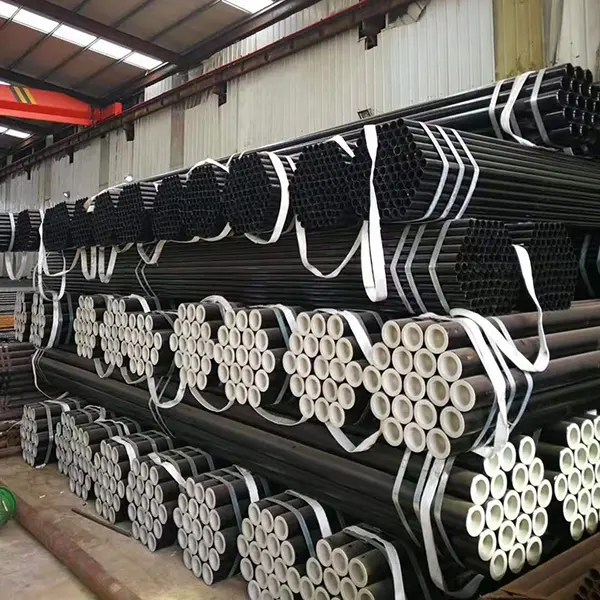
Seamless steel honed tube represents a highly precise form of cold-drawn steel tubing, distinguished by its exceptionally smooth inner surface and tight dimensional tolerances. Positioned within the industrial supply chain as a critical component for hydraulic systems, precision bearing fits, and specialized tooling, it’s derived from high-quality carbon or alloy steel billets. Its core performance characteristics – dimensional accuracy, surface finish, and burst pressure – dictate its suitability for demanding applications where friction minimization and fluid containment are paramount. Unlike standard seamless tubing, honing is a finishing process specifically designed to achieve superior internal geometry, correcting for inherent ovality and surface imperfections. This makes honed tube indispensable in industries requiring reliability and precision, where component failure is not an option. The industry faces ongoing pressure to reduce costs while maintaining, or improving, these key performance indicators, driving innovation in honing techniques and materials.
Material Science & Manufacturing
The foundation of seamless steel honed tube lies in the selection of appropriate steel grades. Common materials include AISI 1026, 1045 carbon steel, and alloy steels such as 4140 and 5154, chosen based on desired strength, ductility, and corrosion resistance. These steels possess a refined grain structure achieved through controlled heating and cooling during the initial billet casting. The manufacturing process begins with electric resistance welding (ERW) or seamless extrusion of the steel billet, forming the parent tube. Critical to the process is the cold drawing stage, where the tube is pulled through a series of progressively smaller dies, reducing its diameter and wall thickness while improving its mechanical properties through work hardening. This introduces inherent surface roughness and dimensional variations, which are then addressed by the honing process. Honing utilizes abrasive stones, precisely guided within the tube bore, to remove material and achieve the final dimensions and surface finish. Key parameters include abrasive grit size, honing pressure, rotational speed, and the feed rate of the honing stones. Lubrication is critical, employing specialized honing oils to dissipate heat, flush away swarf (removed material), and maintain surface integrity. Post-honing processes typically involve cleaning, inspection, and potentially, passivation or coating for enhanced corrosion resistance. Maintaining consistent material properties, die quality, and honing parameters are essential for producing tubes meeting stringent industry specifications.
Performance & Engineering
The performance of seamless steel honed tube is dictated by several engineering principles. Burst pressure, a primary concern, is determined by the tube’s dimensions (diameter and wall thickness), material yield strength, and the application of Barlow’s formula (P = 2St/D, where P is pressure, S is stress, t is wall thickness, and D is diameter). Dimensional tolerances are crucial for interference fit applications, requiring precise control of inner diameter (ID) and outer diameter (OD). Surface finish, typically measured as Ra (average roughness), directly impacts friction and fluid flow characteristics within the tube. Lower Ra values minimize friction, reduce wear on mating components, and improve hydraulic efficiency. Environmental resistance depends on the steel grade and any applied coatings. Exposure to corrosive environments necessitates the selection of materials with high chromium content or the application of protective coatings like zinc plating or epoxy. Compliance requirements, such as those defined by ASTM A519 (for carbon and alloy steel seamless mechanical tubing) and ISO 3306-1, dictate material composition, mechanical properties, and testing procedures. Force analysis often involves evaluating the tube's resistance to bending, torsion, and axial loads, particularly in structural applications. Finite Element Analysis (FEA) is commonly employed to simulate stress distributions and optimize tube geometry for specific load conditions. Considerations also include the impact of thermal expansion and contraction, especially in systems operating at varying temperatures.
Technical Specifications
| Parameter | AISI 1026 | AISI 4140 | DIN EN 10305-1 E235 |
|---|---|---|---|
| Tensile Strength (MPa) | 570-700 | 750-950 | 360-510 |
| Yield Strength (MPa) | 310-450 | 550-700 | 235-360 |
| Inner Diameter Tolerance (mm) | ±0.025 | ±0.025 | ±0.1 |
| Surface Roughness (Ra, µm) | ≤0.4 | ≤0.4 | ≤0.8 |
| Wall Thickness Tolerance (mm) | ±0.13 | ±0.13 | ±0.2 |
| Burst Pressure (MPa) | Dependent on D/t ratio | Dependent on D/t ratio | Dependent on D/t ratio |
Failure Mode & Maintenance
Seamless steel honed tube can experience several failure modes. Fatigue cracking, particularly in applications involving cyclical loading, initiates at surface imperfections or stress concentrators. Corrosion, both uniform and pitting, weakens the tube wall, leading to leakage or rupture. Erosion, caused by abrasive particles in the fluid stream, gradually removes material from the inner surface. Galling, a form of adhesive wear, occurs when mating surfaces experience high contact pressure and insufficient lubrication. Delamination can occur if the honing process introduces subsurface stresses. Oxidation, especially at elevated temperatures, can lead to scaling and reduced mechanical properties. Regular inspection is crucial for preventing failures. Non-destructive testing (NDT) methods such as ultrasonic testing (UT) and eddy current testing (ET) can detect cracks, corrosion, and other defects. Visual inspection can identify surface damage and signs of corrosion. Maintenance includes periodic cleaning to remove debris and contaminants, lubrication to reduce friction and wear, and replacement of damaged tubes. Preventing corrosion involves applying protective coatings, using corrosion inhibitors, and controlling the operating environment. Proper storage, shielded from moisture and contaminants, is also essential. For high-pressure hydraulic systems, regular fluid analysis can identify contamination levels and prevent abrasive wear.
Industry FAQ
Q: What is the primary advantage of a honed tube over a standard seamless tube for hydraulic cylinder applications?
A: The honed inner surface significantly reduces friction between the piston and cylinder wall, resulting in improved efficiency, reduced heat generation, and extended seal life. The tight dimensional tolerances also ensure a consistent seal, minimizing leakage and maximizing system performance. Standard seamless tubes often have surface irregularities that can accelerate wear and reduce hydraulic efficiency.
Q: How does material selection impact the corrosion resistance of a honed tube?
A: Higher alloy steels with increased chromium content (e.g., 4140, 5154) offer superior corrosion resistance compared to lower carbon steels (e.g., 1026). Additionally, surface treatments like passivation or coatings (zinc plating, epoxy) can further enhance resistance to specific corrosive environments. The operating fluid's composition also plays a critical role; using compatible fluids minimizes the risk of corrosion.
Q: What are the key considerations when specifying the dimensional tolerances for a honed tube used in a bearing bore?
A: The tolerance must be selected to provide the desired interference fit with the bearing outer race. This requires precise control of the inner diameter (ID) and roundness. The material's thermal expansion coefficient should also be considered, as temperature variations can affect the fit. Often, the tolerance is specified as an H7 or H8 fit, depending on the application requirements.
Q: What NDT methods are most effective for detecting subsurface defects in honed tubes?
A: Ultrasonic testing (UT) is particularly effective at detecting subsurface cracks, inclusions, and voids. Eddy current testing (ET) is sensitive to surface and near-surface defects. Radiographic testing (RT) can also be used, but it requires access to both sides of the tube and poses radiation safety concerns. The choice of method depends on the type of defect being sought and the material composition.
Q: How does honing affect the mechanical properties of the steel tube?
A: Honing introduces compressive residual stresses on the inner surface, which can improve fatigue resistance. However, excessive honing can reduce the wall thickness and potentially weaken the tube. The cold working process also increases the hardness and strength of the material within the honed region. Careful control of honing parameters is essential to optimize mechanical properties without compromising structural integrity.
Conclusion
Seamless steel honed tube represents a sophisticated engineering component, critical in applications demanding high precision, reliable fluid containment, and superior surface finish. Its performance is intricately linked to material selection, meticulous manufacturing processes – particularly the honing operation itself – and adherence to stringent industry standards. The ability to precisely control dimensional tolerances and surface roughness makes it indispensable in hydraulic systems, bearing bores, and precision tooling.
Looking forward, advancements in honing technology, such as the use of automated systems and diamond abrasives, will continue to drive improvements in surface quality and efficiency. Focus on sustainable manufacturing practices, including minimizing waste and utilizing eco-friendly honing fluids, will also be paramount. The continued demand for higher performance and increased reliability ensures that seamless steel honed tube will remain a vital component in a wide range of industrial applications.
