Introduction
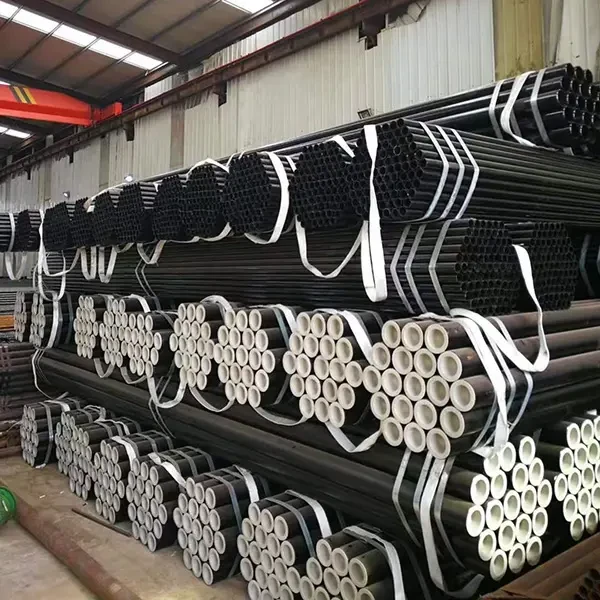
Seamless steel tubes are hollow cylindrical sections manufactured without a welded seam. They represent a critical component across diverse industries including oil and gas, petrochemicals, automotive, aerospace, and construction. Positioned as a high-integrity alternative to welded pipes, seamless tubes offer superior pressure-bearing capacity, enhanced corrosion resistance, and consistent mechanical properties. The manufacturing process, though complex, delivers a product capable of withstanding extreme conditions. Core performance characteristics revolve around dimensional accuracy, chemical composition, mechanical strength (yield strength, tensile strength, elongation), and resistance to various forms of degradation. The increasing demand for high-performance materials in critical applications is driving continued innovation in seamless steel tube manufacturing technologies.
Material Science & Manufacturing
The primary raw material for seamless steel tube production is carbon steel billets, although alloy steels (containing elements like chromium, molybdenum, nickel) are frequently used to achieve specific properties. Billets are selected based on their chemical composition, adhering to stringent standards (e.g., ASTM A53, API 5L). The manufacturing process typically employs either the piercing method or the extrusion method. The piercing method, utilizing a rotary piercing process, involves heating the billet to a plastic state (around 1200°C) and then forcing a mandrel through the center while rotating the billet between conical rollers. This creates the initial hollow shape. Subsequent stages involve reheating, elongating, reducing diameter and wall thickness via mandrel mills, and finally, finishing operations like straightening, cutting to length, and heat treatment. Extrusion, conversely, pushes the heated billet through a die, forming the tube directly. Parameter control is crucial at each stage: billet temperature, mandrel speed and lubrication (piercing), die design and pressure (extrusion), and cooling rates (heat treatment) all directly influence the final product's microstructure and mechanical properties. Grain size refinement, controlled through austenite grain size and cooling rates, directly affects toughness and ductility. Chemical composition dictates weldability, corrosion resistance, and high-temperature performance.
Performance & Engineering
The performance of seamless steel tubes is intimately linked to their ability to withstand internal and external pressure, resist corrosion, and maintain structural integrity under varying loads. Force analysis, particularly stress analysis, is paramount. Hoop stress (resulting from internal pressure) is a critical design consideration, dictated by the tube's diameter, wall thickness, and material yield strength, governed by Barlow's formula (σ = PD/2t, where σ is hoop stress, P is pressure, D is diameter, and t is wall thickness). Environmental resistance necessitates evaluating corrosion mechanisms such as general corrosion, pitting corrosion, and stress corrosion cracking. Alloying elements play a crucial role in enhancing corrosion resistance (e.g., chromium in stainless steel). Compliance requirements often include adherence to specific industry standards like ASME B31.3 for process piping, API 5L for line pipe, and ASTM A106 for high-temperature service. Furthermore, hydrostatic testing is routinely performed to verify the tube’s ability to withstand specified pressure levels without leakage or deformation. Fatigue analysis is critical for applications involving cyclic loading, considering factors such as stress range, mean stress, and surface finish. The tube's surface finish impacts fatigue life; smoother surfaces generally exhibit higher fatigue resistance.
Technical Specifications
| Outside Diameter (OD) (inches) | Wall Thickness (WT) (inches) | Yield Strength (psi) | Tensile Strength (psi) |
|---|---|---|---|
| 0.840 | 0.083 | 36,000 | 58,000 |
| 2.375 | 0.154 | 55,000 | 75,000 |
| 4.500 | 0.237 | 65,000 | 85,000 |
| 8.625 | 0.375 | 70,000 | 90,000 |
| 10.750 | 0.500 | 75,000 | 95,000 |
| 16.000 | 0.750 | 80,000 | 100,000 |
Failure Mode & Maintenance
Seamless steel tubes are susceptible to several failure modes. Fatigue cracking, particularly at stress concentration points (e.g., threaded connections, dents), is a common concern, especially in cyclical loading applications. Corrosion, as previously discussed, can lead to wall thinning and eventual failure. Hydrogen embrittlement, caused by the diffusion of hydrogen into the steel lattice, reduces ductility and promotes cracking, particularly in high-strength steels. Creep, a time-dependent deformation under sustained stress at elevated temperatures, can cause dimensional changes and eventual rupture. Delamination, although less frequent, can occur due to manufacturing defects or severe corrosion. Maintenance strategies include regular inspection (visual inspection, ultrasonic testing, radiographic testing) to detect cracks, corrosion, and wall thinning. Protective coatings (e.g., epoxy coatings, galvanizing) can mitigate corrosion. Cathodic protection is employed in buried pipelines to prevent corrosion. For high-temperature applications, periodic annealing may be necessary to relieve stress and restore ductility. Proper storage to prevent surface damage and environmental exposure is also critical.
Industry FAQ
Q: What is the primary advantage of a seamless tube over a welded tube in high-pressure applications?
A: Seamless tubes lack a weld seam, which represents a potential point of failure under high pressure. The absence of a weld eliminates the possibility of weld defects (e.g., porosity, inclusions) and ensures a more uniform material structure, resulting in superior pressure-bearing capacity and improved fatigue life.
Q: How does the chemical composition impact the corrosion resistance of a seamless steel tube?
A: The addition of alloying elements like chromium, nickel, and molybdenum significantly enhances corrosion resistance. Chromium forms a passive oxide layer, protecting the underlying steel from corrosion. Nickel improves resistance to acids and chlorides. Molybdenum enhances resistance to pitting corrosion and stress corrosion cracking.
Q: What non-destructive testing (NDT) methods are commonly used to inspect seamless steel tubes for defects?
A: Ultrasonic testing (UT) is widely used to detect internal flaws such as cracks, inclusions, and porosity. Radiographic testing (RT) provides a visual representation of the tube's internal structure. Eddy current testing (ET) is effective for detecting surface defects. Magnetic particle inspection (MPI) is used to detect surface and near-surface cracks in ferromagnetic materials.
Q: What is the significance of the heat treatment process in seamless steel tube manufacturing?
A: Heat treatment is crucial for controlling the microstructure and mechanical properties of the steel. Processes like normalizing, quenching, and tempering refine the grain structure, improve toughness, enhance ductility, and relieve residual stresses, ultimately optimizing the tube's performance characteristics.
Q: How does the mandrel milling process contribute to the dimensional accuracy of seamless tubes?
A: Mandrel milling, performed after the initial piercing, is a critical step in achieving precise dimensional control. By carefully controlling the mandrel’s movement and pressure, manufacturers can achieve tight tolerances on the tube's outer diameter and wall thickness, ensuring conformity to specified requirements.
Conclusion
Seamless steel tube manufacturing represents a complex metallurgical and engineering undertaking, demanding precise control over material selection, processing parameters, and quality assurance procedures. The inherent advantages of seamless construction – superior strength, corrosion resistance, and reliability – make these tubes indispensable in critical applications across numerous industries. The ability to tailor material compositions and manufacturing processes to meet specific performance requirements underscores the versatility of this technology.
Future advancements are likely to focus on optimizing manufacturing efficiency, developing new alloy compositions with enhanced properties, and integrating advanced inspection techniques (e.g., phased array ultrasonic testing) to further improve product quality and reliability. Sustainability considerations are also driving research into more energy-efficient manufacturing processes and the use of recycled materials, shaping the future of seamless steel tube production.
