
Introduction
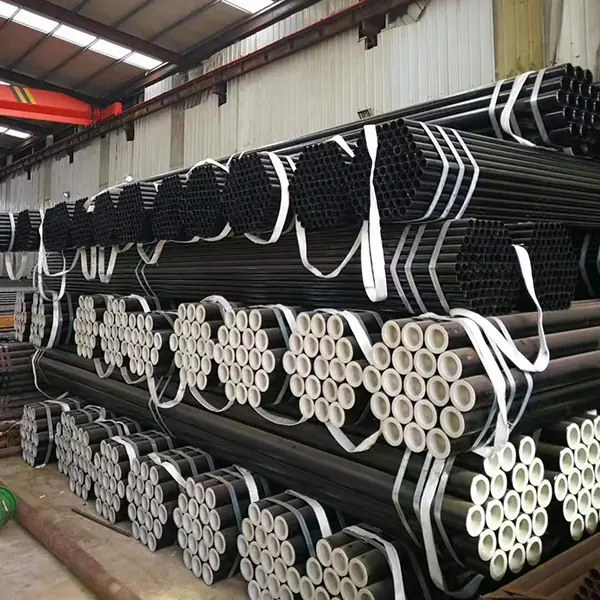
Seamless steel tubing represents a critical component across numerous industrial sectors, including oil and gas, petrochemical processing, automotive manufacturing, construction, and power generation. Unlike welded steel pipe, seamless tubing is manufactured without a welded seam, offering superior strength, pressure handling capabilities, and resistance to stress corrosion cracking. The manufacturing process, typically involving rotary piercing or extrusion, results in a homogenous structure which makes it ideal for high-pressure, high-temperature applications and critical infrastructure. This guide provides an in-depth analysis of seamless steel tubing, covering its material science, manufacturing processes, performance characteristics, potential failure modes, and relevant industry standards. A core industry pain point revolves around ensuring consistent quality and traceability of materials, specifically regarding alloy composition and mechanical properties, to guarantee structural integrity and prevent catastrophic failures. Furthermore, optimizing manufacturing processes to reduce material waste and energy consumption remains a significant challenge.
Material Science & Manufacturing
The primary raw material for seamless steel tubing is carbon steel, although alloy steels incorporating elements like chromium, molybdenum, nickel, and manganese are frequently used to enhance specific properties. Carbon steel offers a balance of strength, ductility, and cost-effectiveness. Alloy steels are employed to achieve improved corrosion resistance (e.g., chromium additions in stainless steel grades), increased high-temperature strength (e.g., molybdenum additions), and enhanced toughness (e.g., nickel additions). The chemical composition dictates the resulting mechanical properties, including yield strength, tensile strength, elongation, and impact resistance. Manufacturing typically begins with billet preparation, followed by heating to a suitable forging temperature. Two primary methods dominate production: hot rotary piercing and extrusion. Hot rotary piercing involves using a mandrel and rotating rolls to create a hollow tube from a solid billet. Precise control of roll gap, mandrel positioning, and piercing speed is crucial to ensure dimensional accuracy and surface finish. Extrusion forces the heated billet through a die, creating a seamless tube. Key parameters include die design, extrusion pressure, and billet temperature. Heat treatment, including normalizing, quenching, and tempering, is often performed post-manufacturing to refine the microstructure, relieve residual stresses, and achieve desired mechanical properties. The cooling rate during heat treatment significantly impacts the grain size and hardness. Quality control measures include ultrasonic testing for defect detection, hydrostatic testing for pressure integrity, and dimensional inspections to verify adherence to specified tolerances.
Performance & Engineering
The performance of seamless steel tubing is heavily influenced by its mechanical properties and operating environment. Force analysis considers both internal pressure and external loads. The Barlow formula (σ = PD/2t, where σ is stress, P is pressure, D is diameter, and t is wall thickness) provides a fundamental basis for calculating hoop stress due to internal pressure. External loads, such as bending moments and axial forces, must also be accounted for to prevent buckling or yielding. Environmental resistance is critical, particularly in corrosive environments. Galvanizing, epoxy coatings, and the use of corrosion-resistant alloys (e.g., stainless steel, duplex stainless steel) are common strategies to mitigate corrosion. Compliance requirements vary depending on the application and geographical location. For example, oil and gas pipelines are subject to stringent regulations from organizations like API (American Petroleum Institute) and DNV (Det Norske Veritas). Automotive tubing must meet automotive industry standards for strength, fatigue resistance, and dimensional accuracy. Fatigue life is a critical design consideration, especially in applications involving cyclic loading. Stress concentration points, such as welds (if any minor repairs are needed) or geometric discontinuities, can significantly reduce fatigue life. Finite element analysis (FEA) is often employed to optimize tube geometry and minimize stress concentrations. Material selection must also account for the operating temperature range, as mechanical properties generally degrade at elevated temperatures.
Technical Specifications
| Grade | Outer Diameter (mm) | Wall Thickness (mm) | Yield Strength (MPa) |
|---|---|---|---|
| A53 Grade B | 21.3 - 660.4 | 2 - 25.4 | 250 |
| API 5L X42 | 10.2 - 1219.2 | 2.2 - 45.7 | 345 |
| ASTM A335 P11 | 19.1 - 406.4 | 2.1 - 19.1 | 205 |
| EN 10210 S235JR | 10.2 - 508 | 1.5 - 20 | 235 |
| 304/304L Stainless Steel | 6.35 - 76.2 | 0.8 - 6.35 | 205 |
| 316/316L Stainless Steel | 6.35 - 76.2 | 0.8 - 6.35 | 205 |
Failure Mode & Maintenance
Seamless steel tubing can experience several failure modes depending on the application and operating conditions. Fatigue cracking is common in applications involving cyclic loading, particularly around stress concentrations. Corrosion, both general and localized (e.g., pitting corrosion, crevice corrosion), can significantly reduce wall thickness and lead to leaks or ruptures. Stress corrosion cracking (SCC) occurs when tensile stress is combined with a corrosive environment. Hydrogen embrittlement can also contribute to cracking, especially in high-strength steels. Erosion, caused by the impingement of abrasive particles, can wear away the tube material. Creep, the slow deformation under sustained load at elevated temperatures, is a concern in high-temperature applications. Regular inspection is essential to detect potential failures before they occur. Non-destructive testing (NDT) methods, such as ultrasonic testing, radiographic testing, and eddy current testing, are commonly employed. Maintenance practices include periodic cleaning to remove corrosive deposits, application of protective coatings, and replacement of damaged sections. For corrosion mitigation, cathodic protection is often used in buried pipelines. Regular hydrostatic testing can verify the integrity of the tubing and detect leaks. The proper selection of materials and coatings, coupled with a robust inspection and maintenance program, is crucial to ensure long-term reliability and prevent catastrophic failures.
Industry FAQ
Q: What is the primary advantage of seamless steel tubing over welded steel pipe in high-pressure applications?
A: The absence of a welded seam in seamless tubing eliminates a potential point of failure. Welded seams, even with rigorous quality control, can exhibit lower strength and increased susceptibility to stress corrosion cracking under high pressure, making seamless tubing the preferred choice for critical applications.
Q: How does the alloy composition impact the corrosion resistance of seamless steel tubing?
A: The addition of alloying elements significantly affects corrosion resistance. Chromium is the key element in stainless steels, forming a passive chromium oxide layer that protects the underlying steel. Molybdenum enhances pitting corrosion resistance, while nickel improves overall corrosion resistance and toughness. The specific alloy composition must be selected based on the anticipated corrosive environment.
Q: What are the key considerations when selecting a wall thickness for a seamless steel tube designed for a specific pressure?
A: Wall thickness is directly related to the pressure rating, diameter, and material strength, as defined by the Barlow formula. A safety factor must be applied to account for uncertainties in material properties, manufacturing tolerances, and operating conditions. Corrosion allowance must also be factored in to account for material loss over the tube’s service life.
Q: What NDT methods are commonly used to detect defects in seamless steel tubing during manufacturing and in-service inspection?
A: Ultrasonic testing (UT) is the most common NDT method, capable of detecting internal flaws like cracks and inclusions. Radiographic testing (RT) provides a visual image of the tube’s internal structure, while eddy current testing (ET) is used to detect surface cracks and measure wall thickness. Leak testing, using hydrostatic pressure, confirms the integrity of the tube.
Q: How does heat treatment affect the mechanical properties of seamless steel tubing?
A: Heat treatment plays a crucial role in controlling the microstructure and mechanical properties. Normalizing refines the grain structure, improving toughness and machinability. Quenching and tempering increase strength and hardness, but can also reduce ductility. The specific heat treatment cycle is tailored to the alloy composition and desired mechanical properties.
Conclusion
Seamless steel tubing remains an essential material in a wide range of demanding industrial applications due to its superior strength, pressure handling capability, and resistance to failure. The material selection process, coupled with meticulous manufacturing controls and rigorous quality assurance testing, are fundamental to ensuring the reliability and longevity of these critical components. Understanding the potential failure modes and implementing proactive maintenance strategies are equally important for mitigating risks and optimizing performance.
Future advancements will likely focus on developing new alloy compositions with enhanced corrosion resistance and high-temperature strength, refining manufacturing processes to reduce material waste and energy consumption, and implementing advanced inspection techniques based on machine learning and artificial intelligence to improve defect detection and predictive maintenance. Continued research and development in these areas will further solidify the role of seamless steel tubing in supporting critical infrastructure and industrial processes.
