Introduction
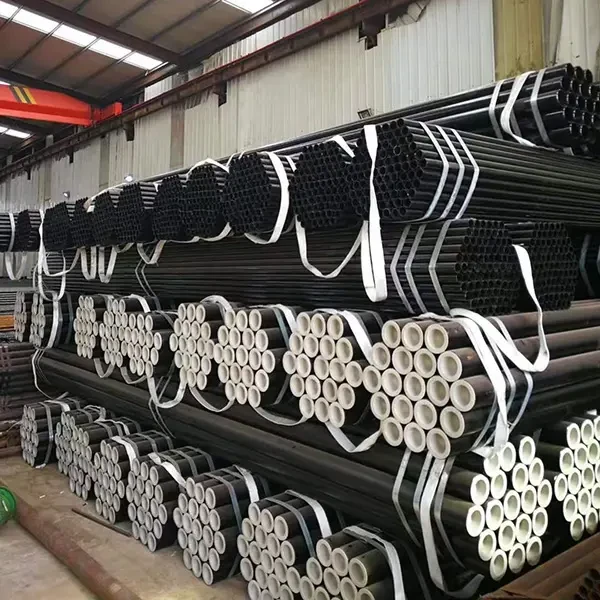
Seamless steel tubing represents a critical component across numerous industrial sectors, including oil and gas, automotive, aerospace, construction, and power generation. Unlike welded steel tubing, seamless tubing is manufactured without a weld seam, offering superior strength, pressure handling capabilities, and resistance to corrosion. This is achieved through processes like extrusion and piercing, resulting in a homogenous material structure. The global seamless steel tubing market is driven by infrastructure development, rising energy demands, and increasingly stringent safety regulations. Suppliers must demonstrate adherence to exacting standards and provide materials that meet precise dimensional tolerances and mechanical properties to ensure reliable performance in demanding applications. Core performance characteristics include yield strength, tensile strength, elongation, impact toughness, and corrosion resistance, all of which dictate suitability for specific environments and operational parameters. A key pain point for end-users is ensuring traceability of material composition and manufacturing processes to guarantee consistent quality and prevent failures.
Material Science & Manufacturing
Seamless steel tubing begins with carefully selected raw materials, typically carbon steel, alloy steel, or stainless steel. Carbon steel grades (e.g., A53, A106) offer cost-effectiveness for general-purpose applications, while alloy steels (e.g., 4140, 8640) provide enhanced strength and toughness. Stainless steels (e.g., 304, 316) are crucial for corrosive environments. The manufacturing process generally involves the following steps: billet preparation, piercing, reheating, stretching, and finishing. Billet preparation includes cutting and conditioning the steel stock. Piercing utilizes a rotary piercing process to create a hollow tube blank. Reheating ensures optimal ductility for subsequent forming operations. Stretching, often performed via mandrel mills, controls wall thickness and diameter to precise specifications. Finishing operations encompass heat treatment (annealing, normalizing, quenching, and tempering) to refine the material’s microstructure and mechanical properties, followed by pickling, oiling, and inspection. Critical parameters during manufacturing include temperature control during reheating and stretching to prevent grain growth and ensure consistent wall thickness. The control of reducing ratios in the mandrel mill directly impacts the final mechanical properties, specifically yield strength and elongation. Chemical composition control is paramount, with tight tolerances maintained on alloying elements to achieve desired performance characteristics. Variations in chemical composition can significantly alter weldability and corrosion resistance.
Performance & Engineering
The performance of seamless steel tubing is fundamentally governed by its mechanical properties and resistance to external factors. Force analysis, particularly concerning pressure containment, dictates wall thickness calculations based on Barlow's formula or more complex finite element analysis (FEA) models. Environmental resistance is crucial, with considerations for corrosion, erosion, and temperature extremes. For applications involving elevated temperatures, creep resistance and oxidation stability become critical. Compliance requirements vary significantly by industry and region. For example, ASME B31.3 governs piping systems in power plants, while API 5L specifies requirements for line pipe used in the oil and gas industry. Corrosion resistance is frequently enhanced through the selection of appropriate steel grades and the application of protective coatings (e.g., epoxy, polyurethane, galvanizing). Cathodic protection is also employed in buried pipelines. Dimensional accuracy is vital for seamless joining techniques like welding or threading. Out-of-roundness and ovality must be tightly controlled. Fatigue life is a key consideration in cyclic loading applications, and suppliers should provide data on S-N curves (stress vs. number of cycles to failure). Hydrostatic testing is routinely performed to verify the integrity of the tubing and ensure it meets specified pressure ratings.
Technical Specifications
| Parameter | ASTM A53 Grade B | ASTM A106 Grade B | API 5L X42 | ASTM A335 P11 |
|---|---|---|---|---|
| Yield Strength (MPa) | 250 | 276 | 345 | 205 |
| Tensile Strength (MPa) | 400 | 414 | 483 | 379 |
| Elongation (%) | 23 | 22 | 20 | 18 |
| Wall Thickness Range (mm) | 2-12.7 | 2-25.4 | 3.2-25.4 | 2.3-19.1 |
| Outside Diameter Range (mm) | 10.3-667 | 10.3-762 | 21.3-1219 | 19.1-667 |
| Corrosion Resistance | Moderate | Moderate | Moderate | Good (High Temp Oxidation) |
Failure Mode & Maintenance
Seamless steel tubing can experience several failure modes in service. Corrosion, particularly pitting and crevice corrosion, is a common cause of failure, especially in chloride-rich environments. Fatigue cracking can occur under cyclic loading, initiated at surface defects or stress concentrators. Stress corrosion cracking (SCC) is a concern in specific environments with tensile stress and corrosive agents. Erosion-corrosion results from the combined action of abrasive particles and corrosive fluids. Hydrogen embrittlement can occur in high-strength steels exposed to hydrogen-containing environments, leading to brittle fracture. Manufacturing defects, such as inclusions or laminations, can also initiate failures. Maintenance practices include regular inspections for corrosion, cracks, and erosion. Non-destructive testing (NDT) methods, such as ultrasonic testing (UT), radiographic testing (RT), and liquid penetrant testing (PT), are used to detect internal and surface flaws. Protective coatings should be maintained and reapplied as needed. Proper drainage should be ensured to prevent water accumulation and corrosion. For high-temperature applications, periodic creep inspections are necessary. Preventive maintenance schedules should be based on the operating environment, fluid composition, and stress levels. Replacement schedules should be determined based on established service life projections and inspection results.
Industry FAQ
Q: What is the significance of normalizing heat treatment in seamless steel tubing manufacturing?
A: Normalizing refines the grain structure of the steel, improving its machinability, weldability, and impact toughness. It reduces internal stresses induced during forming operations and ensures a more uniform microstructure, enhancing mechanical properties and dimensional stability. It's particularly important for carbon and low-alloy steels.
Q: How do different manufacturing processes (extrusion vs. piercing) impact the final microstructure and mechanical properties?
A: Rotary piercing typically results in a finer grain structure and higher strength compared to extrusion. Extrusion can create some directional properties in the material, whereas piercing produces a more isotropic structure. The choice depends on the desired performance characteristics and application requirements. Piercing generally provides a more homogenous material.
Q: What are the key considerations for selecting a seamless steel tubing supplier for a critical high-pressure application?
A: Traceability of materials, adherence to relevant industry standards (e.g., ASME, API), comprehensive quality control procedures (including hydrostatic testing and NDT), and the supplier’s experience with similar applications are crucial. Documentation confirming material composition, mechanical properties, and manufacturing processes is essential. Supplier certifications and independent testing reports are also highly valuable.
Q: What is the impact of sulfur content on the weldability of seamless steel tubing?
A: Higher sulfur content can negatively impact weldability, increasing the risk of hot cracking during welding. Sulfur forms low-melting-point compounds at grain boundaries, promoting fracture. Suppliers should provide documentation verifying sulfur content, and welding procedures should be adjusted accordingly. Low-sulfur grades are preferred for critical welding applications.
Q: How does the cold drawing process affect the mechanical properties of seamless steel tubing?
A: Cold drawing increases the yield strength and tensile strength of the steel due to work hardening. It also improves dimensional accuracy and surface finish. However, it can reduce ductility and toughness. Controlled cold drawing processes, often followed by stress relieving, are employed to balance strength and ductility.
Conclusion
Seamless steel tubing remains a foundational material across a wide spectrum of industries, valued for its strength, reliability, and versatility. The selection process demands a thorough understanding of material science, manufacturing processes, and industry-specific standards. Suppliers capable of consistently delivering tubing that meets exacting specifications and maintains rigorous quality control are critical to ensuring the integrity and longevity of demanding applications. The proper specification and application of seamless steel tubing, combined with diligent maintenance practices, mitigate the risk of premature failure and maximize operational efficiency.
Future trends in seamless steel tubing will likely focus on the development of higher-strength alloys, improved corrosion resistance coatings, and more sustainable manufacturing processes. Advanced NDT techniques and predictive maintenance strategies will play an increasingly important role in optimizing the lifecycle cost of these critical components. Furthermore, advancements in process control and automation will contribute to increased production efficiency and reduced material waste.
