
Introduction
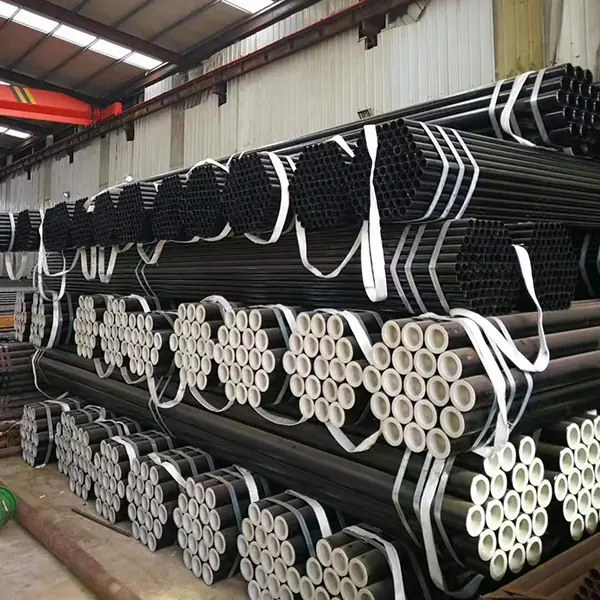
Swagelok seamless tubing represents a critical component in fluid system solutions across diverse industries including oil and gas, chemical processing, pharmaceuticals, power generation, and analytical instrumentation. Unlike welded tubing, seamless tubing is manufactured without a weld seam, eliminating a potential point of failure and providing superior performance in high-pressure, high-temperature, and corrosive environments. Its technical position within the industry chain is as a foundational element for constructing reliable and leak-tight connections, directly impacting system integrity and operational safety. Core performance characteristics center around dimensional accuracy, surface finish, pressure containment, and chemical compatibility, making it a preferred choice for critical applications where reliability is paramount. The selection of appropriate alloy composition and manufacturing process significantly influences its mechanical properties, impacting its ability to withstand stress, corrosion, and fatigue. This guide provides an in-depth technical overview of Swagelok seamless tubing, encompassing material science, manufacturing processes, performance characteristics, failure modes, and relevant industry standards.
Material Science & Manufacturing
Swagelok seamless tubing is commonly manufactured from austenitic stainless steels (304, 316/316L), alloy steels, and other corrosion-resistant materials like Monel and Hastelloy, depending on the application requirements. The material selection is dictated by factors such as operating temperature, pressure, fluid compatibility, and regulatory constraints. Austenitic stainless steels offer excellent corrosion resistance and weldability, while alloy steels provide enhanced strength and toughness. The manufacturing process typically begins with billet heating followed by hot piercing—a process where a mandrel is driven through the heated billet to create the hollow tube. Subsequent cold drawing reduces the diameter and wall thickness while improving the material’s mechanical properties, specifically increasing tensile strength and yield strength. Key parameters controlled during cold drawing include reduction ratio, die angle, and lubrication. Annealing is often performed between drawing passes to relieve residual stresses and restore ductility. Surface finish is critical; Swagelok tubing typically undergoes pickling and passivation treatments to remove surface contaminants and enhance corrosion resistance. Chemical composition is tightly controlled to meet ASTM specifications, with careful monitoring of elements like carbon, chromium, nickel, molybdenum, and nitrogen. The grain structure is also crucial; a fine grain structure promotes better mechanical properties and resistance to stress corrosion cracking. Wall thickness tolerances are maintained within stringent limits to ensure consistent performance and facilitate accurate fitting connections. The residual stress levels after forming significantly impact fatigue life, and stress relieving heat treatments are employed to minimize these stresses. Proper material traceability and documentation are fundamental aspects of the manufacturing process.
Performance & Engineering
The performance of Swagelok seamless tubing is governed by its ability to withstand internal and external pressures, resist corrosion, and maintain dimensional stability under varying temperatures. Force analysis, including hoop stress calculation using Barlow’s formula (σ = PD/2t, where σ is hoop stress, P is internal pressure, D is outer diameter, and t is wall thickness), is crucial for determining the maximum allowable operating pressure. Fatigue analysis is essential for applications involving cyclic loading. The tubing’s resistance to corrosion is determined by the alloy composition and the exposure environment. Electrochemical corrosion testing, including potentiodynamic polarization and immersion tests, are used to assess corrosion rates. Environmental resistance is further evaluated through tests such as salt spray exposure and cyclic thermal shock. Compliance requirements vary depending on the industry and application. For instance, applications in the pharmaceutical industry must meet stringent sanitary standards (3-A Sanitary Standards), while those in the oil and gas industry must comply with NACE standards for corrosion control. Functional implementation requires consideration of factors such as bending radius (typically 2.5 times the outer diameter to avoid kinking), ovality, and straightness. Proper tube bending techniques and the use of appropriate bending tools are crucial to avoid introducing stress concentrations that could lead to premature failure. The compatibility of the tubing material with the conveyed fluid is also critical; improper material selection can lead to galvanic corrosion or degradation of the tubing. Leak testing, typically performed using helium leak testing, is essential to verify the integrity of the system after assembly. Finite element analysis (FEA) is often employed to model stress distributions and predict the behavior of the tubing under various loading conditions.
Technical Specifications
| Material Grade | Outer Diameter (mm) | Wall Thickness (mm) | Tensile Strength (MPa) |
|---|---|---|---|
| 304/304L Stainless Steel | 6.35 | 1.65 | 517 |
| 316/316L Stainless Steel | 9.53 | 2.11 | 552 |
| Alloy 625 (Inconel) | 12.7 | 2.62 | 931 |
| Monel 400 | 15.88 | 3.18 | 724 |
| Hastelloy C-276 | 19.05 | 3.40 | 965 |
| Carbon Steel (ASTM A53 Grade B) | 21.3 | 4.06 | 483 |
Failure Mode & Maintenance
Swagelok seamless tubing can experience several failure modes in practical applications. Corrosion, particularly pitting and crevice corrosion, is a common issue, especially in chloride-rich environments. Stress corrosion cracking (SCC) can occur in susceptible materials exposed to tensile stresses and corrosive environments. Fatigue cracking can result from cyclic loading, initiated at surface defects or stress concentrators. Denting or collapse can occur due to external loads or bending beyond the specified radius. Oxidation at elevated temperatures can lead to material degradation and loss of mechanical properties. Improper installation, such as over-tightening fittings or using incompatible materials, can also induce failure. Maintenance involves regular visual inspections for signs of corrosion, cracking, or deformation. Periodic leak testing should be performed to identify potential leaks. Protective coatings can be applied to mitigate corrosion. For systems operating at high temperatures, thermal insulation can reduce oxidation rates. Proper cleaning and passivation procedures should be followed to remove surface contaminants. When replacing damaged tubing, it’s crucial to use materials that are compatible with the fluid and operating conditions. Preventative maintenance programs should include detailed documentation of material specifications, installation procedures, and inspection results. Consideration should be given to the use of corrosion inhibitors or scavengers in the fluid system to minimize corrosion rates. Regular training for personnel involved in the installation and maintenance of tubing systems is vital to ensure adherence to best practices.
Industry FAQ
Q: What is the primary advantage of seamless tubing over welded tubing in high-pressure applications?
A: The primary advantage lies in the absence of a weld seam, which represents a potential point of failure under high pressure. Welded seams introduce stress concentrations and can be susceptible to corrosion, reducing the tubing's overall pressure rating and increasing the risk of leakage. Seamless tubing provides a more uniform structure and superior pressure containment capabilities.
Q: How does the wall thickness of the tubing impact its performance?
A: Wall thickness is directly proportional to the tubing’s pressure rating and inversely proportional to its susceptibility to bursting. Thicker walls provide greater strength and resistance to pressure, but also increase weight and cost. Proper wall thickness selection is crucial, balancing performance requirements with economic considerations.
Q: What material is best suited for handling highly corrosive chemicals?
A: The optimal material depends on the specific chemical. However, alloys like Hastelloy C-276 and Monel 400 offer exceptional resistance to a broad range of corrosive chemicals. Careful evaluation of the chemical compatibility chart is crucial before selecting a material.
Q: What are the potential consequences of exceeding the recommended bending radius?
A: Exceeding the recommended bending radius can induce kinking or ovality, reducing the internal flow area and creating stress concentrations that can lead to premature failure. Proper bending tools and techniques are essential to maintain the tubing’s integrity.
Q: How important is passivation in maintaining corrosion resistance?
A: Passivation is critical. It forms a protective oxide layer on the surface of the stainless steel, significantly enhancing its corrosion resistance. This layer self-repairs in the presence of oxygen, providing ongoing protection against corrosion. Regular cleaning and passivation are essential for maintaining this protective layer.
Conclusion
Swagelok seamless tubing remains a cornerstone of reliable fluid system construction, offering superior performance in demanding applications. Its seamless construction, coupled with carefully selected alloy compositions and stringent manufacturing controls, ensures exceptional pressure containment, corrosion resistance, and mechanical integrity. Understanding the principles of material science, force analysis, and potential failure modes is essential for selecting the appropriate tubing for a given application and implementing effective maintenance practices.
Looking forward, advancements in alloy development and manufacturing techniques will continue to improve the performance characteristics of seamless tubing. Further research into non-destructive testing methods will enhance the ability to detect and prevent failures. Adopting predictive maintenance strategies based on data analysis and condition monitoring will optimize system reliability and minimize downtime, ultimately contributing to safer and more efficient operations.
