Introduction
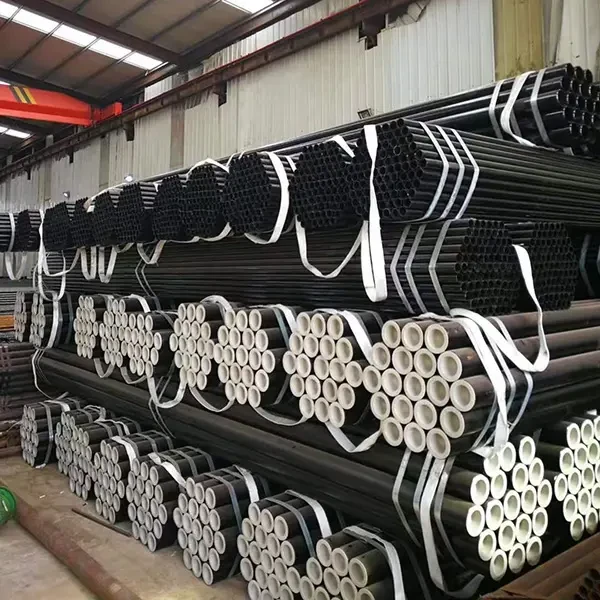
Weld galvanized pipe, encompassing both welded steel pipe subsequently galvanized and galvanized pipe sections joined via welding processes, represents a critical component within fluid conveyance, structural support, and industrial piping systems. Its technical position lies within the ferrous metallurgy and corrosion protection segment of the broader materials science industry chain. Galvanization, typically utilizing a zinc coating, imparts a sacrificial layer of corrosion resistance to the underlying steel substrate. This guide provides an in-depth examination of its material science, manufacturing techniques, performance characteristics, potential failure modes, and relevant industry standards. Core performance indicators include pressure containment capacity, weld integrity, corrosion resistance (measured in salt spray hours and coating thickness), and adherence to dimensional tolerances specified by governing standards. The increasing demand for durable and cost-effective piping solutions, particularly in water distribution, oil and gas, and construction, drives the continued relevance of weld galvanized pipe, despite challenges posed by alternative materials like stainless steel and plastic composites.
Material Science & Manufacturing
The fundamental material for weld galvanized pipe is carbon steel, typically conforming to ASTM A53 Grade B or API 5L specifications. The steel composition influences weldability, strength, and ductility. Key elements include carbon (0.05-0.25%), manganese (0.3-0.9%), silicon (0.02-0.3%), phosphorus (max 0.04%), and sulfur (max 0.05%). The galvanization process, most commonly hot-dip galvanizing, involves immersing the steel pipe in a molten zinc bath (98% purity or higher). This creates a metallurgical bond forming layers of zinc-iron alloys (Gamma, Delta, Zeta) overlaid by a pure zinc layer. Manufacturing processes include Electric Resistance Welding (ERW) and submerged arc welding (SAW) for pipe formation. ERW relies on high-frequency electric current to fuse the steel edges, while SAW utilizes a granular flux to shield the weld pool from atmospheric contamination. Critical parameters include welding current, voltage, travel speed, and flux composition. Post-welding, pipes undergo non-destructive testing (NDT) such as ultrasonic testing (UT) and radiographic testing (RT) to detect weld defects (porosity, inclusions, cracking). Surface preparation prior to galvanization is paramount; it involves pickling (acid cleaning to remove mill scale), fluxing (to promote zinc adhesion), and rinsing. The cooling rate post-galvanization influences the microstructure and corrosion resistance of the zinc coating. Consistent coating thickness, measured in microns, is vital, usually ranging from 50-80µm depending on the application and standard.
Performance & Engineering
The performance of weld galvanized pipe is governed by several engineering principles. Stress analysis, considering internal pressure and external loads, dictates wall thickness requirements based on Barlow’s formula (S = PD/2t, where S = stress, P = pressure, D = diameter, and t = wall thickness). Weld integrity is critical; the weld seam must exhibit equivalent strength and ductility to the base metal. Corrosion resistance stems from the galvanic protection offered by the zinc coating. When the coating is breached, zinc corrodes preferentially, protecting the steel. However, this sacrificial protection is finite, and the rate of corrosion depends on environmental factors (humidity, salinity, pollution). Cyclic loading, inducing fatigue, is a key consideration in applications involving vibration or fluctuating pressure. Finite Element Analysis (FEA) is commonly employed to predict stress distribution and identify potential failure points. Compliance requirements vary based on application. For potable water systems, NSF/ANSI 61 certification ensures the pipe does not leach harmful contaminants. For structural applications, adherence to building codes (IBC, UBC) and seismic design standards is essential. The coefficient of thermal expansion for galvanized steel is approximately 12 x 10-6 /°C; this must be accounted for in piping system design to prevent thermal stress. The design must also consider the impact of cathodic protection systems if deployed, ensuring compatibility with the galvanized coating.
Technical Specifications
| Parameter | Unit | ASTM A53 Grade B (Typical) | API 5L X42 (Typical) |
|---|---|---|---|
| Yield Strength | MPa | 250 | 345 |
| Tensile Strength | MPa | 400 | 485 |
| Elongation | % | 23 | 21 |
| Wall Thickness | mm | 2.0 – 12.7 | 3.2 – 25.4 |
| Outside Diameter | mm | 10.3 – 660.4 | 21.3 - 1219.2 |
| Zinc Coating Thickness | µm | 50 – 80 | 50 – 80 |
Failure Mode & Maintenance
Weld galvanized pipe is susceptible to several failure modes. Corrosion, despite the galvanization, remains a primary concern, particularly in harsh environments. Uniform corrosion gradually reduces wall thickness, while localized corrosion (pitting, crevice corrosion) can lead to rapid penetration. Weld defects (porosity, incomplete fusion, cracking) can initiate failure under stress. Fatigue cracking, resulting from cyclic loading, can occur at weld seams or other stress concentrators. Mechanical damage (impact, abrasion) can compromise the zinc coating and expose the steel to corrosion. Hydrogen embrittlement, a phenomenon where hydrogen diffuses into the steel during the galvanization process, can reduce ductility and promote cracking, especially in high-strength steels. Maintenance strategies include regular inspection for corrosion (visual inspection, ultrasonic thickness testing), coating repair (zinc-rich paints, re-galvanization), and weld seam monitoring (NDT). Cathodic protection (sacrificial anodes or impressed current systems) can be implemented to enhance corrosion resistance. Proper jointing techniques (welding, threading) are crucial to prevent leaks and maintain structural integrity. Avoid over-tightening threaded connections, as this can distort the threads and create stress concentrations. Periodic cleaning to remove debris and contaminants can also extend the service life of the pipe.
Industry FAQ
Q: What is the impact of weld quality on the long-term corrosion performance of galvanized pipe?
A: Weld quality is paramount. Defects like porosity and incomplete fusion create sites for accelerated corrosion. These imperfections disrupt the protective zinc coating and expose the underlying steel to corrosive elements. Thorough non-destructive testing (UT, RT) is crucial to ensure weld integrity. Post-weld heat treatment can also relieve residual stresses and improve corrosion resistance.
Q: How does the galvanization process affect the weldability of the steel pipe?
A: The galvanization process, particularly hot-dip galvanizing, can slightly reduce the weldability due to the formation of brittle iron-zinc alloy layers. However, with proper welding parameters and techniques (e.g., using low-hydrogen electrodes), welds can be successfully made. Thorough cleaning of the galvanized surface prior to welding is essential to remove zinc oxides and prevent porosity.
Q: What are the limitations of using weld galvanized pipe in high-temperature applications?
A: The zinc coating has a relatively low melting point (419°C). Exposing weld galvanized pipe to elevated temperatures can cause the zinc to vaporize or degrade, reducing its corrosion protection. Furthermore, the mechanical properties of the steel itself can decrease at high temperatures. Therefore, it's generally not suitable for sustained temperatures above 150°C.
Q: What considerations are important when selecting a welding process for joining galvanized pipes?
A: Shielded Metal Arc Welding (SMAW) with low-hydrogen electrodes and Gas Metal Arc Welding (GMAW) are commonly used. It’s essential to select a welding process that minimizes heat input and produces high-quality welds with minimal porosity. Preheating may be necessary for thicker-walled pipes. Proper ventilation is crucial to remove zinc fumes generated during welding.
Q: How does the surrounding environment (e.g., soil composition, salinity) affect the corrosion rate of weld galvanized pipe?
A: The surrounding environment significantly influences corrosion rates. Soils with high chloride content (salinity) accelerate corrosion. Acidic or alkaline soils can also promote corrosion. Aeration, moisture levels, and the presence of pollutants all play a role. Proper coating selection (e.g., adding epoxy coatings over galvanization) and cathodic protection can mitigate environmental effects.
Conclusion
Weld galvanized pipe remains a robust and cost-effective solution for a wide array of fluid conveyance and structural applications. Its longevity, however, is heavily dependent upon meticulous material selection (steel grade, galvanization quality), precise manufacturing processes (welding, surface preparation), and appropriate maintenance strategies. Understanding the inherent failure modes – primarily corrosion and weld defects – is crucial for ensuring structural integrity and preventing premature failure.
Future advancements will likely focus on enhancing the durability of zinc coatings (e.g., incorporating alloying elements) and improving welding techniques to minimize defects. Increased adoption of non-destructive testing methods and the development of predictive modeling tools will further optimize the performance and lifespan of weld galvanized pipe systems, solidifying its position within the broader industrial landscape.
