Introduction
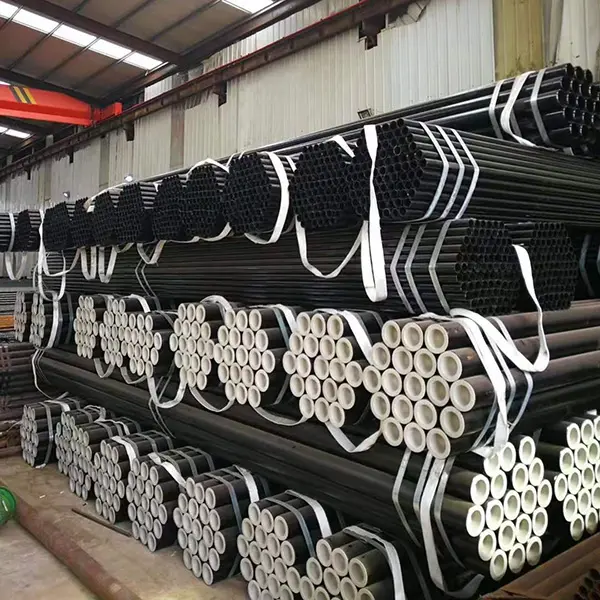
1.5-inch stainless steel tubing represents a critical component in numerous industrial applications, ranging from process piping and fluid transfer systems to structural supports and instrumentation. Its technical position within the broader materials supply chain is as a semi-finished product, requiring further fabrication – bending, welding, flanging – to meet specific end-use requirements. Primarily manufactured from austenitic stainless steels (304/304L, 316/316L) due to their corrosion resistance and weldability, this tubing size offers a balance between flow capacity and structural integrity. Core performance characteristics include pressure containment capability, resistance to chemical attack, and dimensional stability under varying temperature conditions. The increasing demand for hygienic and corrosion-resistant materials in industries like pharmaceuticals, food processing, and chemical handling drives consistent specification and utilization of 1.5” stainless steel tubing. A key industry pain point centers on consistent wall thickness and surface finish quality, directly impacting weld integrity and process hygiene. Maintaining traceability of material composition and manufacturing processes to ensure compliance with stringent industry regulations (e.g., ASME BPE) is also a major concern.
Material Science & Manufacturing
The predominant material for 1.5" stainless steel tubing is Type 304/304L or Type 316/316L stainless steel. 304/304L, containing 18-20% chromium and 8-10.5% nickel, exhibits excellent corrosion resistance in oxidizing environments. The ‘L’ grade designates low carbon content (<0.03%), minimizing carbide precipitation during welding, thereby enhancing resistance to intergranular corrosion. 316/316L adds 2-3% molybdenum, improving resistance to chloride corrosion, making it ideal for marine environments and applications involving halogenated chemicals. Raw material is typically supplied as stainless steel strip or coil. Manufacturing predominantly utilizes the welded tube process. This involves forming the strip into a cylindrical shape, followed by welding the seam – typically employing Tungsten Inert Gas (TIG) or Plasma Arc Welding (PAW) to ensure high-quality, full penetration welds. Key parameter control includes precise control of welding current, voltage, shielding gas flow rate (typically Argon), and travel speed. Post-welding, the tubing undergoes annealing to relieve stresses introduced during forming and welding, improving ductility and corrosion resistance. Bright annealing, performed in a controlled atmosphere, produces a smooth, scale-free surface. Tube drawing, using mandrels, achieves precise dimensional tolerances and desired wall thickness. Surface finish is critical; electropolishing is often employed to achieve a hygienic, corrosion-resistant surface, reducing the coefficient of friction and minimizing bacterial adhesion. Chemical composition verification, through techniques like Optical Emission Spectroscopy (OES), and non-destructive testing (NDT) like eddy current testing, are crucial for quality control.

Performance & Engineering
Performance of 1.5” stainless steel tubing is heavily dictated by its pressure containment capacity and resistance to environmental factors. Hydrostatic testing, conducted at pressures exceeding the operational maximum, verifies structural integrity and leak tightness. Force analysis considers hoop stress (σh = PD/2t, where P=pressure, D=diameter, t=wall thickness) and longitudinal stress. Wall thickness is a primary determinant of pressure rating. Environmental resistance depends on the alloy composition. 304/304L exhibits good resistance to freshwater and oxidizing acids, while 316/316L excels in chloride-rich environments. Compliance requirements vary by industry. For pharmaceutical applications, ASME BPE (Bioprocessing Equipment) sets stringent standards for surface finish (Ra < 32 µin), weld quality, and material traceability. Food processing applications demand compliance with 3-A Sanitary Standards. For high-temperature applications, creep resistance and oxidation behavior become critical design considerations. Finite Element Analysis (FEA) is frequently used to model stress distribution under complex loading conditions and optimize tube geometry. Corrosion fatigue, caused by cyclic loading in corrosive environments, is a significant failure mode. Proper material selection, surface treatment, and avoidance of galvanic corrosion (by using compatible materials) are crucial for ensuring long-term reliability.
Technical Specifications
| Parameter | 304/304L | 316/316L | Unit |
|---|---|---|---|
| Outer Diameter | 1.5 | 1.5 | inches |
| Wall Thickness | 0.065 – 0.120 | 0.065 – 0.120 | inches |
| Yield Strength | 30,000 | 28,000 | psi |
| Tensile Strength | 75,000 | 70,000 | psi |
| Elongation | 35 | 30 | % |
| Corrosion Rate (in NaCl) | < 0.1 | < 0.05 | mils/year |
Failure Mode & Maintenance
Common failure modes for 1.5” stainless steel tubing include pitting corrosion (particularly in chloride environments), crevice corrosion (at joints and under gaskets), stress corrosion cracking (SCC), and fatigue cracking. Pitting corrosion initiates at imperfections on the surface and propagates rapidly, leading to localized perforation. Crevice corrosion occurs in confined spaces where stagnant solutions accumulate. SCC results from the combined action of tensile stress and a corrosive environment. Fatigue cracking arises from cyclic loading, even below the yield strength. Oxidation at high temperatures can also lead to material degradation. Delamination can occur if improper welding techniques are used. Maintenance involves regular visual inspection for signs of corrosion, cracking, or deformation. Non-destructive testing (NDT) methods like liquid penetrant testing (LPT) and ultrasonic testing (UT) can detect subsurface flaws. Passivation treatment, using nitric acid, restores the protective chromium oxide layer, enhancing corrosion resistance. For applications involving abrasive materials, periodic cleaning and coating may be necessary. Proper weld procedures, including appropriate filler metal selection and heat treatment, are critical for preventing weld-related failures. Replacement is recommended if significant corrosion or cracking is detected, or if the tube has exceeded its design life.
Industry FAQ
Q: What is the primary difference between 304/304L and 316/316L stainless steel tubing for a chemical processing application?
A: The key difference lies in the molybdenum content. 316/316L contains molybdenum, which significantly improves its resistance to chloride-induced pitting corrosion. If the chemical process involves chlorides (e.g., hydrochloric acid, sodium chloride solutions), 316/316L is strongly recommended to prevent premature failure.
Q: What wall thickness is appropriate for a 1.5” stainless steel tube handling water at 150 psi?
A: The required wall thickness depends on the safety factor and the specific application. Using the hoop stress formula (σh = PD/2t) and a typical safety factor of 3, a wall thickness of at least Schedule 40 (0.065 inches) would be a minimum consideration. However, a thorough engineering analysis, considering temperature, cyclic loading, and potential corrosion, is crucial for accurate selection.
Q: How important is surface finish (Ra value) in pharmaceutical applications?
A: Surface finish is critically important. ASME BPE specifies a maximum Ra value of 32 µin for surfaces in contact with the process fluid. A smoother surface minimizes bacterial adhesion, facilitates cleaning and sterilization, and reduces the risk of contamination.
Q: What NDT methods are commonly used to verify the integrity of welded 1.5” stainless steel tubing?
A: Liquid Penetrant Testing (LPT) is commonly used to detect surface cracks and porosity. Radiographic Testing (RT) provides a volumetric inspection, revealing internal flaws. Ultrasonic Testing (UT) is another volumetric method, offering advantages in portability and sensitivity. Eddy Current Testing (ECT) is effective for detecting near-surface defects.
Q: What are the implications of using dissimilar metals in a system incorporating 1.5” stainless steel tubing?
A: Using dissimilar metals can create a galvanic cell, leading to accelerated corrosion of the less noble metal. Careful material selection and the use of dielectric unions or insulating sleeves are necessary to prevent galvanic corrosion. Compatibility charts should be consulted to assess the potential for corrosion.
Conclusion
1.5” stainless steel tubing represents a versatile and reliable solution for numerous industrial applications, provided careful consideration is given to material selection, manufacturing processes, and operating conditions. The choice between 304/304L and 316/316L hinges primarily on the corrosive environment, with 316/316L offering superior resistance to chloride attack. Maintaining strict control over welding parameters, surface finish, and dimensional tolerances is essential for ensuring long-term performance and compliance with relevant industry standards.
Future trends will likely focus on enhanced surface treatments (e.g., advanced passivation techniques), improved NDT methods for detecting microscopic flaws, and the development of more corrosion-resistant alloys. Continued adherence to rigorous quality control procedures and proactive maintenance programs will remain paramount for maximizing the lifespan and reliability of 1.5” stainless steel tubing systems.
