Introduction
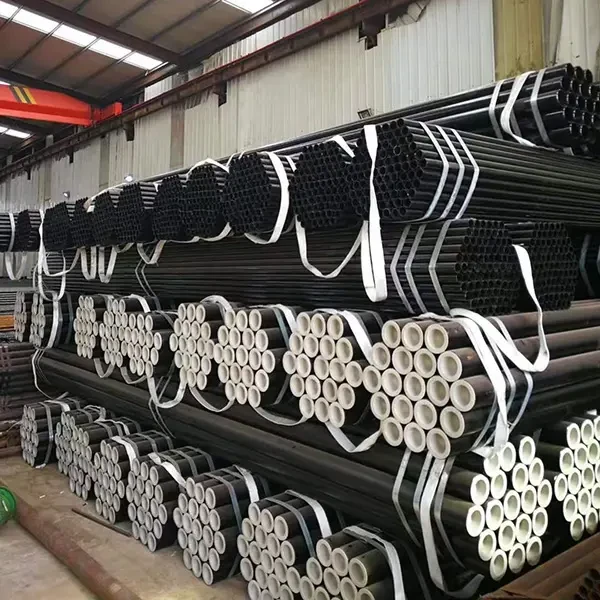
1 7/8 inch outer diameter (OD) steel pipe represents a critical component in numerous industrial applications, primarily within fluid transfer systems. Its designation refers to the nominal pipe size, which doesn't directly correlate with the actual outer diameter, but rather represents an approximate internal diameter. This piping is typically manufactured from carbon steel, though alloy steel variations exist for specialized purposes. Its technical position within the industrial chain is as a finished good, directly utilized in industries such as oil and gas, petrochemical processing, power generation, and mechanical engineering. Core performance characteristics center around its pressure containment capabilities, resistance to corrosion (dependent on material grade and coating), and structural integrity under load. The selection of 1 7/8" OD steel pipe is frequently dictated by flow rate requirements, system pressure, and compatibility with connecting components, making a thorough understanding of its material properties and manufacturing standards essential for engineering professionals and procurement managers.
Material Science & Manufacturing
The primary raw material for 1 7/8" OD steel pipe is carbon steel, often conforming to specifications like ASTM A53 Grade B or ASTM A106 Grade B. These steels consist predominantly of iron, with carbon content influencing hardness and weldability. Typical composition includes manganese (0.29-1.06%), silicon (0.05-0.35%), phosphorus (0.04 max), and sulfur (0.03 max). Alloy steel variations, utilizing elements like chromium, molybdenum, and nickel, offer enhanced corrosion resistance and elevated temperature strength. Manufacturing typically begins with hot rolling of steel billets into seamless pipes or electric resistance welding (ERW) for welded pipes. Seamless pipe manufacturing involves piercing a solid billet and subsequently drawing and rolling to achieve the desired dimensions. ERW pipes are formed by longitudinally welding steel strips. Critical parameters during manufacturing include temperature control during rolling/welding to ensure proper grain structure and minimize residual stress. Post-manufacturing processes include normalizing, pickling, and oiling to remove scale and provide corrosion protection. Wall thickness is precisely controlled during the rolling or welding process, and non-destructive testing (NDT), such as ultrasonic testing (UT) and radiographic testing (RT), is employed to verify weld integrity and detect defects. Chemical composition is verified through spectrometer analysis to ensure compliance with specified standards. The surface finish is critical; milling or other finishing operations are employed for applications requiring tight tolerances and smooth internal surfaces.
Performance & Engineering
The performance of 1 7/8" OD steel pipe is governed by several engineering principles. Hoop stress, arising from internal pressure, is a critical design consideration, calculated using the Barlow's formula: σ = (PD)/(2t), where σ is hoop stress, P is internal pressure, D is outer diameter, and t is wall thickness. Corrosion resistance, particularly in aggressive environments, dictates the selection of appropriate steel grades or protective coatings. External loads, such as bending moments from pipe supports or seismic forces, require careful analysis to prevent yielding or buckling. Fatigue analysis is crucial for applications involving cyclic loading, ensuring the pipe can withstand repeated stress cycles without failure. Compliance requirements, such as those outlined in ASME B31.3 (Process Piping) or API 5L (Line Pipe), govern design, fabrication, and inspection procedures. Environmental resistance is also paramount. Exposure to high temperatures can reduce yield strength and creep resistance, while low temperatures can induce brittle fracture. Furthermore, galvanic corrosion can occur when dissimilar metals are in contact within a conductive electrolyte. The material’s yield strength (typically >36,000 psi for carbon steel) and tensile strength (typically >58,000 psi) determine its load-bearing capacity. Thermal expansion and contraction must be accounted for in piping system design to prevent stress concentration and potential failure.
Technical Specifications
| Parameter | ASTM A53 Grade B | ASTM A106 Grade B | API 5L X42 |
|---|---|---|---|
| Nominal Pipe Size (OD) | 1.78 in (45.2 mm) | 1.78 in (45.2 mm) | 1.78 in (45.2 mm) |
| Typical Wall Thickness | Schedule 40: 0.154 in (3.9 mm) | Schedule 40: 0.154 in (3.9 mm) | Variable, typically 0.154-0.280 in |
| Minimum Yield Strength (psi) | 36,000 | 36,000 | 42,000 |
| Minimum Tensile Strength (psi) | 58,000 | 58,000 | 65,000 |
| Elongation (%) | 18 min | 18 min | 20 min |
| Hydrostatic Test Pressure (psi) | Variable, based on wall thickness & size | Variable, based on wall thickness & size | Variable, based on wall thickness & size |
Failure Mode & Maintenance
Several failure modes are common in 1 7/8" OD steel pipe. Corrosion, particularly localized pitting corrosion and uniform corrosion, is a primary concern, especially in corrosive environments. Fatigue cracking can occur under cyclic loading, initiating at stress concentrators such as welds or dents. Stress corrosion cracking (SCC) can occur in the presence of tensile stress and specific corrosive agents. Erosion corrosion results from the combined action of corrosion and abrasive wear. Weld defects, such as porosity or incomplete fusion, can lead to premature failure. Denting or ovality due to external impact can reduce pressure containment capability. Maintenance strategies include regular visual inspection for signs of corrosion, dents, or cracks. Non-destructive testing (NDT) methods, such as UT and RT, should be employed periodically to assess wall thickness and detect internal flaws. Protective coatings, such as epoxy or polyurethane, can mitigate corrosion. Cathodic protection is an effective method for preventing corrosion in buried pipelines. Regular cleaning to remove debris and scale can prevent erosion corrosion. If cracks are detected, repair welding or pipe replacement is necessary. Proper pipe support design is critical to prevent overstressing and fatigue. Routine pressure testing ensures the integrity of the system.
Industry FAQ
Q: What is the difference between seamless and ERW pipe, and which is preferable for high-pressure applications?
A: Seamless pipe is manufactured from a solid billet, offering superior strength and resistance to failure under pressure due to the absence of a weld seam. ERW (Electric Resistance Welded) pipe is formed by welding steel strips. While ERW pipe has improved significantly in recent years, seamless pipe generally remains the preferred choice for high-pressure applications exceeding moderately high pressures where the integrity of the weld is critical and comprehensive NDT is often costly or impractical.
Q: How does wall thickness affect the pressure rating of the pipe?
A: Wall thickness is inversely proportional to hoop stress, and therefore, directly impacts the pressure rating. A thicker wall provides greater resistance to deformation under internal pressure. The allowable pressure rating is calculated using formulas like Barlow’s formula and is significantly reduced with decreasing wall thickness. Pressure-temperature ratings are also governed by applicable codes and standards.
Q: What types of corrosion are most prevalent in oil and gas applications, and how can they be mitigated?
A: Corrosion in oil and gas applications can include general corrosion, pitting corrosion, erosion corrosion, and sour gas corrosion (H2S induced). Mitigation strategies include selecting corrosion-resistant alloy steels, applying protective coatings (epoxy, polyurethane, or specialized anti-corrosion paints), implementing cathodic protection, and using corrosion inhibitors in the fluid stream.
Q: What are the common non-destructive testing (NDT) methods used to inspect steel pipe?
A: Common NDT methods include Ultrasonic Testing (UT) for detecting internal flaws and measuring wall thickness, Radiographic Testing (RT) for identifying weld defects, Magnetic Particle Testing (MT) for detecting surface cracks in ferromagnetic materials, and Liquid Penetrant Testing (PT) for detecting surface cracks and discontinuities. Visual inspection is also a crucial first step.
Q: What is the significance of the pipe's surface finish?
A: The pipe’s surface finish impacts both corrosion resistance and flow characteristics. A smoother surface reduces friction and pressure drop, improving flow efficiency. A properly prepared surface is also essential for the effective application and adhesion of protective coatings, enhancing corrosion protection. Rough surfaces can act as nucleation sites for corrosion.
Conclusion
1 7/8" OD steel pipe remains a foundational element in numerous critical industrial systems. Its performance is inextricably linked to meticulous material selection, stringent manufacturing controls, and adherence to established engineering principles and industry standards. Understanding the interplay between material properties, stress analysis, and potential failure modes is vital for ensuring long-term operational reliability and safety.
The continued evolution of steel manufacturing techniques and corrosion protection technologies will further enhance the lifespan and performance of this essential component. Careful consideration of application-specific requirements, including pressure, temperature, fluid composition, and environmental conditions, is paramount when selecting and implementing 1 7/8" OD steel pipe solutions. Proactive maintenance and regular inspection programs are indispensable for identifying and addressing potential issues before they escalate into costly failures.
