Introduction
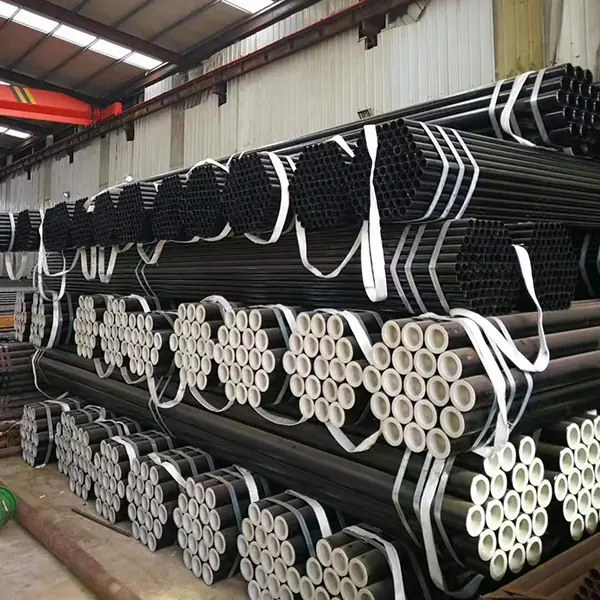
1.75 inch Drawn Over Mandrel (DOM) tubing is a precision-formed welded steel tube characterized by its tight tolerances, smooth inner surface, and consistent wall thickness. Within the steel tube manufacturing chain, DOM tubing occupies a critical position bridging the gap between standard welded steel pipe and more costly seamless tubing. It serves as a high-performance alternative where the absolute integrity of a seamless tube isn’t required but superior dimensional accuracy and surface finish are paramount. Primarily utilized in applications demanding high structural integrity and precise fitment – such as automotive chassis components, roll cages, structural supports, and hydraulic systems – DOM tubing's core performance characteristics revolve around its superior straightness, concentricity, and consistent mechanical properties compared to conventional ERW (Electric Resistance Welded) tubing. The demand for DOM tubing stems from its ability to reduce material waste during fabrication, minimize welding requirements in assemblies, and enhance the overall performance and reliability of finished products.
Material Science & Manufacturing
The predominant material for 1.75 inch DOM tubing is 1018 mild steel, though higher strength alloys like 4130 chromoly steel are also common depending on application requirements. 1018 steel boasts a carbon content of approximately 0.18%, providing a good balance of weldability, ductility, and strength. Its tensile strength typically ranges between 58,000 – 70,000 PSI, and its yield strength falls between 36,000 – 48,000 PSI. Manufacturing begins with cold forming a steel strip into a tubular shape. This is followed by electric resistance welding (ERW) to create the initial welded seam. The crucial step differentiating DOM from standard ERW tubing is the ‘drawing over mandrel’ process. This involves forcing the welded tube over a precisely sized and shaped mandrel, reducing the tube's diameter and wall thickness while simultaneously improving its straightness and concentricity. Critical parameters during the drawing process include reduction ratio (the amount the tube’s diameter is reduced), die angle, mandrel finish, and lubrication. Maintaining consistent lubrication is vital to prevent galling and ensure a smooth surface finish. Post-drawing, the tubing undergoes stress relieving heat treatment to eliminate residual stresses induced by the cold working process, improving dimensional stability and minimizing the risk of cracking. Final inspection includes dimensional checks, straightness testing, and non-destructive testing (NDT) like ultrasonic testing to verify weld integrity.
Performance & Engineering
The performance of 1.75 inch DOM tubing is critically linked to its geometric accuracy and mechanical properties. Force analysis in structural applications dictates the tubing’s ability to withstand bending moments, axial loads, and torsional stresses. The tube's moment of inertia, a geometric property determined by its outer diameter and wall thickness, directly impacts its resistance to bending. Environmental resistance is a key concern, particularly in corrosive environments. While 1018 steel is susceptible to rust, appropriate coatings like zinc plating, powder coating, or internal oiling can provide significant corrosion protection. For applications demanding high strength-to-weight ratios, 4130 chromoly steel offers superior performance, exhibiting increased yield and tensile strength alongside improved toughness and weldability. Compliance requirements vary based on the end-use application. Automotive applications often adhere to SAE J525 standards for DOM tubing, specifying dimensional tolerances, mechanical properties, and surface finish requirements. Hydraulic systems require tubing meeting ASTM A53 standards for pressure integrity. Functional implementation often involves welding, bending, and machining. Pre-bending operations should consider the material’s springback characteristics to achieve accurate angles. Welding processes require careful control of heat input to avoid distortion and maintain mechanical properties in the heat-affected zone.
Technical Specifications
| Parameter | 1018 Steel (Standard) | 4130 Chromoly Steel (High Strength) | ASTM A53 Grade B (Reference) |
|---|---|---|---|
| Outer Diameter (in) | 1.750 ± 0.005 | 1.750 ± 0.005 | 1.750 ± 0.010 |
| Wall Thickness (in) | 0.083 ± 0.005 | 0.083 ± 0.005 | 0.083 ± 0.010 |
| Tensile Strength (PSI) | 60,000 - 70,000 | 75,000 - 90,000 | 60,000 |
| Yield Strength (PSI) | 36,000 - 48,000 | 58,000 - 70,000 | 36,000 |
| Elongation (%) | 25 - 35 | 15 - 25 | 20 |
| Surface Finish (Ra, µin) | ≤ 32 | ≤ 32 | ≤ 63 |
Failure Mode & Maintenance
Common failure modes in 1.75 inch DOM tubing include fatigue cracking, particularly in cyclical loading applications. This often initiates at weld seams or areas of high stress concentration, such as bends or weldments. Corrosion, especially pitting corrosion, can also lead to failure by reducing the effective wall thickness. Delamination can occur if improper welding techniques or material incompatibility introduce defects within the weld. Oxidation at elevated temperatures can degrade the steel's mechanical properties over time. Maintenance to mitigate these failures involves regular visual inspections for signs of corrosion, cracks, or deformation. Protective coatings should be maintained and reapplied as needed. Welded joints should be inspected using NDT methods like dye penetrant testing or ultrasonic testing to ensure integrity. Proper storage in a dry environment prevents corrosion. For high-stress applications, periodic stress relieving heat treatment can extend the tube's service life. Addressing any observed damage or corrosion promptly is crucial to prevent catastrophic failure. The use of compatible welding consumables and adherence to recommended welding procedures are also paramount in preventing weld-related failures.
Industry FAQ
Q: What is the primary advantage of DOM tubing over standard ERW tubing?
A: The key advantage lies in its superior dimensional accuracy and straightness achieved through the drawing over mandrel process. This results in tighter tolerances, a smoother inner surface, and more consistent wall thickness, critical for applications requiring precise fitment and high structural integrity.
Q: Can DOM tubing be used in hydraulic applications?
A: Yes, but it’s essential to verify that the tubing meets the relevant hydraulic standards (e.g., ASTM A53) and that the material is compatible with the hydraulic fluid. Surface finish and internal cleanliness are also critical factors for hydraulic system performance.
Q: What is the impact of wall thickness on the tube's performance?
A: Wall thickness directly affects the tube’s bending strength, burst pressure, and overall structural integrity. Thicker walls provide higher resistance to deformation and failure but also increase weight. The optimal wall thickness is determined by the specific application requirements and load conditions.
Q: How does material selection influence corrosion resistance?
A: 1018 steel is susceptible to corrosion. Choosing 4130 chromoly steel provides improved corrosion resistance due to its alloy composition. Additionally, applying protective coatings like zinc plating or powder coating significantly enhances corrosion protection for both materials.
Q: What NDT methods are commonly used to inspect DOM tubing?
A: Ultrasonic testing is frequently used to detect subsurface flaws in the weld seam. Dye penetrant testing can reveal surface cracks and imperfections. Radiographic testing (X-ray) provides a comprehensive internal inspection but is less common due to cost and complexity.
Conclusion
1.75 inch DOM tubing represents a sophisticated steel tube product offering a superior balance of strength, dimensional accuracy, and surface finish compared to standard ERW tubing. Its manufacturing process, centered around the drawing over mandrel technique, imparts crucial performance characteristics that make it ideal for demanding applications in automotive, hydraulic, and structural engineering. Understanding the material science, manufacturing parameters, and potential failure modes is paramount for ensuring optimal performance and longevity.
Looking ahead, advancements in manufacturing techniques, such as laser welding and improved mandrel designs, will likely further enhance the quality and performance of DOM tubing. Increased adoption of higher strength alloys and advanced coating technologies will expand its applicability to an even wider range of challenging environments. Selecting the appropriate material grade and applying meticulous inspection protocols remain critical for maximizing the value and reliability of this essential industrial component.
