Introduction
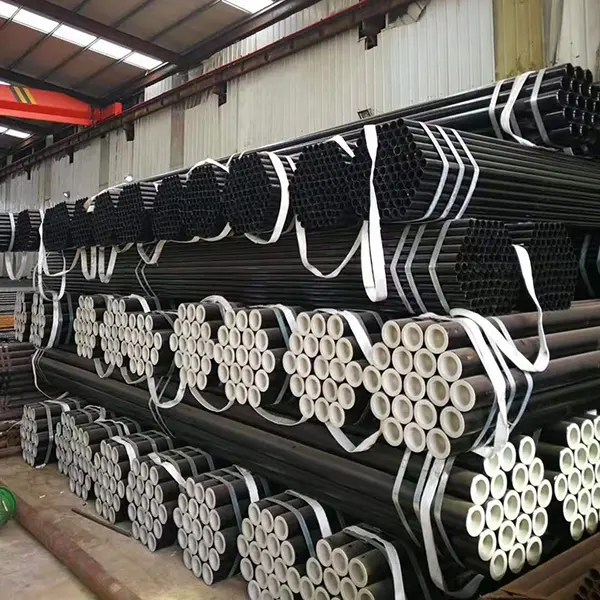
11 gauge steel tubing represents a standardized dimension within steel tube manufacturing, commonly employed across diverse industrial applications. Defined by its outer diameter and wall thickness – specifically, an outer diameter of approximately 0.840 inches and a wall thickness of 0.115 inches – 11 gauge tubing occupies a crucial position in structural support, fluid conveyance, and mechanical component fabrication. Its position in the industry chain falls between the raw material production of steel (typically carbon steel, though alloy variations exist) and the final assembly of products ranging from automotive chassis components and furniture frames to plumbing systems and agricultural equipment. Core performance characteristics center around its load-bearing capacity, weldability, corrosion resistance (dependent on surface treatment), and dimensional accuracy. Understanding these characteristics is critical for engineers and procurement managers to ensure appropriate application and long-term reliability.
Material Science & Manufacturing
The primary raw material for 11 gauge steel tubing is typically carbon steel, conforming to specifications like ASTM A53 or A500. The steel’s chemical composition profoundly impacts its mechanical properties; carbon content influences hardness and weldability, while manganese contributes to strength and toughness. Manufacturing commences with the production of a steel strip, often through hot rolling. This strip is then formed into a tubular shape, typically using one of three primary methods: welded, seamless, or drawn-over-mandrel. Welded tubing, the most common and cost-effective method, involves forming the strip and then welding the seam using electric resistance welding (ERW) or high-frequency induction welding (HFI). Seamless tubing, produced by piercing a solid billet, offers superior strength and is preferred for high-pressure applications. Drawn-over-mandrel tubing, used for precise dimensions and thin walls, involves drawing the tube over a mandrel. Key parameter control during manufacturing includes maintaining precise wall thickness uniformity, controlling weld quality (for welded tubes - ensuring complete fusion and minimal porosity), and achieving accurate diameter tolerances. Post-manufacturing processes often involve annealing to relieve stresses induced during forming, pickling to remove scale, and surface coatings (galvanization, powder coating) to enhance corrosion resistance.
Performance & Engineering
Performance of 11 gauge steel tubing is fundamentally governed by its structural integrity under applied loads. Force analysis requires consideration of bending moments, shear forces, and axial compression/tension. The section modulus, calculated from the tube’s outer diameter and wall thickness, dictates its resistance to bending. The yield strength and ultimate tensile strength of the steel material determine the load limits before permanent deformation or fracture occurs. Environmental resistance is a critical factor, particularly concerning corrosion. Carbon steel is susceptible to rust in humid environments; therefore, protective coatings like galvanization (zinc coating) or epoxy powder coating are frequently applied. Compliance requirements vary depending on the application. For pressure applications (e.g., plumbing), tubing must meet standards like ASME B31.3, ensuring adequate wall thickness to withstand internal pressure. For structural applications, adherence to building codes and standards like AISC (American Institute of Steel Construction) is crucial. Functional implementation also necessitates understanding potential buckling behavior, particularly in thin-walled tubes subjected to compressive loads. Careful consideration of weld quality and heat-affected zones is vital to maintain structural integrity, especially in welded constructions.
Technical Specifications
| Parameter | Value (Typical) | Testing Standard | Tolerance |
|---|---|---|---|
| Outer Diameter | 0.840 inches (21.34 mm) | ASTM E8 | +/- 0.005 inches |
| Wall Thickness | 0.115 inches (2.92 mm) | ASTM E379 | +/- 0.005 inches |
| Yield Strength | 50,000 psi (345 MPa) | ASTM A36 | +/- 3,000 psi |
| Ultimate Tensile Strength | 60,000 psi (414 MPa) | ASTM A36 | +/- 5,000 psi |
| Elongation | 20% | ASTM E8 | +/- 5% |
| Corrosion Resistance (Salt Spray Test) | 24 hours (uncoated) / 1000 hours (galvanized) | ASTM B117 | N/A |
Failure Mode & Maintenance
11 gauge steel tubing is susceptible to several failure modes in practical applications. Fatigue cracking, induced by cyclical loading, can initiate at stress concentrations (e.g., welds, dents). Corrosion, particularly in humid or corrosive environments, leads to material degradation and reduced load-bearing capacity. Creep, the time-dependent deformation under sustained load, can occur at elevated temperatures. Denting or impact damage can compromise structural integrity. Weld failures, including porosity, lack of fusion, and cracking, are common points of weakness. Maintenance involves regular inspection for signs of corrosion, cracks, or deformation. Protective coatings should be inspected and reapplied as needed. Welded joints should be visually inspected for cracks or defects. For critical applications, non-destructive testing methods like ultrasonic testing or radiographic inspection can detect internal flaws. Proper storage is vital – tubing should be stored in a dry environment to prevent corrosion. If corrosion is detected, abrasive cleaning followed by re-coating is recommended. Preventive maintenance, including periodic cleaning and inspection, significantly extends the service life of the tubing.
Industry FAQ
Q: What is the primary difference between ERW and seamless 11 gauge tubing, and when would I choose one over the other?
A: ERW (Electric Resistance Welded) tubing is formed and welded from a flat steel strip, making it more cost-effective for general applications. Seamless tubing is manufactured from a solid billet and pierced to create a hollow section, offering superior strength and uniformity, making it suitable for high-pressure applications or those requiring consistent mechanical properties throughout the tube's circumference. If cost is a primary concern and the application doesn't demand exceptionally high strength or pressure resistance, ERW is appropriate. For critical applications, seamless is preferred.
Q: How does the gauge of steel tubing relate to its weight per foot?
A: Gauge is inversely proportional to thickness; a higher gauge number indicates a thinner wall. Therefore, a lower gauge (like 11 gauge) will have a heavier weight per foot compared to a higher gauge (like 16 gauge) because it contains more material. The weight per foot can be accurately calculated knowing the outer diameter, wall thickness, and density of steel.
Q: What surface treatments are commonly applied to 11 gauge steel tubing to enhance corrosion resistance?
A: The most common surface treatments are galvanization (zinc coating), which provides sacrificial corrosion protection, and powder coating (typically epoxy or polyester), which creates a barrier against moisture and corrosive agents. Other options include painting with corrosion-inhibitive primers, and oiling for temporary protection during storage.
Q: What are the key considerations when welding 11 gauge steel tubing?
A: Pre-cleaning is essential to remove rust, oil, and contaminants. Selecting the appropriate welding process (e.g., MIG, TIG) and filler metal is crucial based on the steel grade. Maintaining proper welding parameters (current, voltage, travel speed) is vital to ensure complete fusion and minimize porosity. Post-weld heat treatment may be required to relieve stresses and improve mechanical properties.
Q: What standards govern the dimensional accuracy of 11 gauge steel tubing?
A: Dimensional accuracy is typically governed by standards like ASTM A53 or ASTM A500, which specify tolerances for outer diameter, wall thickness, and straightness. The specific tolerances will vary depending on the grade and application of the tubing. ISO standards may also be relevant depending on the region and specific requirements.
Conclusion
11 gauge steel tubing represents a versatile and widely utilized material in numerous industrial sectors. Its performance characteristics – strength, weldability, and potential for corrosion resistance – are directly linked to the underlying material science and manufacturing processes employed. Proper material selection, meticulous parameter control during fabrication, and appropriate surface treatments are paramount to ensuring long-term reliability and structural integrity.
Understanding potential failure modes and implementing a proactive maintenance strategy are crucial for maximizing the service life and minimizing the risk of catastrophic failure. Adherence to relevant industry standards and compliance regulations is non-negotiable, guaranteeing the safety and performance of components and structures utilizing 11 gauge steel tubing. Continued innovation in materials and manufacturing techniques will further refine the capabilities and applications of this foundational engineering material.
