Introduction
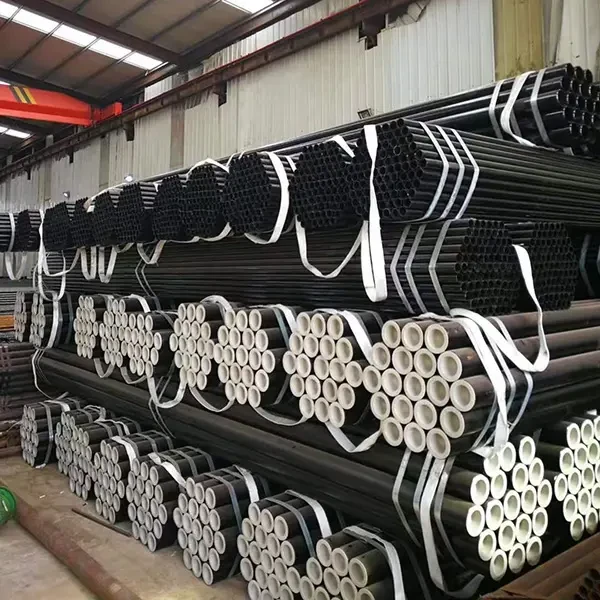
16mm steel tube is a hollow cylindrical section manufactured from various steel alloys, primarily carbon steel, alloy steel, and stainless steel. Its defining characteristic is its 16mm outer diameter, a common size in numerous industrial applications. Positioned within the broader steel product landscape, it serves as a critical component in structural frameworks, fluid conveyance systems, mechanical assemblies, and a diverse range of fabricated products. Core performance characteristics center around its mechanical strength (yield strength, tensile strength), dimensional accuracy, weldability, corrosion resistance (dependent on alloy), and pressure-bearing capacity. The selection of specific steel grade dictates its suitability for demanding applications, addressing concerns like temperature extremes, corrosive environments, and high-stress loading conditions. A key industry pain point revolves around ensuring consistent material properties and dimensional tolerances to maintain structural integrity and prevent premature failure in critical systems. Furthermore, traceability and compliance with industry standards are paramount to guarantee quality and safety.
Material Science & Manufacturing
The primary raw material for 16mm steel tubes is steel billet or bloom, produced through processes like basic oxygen steelmaking (BOS) or electric arc furnace (EAF) refining. Carbon content varies depending on the grade, ranging from low-carbon steels (<0.3% C) for enhanced ductility to high-carbon steels (>0.6% C) for increased hardness and strength. Alloying elements such as manganese, silicon, chromium, nickel, and molybdenum are added to tailor specific properties like corrosion resistance, weldability, and toughness. The manufacturing process typically involves several stages. First, the steel billet is heated and pierced to create a hollow shell, followed by rolling or extrusion to achieve the desired 16mm outer diameter and wall thickness. Seamless tubes are produced via processes like mandrel rolling or rotary piercing. Welded tubes are manufactured by forming steel strips into a cylindrical shape and welding the seam using electric resistance welding (ERW), submerged arc welding (SAW), or laser welding. Critical parameters during manufacturing include temperature control (heating, cooling), rolling speed, reduction ratio, welding current, and shielding gas composition. Precise control of these parameters directly influences the microstructure, grain size, and mechanical properties of the final product. Post-manufacturing processes encompass normalizing, annealing, quenching, and tempering to optimize the steel’s properties. Surface treatments like galvanizing, painting, or epoxy coating are applied to enhance corrosion resistance.
Performance & Engineering
The performance of 16mm steel tubes is dictated by its ability to withstand various stresses and environmental factors. Force analysis focuses on tensile stress (resistance to pulling forces), compressive stress (resistance to crushing forces), shear stress (resistance to sliding forces), torsional stress (resistance to twisting forces), and bending stress (resistance to deformation under load). The yield strength represents the stress at which permanent deformation begins, while the ultimate tensile strength indicates the maximum stress the material can withstand before fracturing. Environmental resistance is crucial, particularly in corrosive environments. The susceptibility to corrosion depends heavily on the steel alloy. Stainless steel grades (e.g., 304, 316) exhibit superior corrosion resistance due to the presence of chromium, forming a passive oxide layer. Carbon steel tubes require protective coatings or cathodic protection to mitigate corrosion. Compliance requirements vary based on application. For pressure-bearing applications (e.g., pipelines, hydraulic systems), tubes must meet standards like ASME B31.3 (Process Piping) or EN 10216-2 (Seamless Steel Tubes for Pressure Purposes). For structural applications, standards like ASTM A53 (Welded and Seamless Steel Pipe) or EN 10210 (Hollow Sections) are relevant. Functional implementation often involves joining techniques like welding, brazing, or mechanical fittings. Welding requires careful consideration of the steel grade and welding process to ensure a sound and durable joint. Non-destructive testing (NDT) methods like ultrasonic testing (UT), radiographic testing (RT), and magnetic particle inspection (MPI) are employed to detect defects and ensure structural integrity.
Technical Specifications
| Parameter | Typical Value (Carbon Steel) | Typical Value (Stainless Steel 304) | Unit |
|---|---|---|---|
| Outer Diameter | 16.0 | 16.0 | mm |
| Wall Thickness | 2.0 - 6.0 | 2.0 - 6.0 | mm |
| Yield Strength | 250 | 205 | MPa |
| Tensile Strength | 485 | 515 | MPa |
| Elongation | 20 | 30 | % |
| Corrosion Rate (in NaCl solution) | 0.1 – 1.0 | <0.01 | mm/year |
Failure Mode & Maintenance
16mm steel tubes are susceptible to various failure modes. Fatigue cracking occurs due to cyclic loading, initiating at stress concentrations (e.g., welds, notches). Corrosion is a significant concern, leading to localized pitting or general thinning of the tube wall. Stress corrosion cracking (SCC) can occur in specific corrosive environments, especially with susceptible steel grades. Denting or deformation can result from impact loads or excessive bending. Oxidation at high temperatures leads to scaling and reduction in wall thickness. Delamination can occur in welded tubes due to improper welding parameters or material defects. Maintenance strategies involve regular inspections for corrosion, cracks, and deformation. Non-destructive testing (NDT) methods like visual inspection, ultrasonic testing (UT), and liquid penetrant testing (PT) are used to detect defects. Protective coatings (e.g., paint, epoxy, galvanizing) should be reapplied periodically to maintain corrosion resistance. For pressure-bearing applications, hydrostatic testing should be performed to verify the integrity of the tube. Repair options include welding (for minor cracks and defects) and tube replacement (for severe damage). Preventive maintenance programs, incorporating regular inspections and timely repairs, are crucial to ensure the long-term reliability and safety of steel tube systems.
Industry FAQ
Q: What are the key differences between seamless and welded 16mm steel tubes, and which is preferable for high-pressure applications?
A: Seamless tubes are manufactured without a weld seam, offering superior strength and resistance to pressure. Welded tubes, created by joining steel strips, typically have slightly lower strength and can be susceptible to weld defects. For high-pressure applications, seamless tubes are generally preferred due to their higher burst pressure and lower risk of failure at the weld seam. However, advancements in welding technology (e.g., laser welding) have significantly improved the quality of welded tubes, making them suitable for moderate pressure applications when properly inspected and certified.
Q: How does the carbon content in 16mm steel tube affect its weldability?
A: Higher carbon content generally reduces weldability. Increased carbon leads to a harder microstructure, making it more prone to cracking during welding. Lower carbon steels are easier to weld, requiring less preheating and post-weld heat treatment. For high-carbon steel tubes, preheating is often necessary to reduce cooling rates and minimize the risk of hydrogen-induced cracking. Selecting the appropriate welding process and filler metal is also crucial.
Q: What are the common corrosion prevention methods for 16mm carbon steel tubes used in outdoor environments?
A: Common corrosion prevention methods include applying protective coatings such as paint, epoxy, galvanizing (zinc coating), or powder coating. Cathodic protection, using sacrificial anodes or impressed current systems, can also be employed to prevent corrosion. Regular inspection and maintenance of the coating are essential to ensure its effectiveness. Selecting a steel grade with improved corrosion resistance (e.g., weathering steel) can also extend service life.
Q: What NDT methods are typically used to inspect 16mm steel tubes for internal defects?
A: Ultrasonic testing (UT) is the most common NDT method for detecting internal defects such as cracks, voids, and inclusions in 16mm steel tubes. Radiographic testing (RT), using X-rays or gamma rays, can also be used, but it requires access to both sides of the tube and poses safety concerns. Eddy current testing (ET) is suitable for detecting surface and near-surface defects.
Q: What impact does heat treatment have on the mechanical properties of 16mm steel tubes?
A: Heat treatment significantly influences the mechanical properties of 16mm steel tubes. Normalizing refines the grain structure, improving strength and toughness. Annealing softens the steel, enhancing ductility and machinability. Quenching and tempering increase hardness and strength, but can reduce ductility. The specific heat treatment process is tailored to the steel grade and desired mechanical properties. Proper control of temperature and cooling rates is crucial to achieve the desired results.
Conclusion
The 16mm steel tube represents a foundational component across diverse industries, its utility rooted in a balance of mechanical strength, fabricability, and cost-effectiveness. Understanding the nuances of its material science—from alloy composition to manufacturing processes—is critical for selecting the appropriate grade for a given application. The performance characteristics, heavily influenced by factors like stress loading, environmental conditions, and adherence to relevant industry standards, dictate its long-term reliability.
Future developments in steel tube technology will likely focus on enhancing corrosion resistance through advanced coatings and alloy compositions, improving manufacturing processes to reduce costs and enhance dimensional accuracy, and developing more sophisticated NDT techniques for defect detection. Prioritizing preventative maintenance and rigorous quality control throughout the entire lifecycle of a steel tube system remains paramount to ensuring safety, minimizing downtime, and maximizing return on investment.
