Introduction
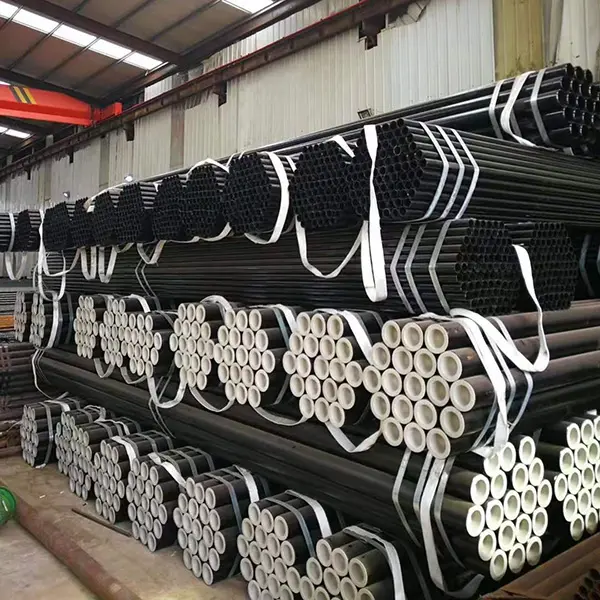
19mm steel tube, denoting a nominal diameter of 19 millimeters, represents a fundamental component within numerous industrial applications, spanning construction, mechanical engineering, fluid transfer systems, and beyond. Positioned within the broader steel tube manufacturing chain, it serves as a semi-finished product, undergoing further processing such as welding, bending, threading, or coating to achieve final component specifications. Its core performance characteristics – namely, structural integrity, pressure containment capability, and corrosion resistance – directly influence the reliability and longevity of the systems in which it is integrated. The selection of appropriate steel grade, manufacturing method, and protective coatings are critical considerations for optimizing performance in specific operating environments. This guide provides a comprehensive technical overview of 19mm steel tube, encompassing material science, manufacturing processes, performance parameters, failure modes, and relevant industry standards.
Material Science & Manufacturing
The primary raw material for 19mm steel tube is typically carbon steel, though alloy steels are increasingly employed to enhance specific properties. Common carbon steel grades include AISI 1018, 1020, and 1026, offering a balance of strength, ductility, and weldability. Alloy steels, such as ASTM A53 Grade B (containing manganese, silicon, and phosphorus) or API 5L grades (designed for pipeline applications), provide improved corrosion resistance, higher yield strength, and enhanced low-temperature toughness. The chemical composition significantly impacts mechanical properties; higher carbon content generally increases strength but reduces weldability. The manufacturing process commonly utilizes Electric Resistance Welding (ERW), where a steel strip is formed into a tube and welded along the seam using electrical resistance heating. Alternatively, seamless tubes are produced via processes like piercing or extrusion, eliminating the weld seam and offering superior pressure ratings. Key parameters during manufacturing include strip thickness, welding current (for ERW), rolling speed, and annealing temperature. Dimensional accuracy is controlled through continuous monitoring and adjustments during the forming and welding stages. Surface finishing, such as galvanizing, epoxy coating, or powder coating, is often applied to enhance corrosion resistance and improve aesthetic appeal. Heat treatment processes, like annealing and normalizing, are vital for achieving desired mechanical properties and relieving residual stresses induced during welding or forming.
Performance & Engineering
The performance of 19mm steel tube is fundamentally governed by its mechanical properties and resistance to environmental factors. Structural analysis often involves calculations of bending moment, torsional stress, and axial load capacity. Yield strength, tensile strength, and elongation are critical parameters determined through standardized testing (ASTM A36, ASTM A53). For pressure applications, hoop stress calculations are performed to ensure the tube can withstand internal or external pressures without failure. Fatigue resistance is a key consideration in applications involving cyclic loading, requiring evaluation of the S-N curve (stress vs. number of cycles to failure). Corrosion resistance depends heavily on the steel grade and any applied coatings. Exposure to chlorides, sulfates, or acidic environments can accelerate corrosion, necessitating the use of corrosion-resistant alloys (e.g., stainless steel) or protective coatings. Compliance requirements vary by industry and application. For example, pressure vessel applications are governed by ASME Boiler and Pressure Vessel Code, while pipeline applications adhere to API standards. Finite Element Analysis (FEA) is frequently employed to simulate stress distributions under various loading conditions and optimize tube geometry for enhanced performance. Consideration must be given to thermal expansion and contraction, particularly in systems operating at elevated temperatures, to prevent stress concentrations and potential failure.
Technical Specifications
| Parameter | AISI 1018 Steel | ASTM A53 Grade B Steel | API 5L X42 Steel | 304 Stainless Steel |
|---|---|---|---|---|
| Nominal Diameter (mm) | 19 | 19 | 19 | 19 |
| Wall Thickness (mm) | 2.0 - 6.0 | 2.0 - 8.0 | 2.0 - 12.0 | 2.0 - 6.0 |
| Yield Strength (MPa) | 205 | 250 | 345 | 205 |
| Tensile Strength (MPa) | 440 | 485 | 485 | 515 |
| Elongation (%) | 25 | 22 | 21 | 30 |
| Corrosion Resistance | Low (requires coating) | Moderate (requires coating) | Good (with appropriate coating) | Excellent |
Failure Mode & Maintenance
19mm steel tube is susceptible to several failure modes depending on the application and operating environment. Corrosion, particularly localized corrosion such as pitting and crevice corrosion, is a common cause of failure, leading to material loss and eventual perforation. Fatigue cracking can occur under cyclic loading, initiating at stress concentrations such as weld seams, dents, or corrosion pits. Stress corrosion cracking (SCC) arises from the combined effects of tensile stress and a corrosive environment. Denting and ovalization can occur due to external loads, reducing the tube's pressure containment capability. For welded tubes, weld defects (porosity, lack of fusion, incomplete penetration) can serve as initiation sites for cracks. Maintenance procedures include regular visual inspections for signs of corrosion, dents, or cracks. Non-destructive testing (NDT) methods, such as ultrasonic testing (UT) and radiographic testing (RT), can be employed to detect subsurface defects. Protective coatings should be inspected periodically and repaired as needed. For systems operating at high temperatures, thermal stress analysis and periodic inspections are crucial. In corrosive environments, regular monitoring of corrosion rates and implementation of corrosion mitigation strategies (e.g., cathodic protection, chemical inhibitors) are essential. Proper handling and storage procedures are also important to prevent mechanical damage.
Industry FAQ
Q: What is the difference between ERW and seamless steel tube, and which is preferable for high-pressure applications?
A: ERW (Electric Resistance Welded) tubes are manufactured by forming steel strip and welding the seam using electrical resistance. Seamless tubes are produced without a weld seam, typically through piercing or extrusion. For high-pressure applications, seamless tubes are generally preferred due to the absence of a weld seam, which eliminates a potential point of failure. However, advancements in ERW technology have produced high-quality welded tubes with properties approaching those of seamless tubes, making them suitable for certain high-pressure applications with appropriate quality control and testing.
Q: How does the carbon content in steel affect its weldability?
A: Higher carbon content generally reduces weldability. Carbon forms hard, brittle martensite during cooling after welding, increasing the risk of cracking. Lower carbon steels are easier to weld and exhibit better ductility in the weld zone. Preheating and post-weld heat treatment can be used to improve the weldability of higher carbon steels.
Q: What are the common methods for preventing corrosion in 19mm steel tube?
A: Common corrosion prevention methods include applying protective coatings (galvanizing, epoxy coating, powder coating), using corrosion-resistant alloys (stainless steel), employing cathodic protection, and utilizing chemical inhibitors. The choice of method depends on the severity of the corrosive environment and the cost constraints.
Q: What is the significance of the yield strength and tensile strength of a steel tube?
A: Yield strength represents the stress at which the material begins to deform permanently. Tensile strength represents the maximum stress the material can withstand before fracturing. These properties are critical for determining the tube's load-carrying capacity and its resistance to failure under stress. Higher yield and tensile strengths indicate a stronger material.
Q: How important is Non-Destructive Testing (NDT) for quality control of steel tubes?
A: NDT is crucial for identifying defects that may not be visible to the naked eye, such as subsurface cracks, porosity, and lack of fusion in welds. Methods like ultrasonic testing (UT) and radiographic testing (RT) allow for inspection without damaging the tube, ensuring its structural integrity and reliability. Regular NDT is essential for maintaining quality control and preventing failures.
Conclusion
The 19mm steel tube serves as a versatile and essential component in a multitude of industrial applications. Its performance characteristics are heavily influenced by material selection, manufacturing processes, and the presence of protective coatings. A thorough understanding of material science principles, mechanical properties, and potential failure modes is critical for ensuring its reliable operation and longevity. Selecting the appropriate steel grade and manufacturing technique based on the specific application requirements is paramount.
Future trends in 19mm steel tube technology are likely to focus on the development of high-strength, lightweight alloys, improved corrosion resistance through advanced coatings, and the implementation of advanced manufacturing techniques such as laser welding and additive manufacturing. Continued research and development in these areas will contribute to the advancement of more durable, efficient, and sustainable steel tube solutions.
