Introduction
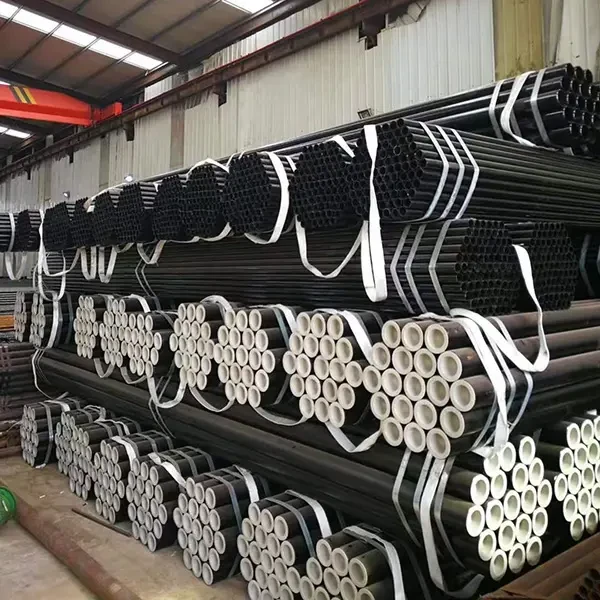
2-inch Schedule 40 carbon steel pipe, typically supplied in 20-foot lengths, represents a fundamental component in numerous industrial applications, including fluid conveyance, structural support, and mechanical systems. Its prevalence stems from a balance of cost-effectiveness, mechanical strength, and ease of fabrication. This guide provides a comprehensive technical analysis of this ubiquitous piping material, covering material science, manufacturing processes, performance characteristics, potential failure modes, and relevant industry standards. The price of 2-inch steel pipe (20 ft) is largely determined by steel market fluctuations, production volume, grade, and geographic location, though it remains a competitively priced material. Understanding the underlying technical attributes is crucial for optimal selection, application, and long-term operational reliability. This document will move beyond simple pricing to address the engineering considerations that impact life-cycle costs.
Material Science & Manufacturing
The primary material for 2-inch Schedule 40 pipe is typically ASTM A53 Grade B carbon steel. This grade consists predominantly of iron, with carefully controlled percentages of carbon (typically 0.25-0.32%), manganese (0.80-1.05%), phosphorus (max 0.04%), sulfur (max 0.05%), and silicon (max 0.30%). These elements dictate the steel’s weldability, ductility, and corrosion resistance. Manufacturing begins with hot rolling of steel billets into seamless or welded pipes. Seamless pipe is produced by piercing a solid billet, offering superior pressure ratings and resistance to fatigue cracking. Welded pipe, manufactured by processes like Electric Resistance Welding (ERW) or submerged arc welding (SAW), is generally more cost-effective. Key process controls during manufacturing include maintaining consistent wall thickness (Schedule 40 equates to a nominal wall thickness of 0.154 inches), accurate diameter, and proper heat treatment to achieve desired mechanical properties. Surface finishing processes such as pickling and oiling are applied to remove mill scale and provide corrosion protection during storage and transport. The internal surface finish is crucial for flow characteristics, with smoother surfaces reducing friction losses. The steel's microstructure, characterized by ferrite and pearlite phases, is susceptible to changes based on cooling rates during manufacturing and subsequent heat exposure in service.
Performance & Engineering
The performance of 2-inch steel pipe is dictated by several key engineering parameters. Yield strength (typically around 36,000 psi for A53 Grade B) determines the pipe’s resistance to permanent deformation under load. Tensile strength (around 58,000 psi) indicates the maximum stress the pipe can withstand before fracture. Important considerations include hoop stress, arising from internal pressure, and longitudinal stress due to bending moments or axial loads. The Sch. 40 designation directly impacts the pipe’s ability to handle pressure; higher schedules offer increased burst pressure capacity. Environmental resistance is a critical factor. Carbon steel is susceptible to corrosion in the presence of moisture and oxygen, necessitating protective coatings (e.g., galvanizing, epoxy coatings) or cathodic protection in corrosive environments. Fatigue resistance is paramount in applications involving cyclic loading, and weld quality significantly influences fatigue life. Compliance requirements, such as those specified by ASME B31.1 for power piping or ASME B31.3 for process piping, dictate design factors, inspection criteria, and material traceability. Proper support design is vital to prevent overstressing and maintain structural integrity. Thermal expansion and contraction must be accounted for in piping layouts to avoid stresses caused by restrained movement.
Technical Specifications
| Parameter | Value (Typical - A53 Grade B) | Test Method | Units |
|---|---|---|---|
| Nominal Pipe Size | 2 inches | ANSI/ASME B36.10M | inches |
| Schedule | 40 | ANSI/ASME B36.10M | - |
| Outside Diameter | 2.375 | ANSI/ASME B36.10M | inches |
| Wall Thickness | 0.154 | ANSI/ASME B36.10M | inches |
| Yield Strength | 36,000 | ASTM A370 | psi |
| Tensile Strength | 58,000 | ASTM A370 | psi |
| Elongation | 20 | ASTM A370 | % |
Failure Mode & Maintenance
Common failure modes for 2-inch steel pipe include corrosion (uniform, pitting, galvanic), erosion (from high-velocity fluids), fatigue cracking (due to cyclic stress), and stress corrosion cracking (SCC – particularly in chloride-containing environments). Weld defects (porosity, inclusions, lack of fusion) can act as stress concentrators and initiate cracks. External loads exceeding design limits can lead to bending or buckling failure. Maintenance strategies include regular visual inspections for signs of corrosion or damage, non-destructive testing (NDT) methods like ultrasonic testing (UT) or radiographic testing (RT) to detect internal flaws, and application of protective coatings. Periodic hydrostatic testing verifies the pipe’s pressure-holding capacity. For SCC-prone environments, materials with improved SCC resistance (e.g., low-alloy steels) or the implementation of corrosion inhibitors may be necessary. Proper drainage systems are essential to prevent standing water and localized corrosion. In the event of a detected flaw, repair options include welding (following qualified procedures) or pipe replacement. Detailed record-keeping of inspection and maintenance activities is critical for tracking pipe integrity and predicting remaining service life.
Industry FAQ
Q: What is the difference between seamless and welded pipe, and when should each be used?
A: Seamless pipe is produced from a single billet of steel, offering superior strength and resistance to fatigue cracking, making it ideal for high-pressure applications and critical services. Welded pipe is generally more cost-effective but may have lower strength and fatigue life. Welded pipe is suitable for lower-pressure systems where cost is a primary concern and frequent inspection is feasible.
Q: How does the Schedule number (e.g., Sch. 40) affect the pipe’s performance?
A: The Schedule number corresponds to the nominal wall thickness of the pipe. Higher schedule numbers indicate thicker walls, resulting in higher pressure ratings and greater resistance to mechanical stress. However, thicker walls also increase weight and cost.
Q: What are the common corrosion mitigation strategies for carbon steel pipe?
A: Common strategies include applying protective coatings (e.g., epoxy, galvanizing), using corrosion inhibitors in the fluid being conveyed, implementing cathodic protection (sacrificial anodes or impressed current), selecting corrosion-resistant alloys for critical components, and ensuring proper drainage to prevent standing water.
Q: What NDT methods are typically used to inspect steel pipe for flaws?
A: Commonly used NDT methods include visual inspection (VT), ultrasonic testing (UT) for detecting internal flaws, radiographic testing (RT) for identifying cracks and porosity, magnetic particle testing (MT) for surface and near-surface defects, and liquid penetrant testing (PT) for surface flaws.
Q: How does temperature affect the mechanical properties of steel pipe?
A: Elevated temperatures generally reduce the yield strength and tensile strength of steel, making it more susceptible to creep and stress rupture. Low temperatures can increase brittleness and reduce impact resistance. Material selection and design considerations must account for the operating temperature range.
Conclusion
2-inch Schedule 40 carbon steel pipe remains a workhorse material in a wide range of industries due to its favorable combination of strength, cost, and manufacturability. However, successful application necessitates a thorough understanding of its material properties, manufacturing processes, and potential failure modes. Proper design, fabrication, inspection, and maintenance are crucial for ensuring long-term reliability and preventing catastrophic failures.
Future trends involve increased adoption of higher-strength steels, advanced coating technologies, and predictive maintenance techniques utilizing sensor data and data analytics to optimize pipe integrity and extend service life. A holistic approach, encompassing material selection, engineering analysis, and proactive maintenance, will continue to be paramount for maximizing the value and minimizing the risks associated with this essential piping component.
