Introduction
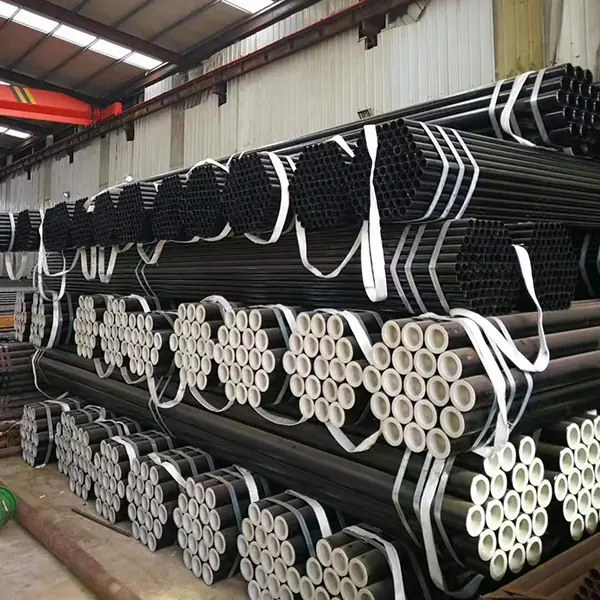
20 foot 2 inch steel pipe, commonly referred to as Schedule 40 steel pipe, represents a foundational component in numerous industrial applications. Its technical position within the supply chain is as a semi-finished product, fabricated from steel billets or blooms and processed through various forming and finishing operations. The pipe's core performance characteristics are defined by its pressure-bearing capacity, structural integrity, weldability, and corrosion resistance. Widely deployed in industries such as oil and gas, construction, water distribution, and manufacturing, this pipe size offers a balance between flow capacity and structural robustness. Understanding its material composition, manufacturing nuances, and potential failure modes is crucial for ensuring long-term operational reliability and safety. This guide provides an in-depth exploration of these facets, targeting engineers, procurement professionals, and quality control personnel involved in the specification, application, and maintenance of 20 foot 2 inch steel pipe.
Material Science & Manufacturing
The predominant material for 20 foot 2 inch steel pipe is carbon steel, typically conforming to ASTM A53 Grade B or API 5L specifications. These standards dictate precise chemical compositions, primarily iron with controlled amounts of carbon (typically 0.05% - 0.25%), manganese (0.30% - 1.00%), silicon (0.02% - 0.30%), phosphorus (max 0.04%), and sulfur (max 0.03%). The carbon content directly influences the steel's hardness and weldability; higher carbon content increases hardness but reduces weldability. Manganese enhances strength and hardenability. Sulfur and phosphorus are generally minimized as they can negatively impact ductility and weld integrity.
Manufacturing typically involves a seamless or welded process. Seamless pipe is produced via rotary piercing of steel billets, followed by mandrel finishing to achieve precise dimensions and wall thickness. This process yields superior strength and pressure-bearing capacity due to the absence of a weld seam. Welded pipe, conversely, is manufactured by forming steel strips into a cylindrical shape and subsequently welding the seam, typically using electric resistance welding (ERW) or submerged arc welding (SAW). SAW offers higher deposition rates and improved weld properties, particularly for thicker-walled pipes. Key manufacturing parameters requiring strict control include temperature during forming and welding, cooling rates, and dimensional tolerances. Non-destructive testing (NDT), such as ultrasonic testing (UT) and radiographic testing (RT), is essential to verify weld integrity and detect any internal flaws. Surface finishing operations, including pickling and oiling, are applied to remove mill scale and provide corrosion protection during storage and transportation.
Performance & Engineering
The performance of 20 foot 2 inch steel pipe is critically dependent on its ability to withstand internal pressure, external loads, and environmental factors. Hydrostatic testing, as outlined in API 5L, is a standard procedure to verify pressure integrity. The hoop stress (σh) induced by internal pressure (P) is calculated using the Barlow’s formula: σh = (P D) / (2 t), where D is the outer diameter and t is the wall thickness. Engineers must ensure that the calculated hoop stress remains below the specified yield strength of the steel, incorporating appropriate safety factors. External loads, such as soil loading in buried pipelines or weight from supported structures, induce longitudinal and bending stresses, which require consideration in structural design.
Environmental resistance is a key engineering concern. Corrosion, particularly in the presence of moisture, chlorides, or acidic compounds, can lead to material degradation and eventual failure. Corrosion prevention strategies include applying protective coatings (e.g., epoxy, polyurethane, polyethylene), utilizing cathodic protection systems, and selecting appropriate steel grades with enhanced corrosion resistance (e.g., low-alloy steels). Furthermore, the pipe’s performance in extreme temperatures must be assessed. High temperatures can reduce yield strength and creep resistance, while low temperatures can lead to brittle fracture, particularly in the heat-affected zone of welded pipes. Compliance with relevant industry codes and standards, such as ASME B31.3 for process piping and ANSI/API 1104 for liquid pipelines, is mandatory to ensure safe and reliable operation.
Technical Specifications
| Parameter | Specification (ASTM A53 Grade B) | Specification (API 5L X42) | Units |
|---|---|---|---|
| Outer Diameter | 2.375 | 2.375 | inches |
| Wall Thickness | 0.154 (Schedule 40) | 0.179 (Typical) | inches |
| Yield Strength (Minimum) | 36,000 | 42,000 | psi |
| Tensile Strength (Minimum) | 58,000 | 65,000 | psi |
| Elongation (Minimum) | 20 | 20 | % |
| Hydrostatic Test Pressure (Minimum) | 2,340 | 2,790 | psi |
Failure Mode & Maintenance
Common failure modes for 20 foot 2 inch steel pipe include corrosion-induced pitting and erosion, stress corrosion cracking (SCC), fatigue cracking due to cyclic loading, and weld defects. Corrosion often initiates at surface imperfections or areas with localized stress concentrations. SCC is particularly prevalent in environments containing specific corrosive agents, such as chlorides or hydrogen sulfide. Fatigue cracking occurs under repeated stress cycles, even below the yield strength, leading to gradual crack propagation and eventual fracture. Weld defects, such as porosity, inclusions, and incomplete fusion, weaken the weld joint and increase the risk of failure.
Preventive maintenance is crucial to mitigate these risks. Regular inspections, utilizing visual examination, ultrasonic testing (UT), and radiographic testing (RT), can detect early signs of corrosion, cracking, or weld defects. Protective coatings should be inspected for damage and repaired promptly. Cathodic protection systems require periodic monitoring to ensure their effectiveness. For pipelines subjected to cyclic loading, stress analysis should be performed to assess fatigue life and identify areas requiring reinforcement or replacement. Proper cleaning and removal of debris are essential to prevent erosion and corrosion. If cracks are detected, they should be evaluated by a qualified engineer to determine the severity and implement appropriate repair strategies, such as welding or mechanical clamping. Routine pressure testing should be conducted to verify the integrity of the pipeline system.
Industry FAQ
Q: What is the impact of sulfur content on the weldability of 2 inch steel pipe?
A: Higher sulfur content in steel reduces its weldability. Sulfur forms iron sulfide at grain boundaries, which lowers the melting temperature in those regions and promotes hot cracking during welding. Steel specifications typically limit sulfur content to minimize this risk. Lower sulfur content steels, or the use of specialized welding procedures, are recommended for critical applications.
Q: How does wall thickness affect the pressure rating of the pipe?
A: Wall thickness is inversely proportional to the stress in the pipe wall for a given internal pressure. Increasing the wall thickness directly increases the pipe's pressure rating, allowing it to withstand higher internal pressures without exceeding the yield strength of the material. The relationship is defined by Barlow's formula.
Q: What are the differences between API 5L and ASTM A53 specifications?
A: Both specify carbon steel pipe, but API 5L is primarily focused on pipeline applications (oil and gas transmission), while ASTM A53 is a more general specification for pressure and structural applications. API 5L typically includes more stringent requirements for chemical composition, mechanical properties, and testing, particularly related to fracture toughness and sour service applications.
Q: What is the significance of Charpy V-notch testing?
A: Charpy V-notch testing assesses the impact toughness of steel at different temperatures. It measures the energy absorbed during fracture, indicating the steel’s resistance to brittle failure. This is particularly important for applications in cold climates or where impact loading is a concern. Lower impact toughness values indicate a higher susceptibility to brittle fracture.
Q: What are the common coating systems used for corrosion protection of steel pipe?
A: Common coating systems include epoxy coatings, polyurethane coatings, polyethylene coatings (often applied via three-layer polyethylene or FBE), and galvanized coatings. The choice of coating depends on the specific environment and application requirements. Epoxy and polyurethane offer good chemical resistance, while polyethylene provides excellent barrier properties. Galvanizing provides sacrificial protection.
Conclusion
20 foot 2 inch steel pipe remains a critical component across numerous industries due to its cost-effectiveness, readily available manufacturing processes, and reliable performance when properly specified and maintained. A thorough understanding of its material properties, manufacturing techniques, and potential failure modes is paramount for ensuring long-term operational safety and efficiency. The selection of appropriate steel grades, adherence to relevant industry standards, and implementation of comprehensive corrosion prevention and inspection programs are all essential elements of a robust engineering strategy.
Looking forward, advancements in materials science and coating technologies will likely lead to further improvements in the durability and corrosion resistance of steel pipe. The increasing adoption of non-destructive testing methods, such as advanced ultrasonic techniques and remotely operated inspection vehicles (ROVs), will enable more proactive identification of potential defects and preventative maintenance. Continued research into stress corrosion cracking mechanisms and the development of more resistant alloys will also be crucial for extending the service life of steel pipe infrastructure.
