Introduction
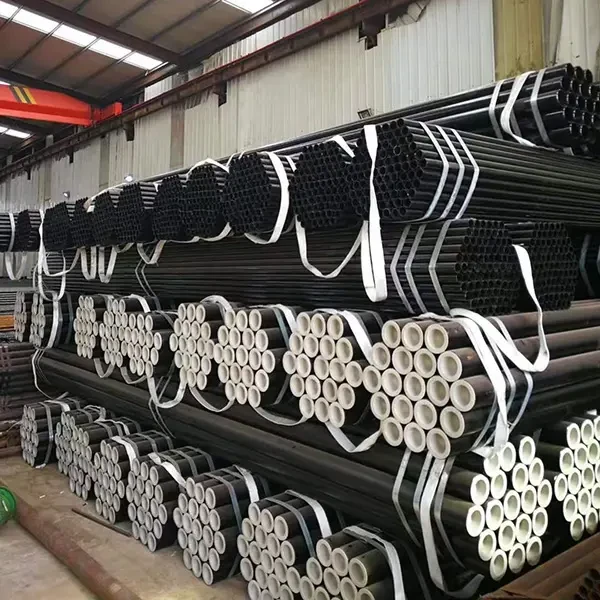
25mm stainless steel pipe represents a standardized dimension within the broader family of stainless steel tubing, commonly employed across diverse industrial sectors. Its technical position in the supply chain lies as a fabricated product, originating from stainless steel billet or coil, undergoing processes like extrusion, drawing, and welding. The core performance characteristics – corrosion resistance, mechanical strength, and hygienic properties – dictate its application in critical systems such as fluid transfer, structural support, and process piping. The 25mm outer diameter is frequently selected for its balance between flow capacity and structural rigidity, fitting conveniently into standard pipe fittings and components. Addressing industry pain points, 25mm stainless steel pipe aims to provide a durable, reliable, and long-lasting solution mitigating issues associated with carbon steel corrosion and material degradation, especially in challenging environments.
Material Science & Manufacturing
The primary material for 25mm stainless steel pipe is typically Type 304 or 316 stainless steel. Type 304 comprises approximately 18-20% chromium, 8-10.5% nickel, and less than 0.08% carbon, providing excellent corrosion resistance in many environments. Type 316 adds 2-3% molybdenum, significantly enhancing resistance to chloride corrosion, making it suitable for marine and chemical processing applications. Raw material selection focuses on verifying chemical composition using X-ray fluorescence (XRF) and mechanical properties like tensile strength and yield strength through standardized testing (ASTM A240).
Manufacturing commonly involves the following processes: Electric Resistance Welding (ERW) for seamless and welded pipe. ERW employs high-frequency current to fuse the edges of a steel strip, forming a longitudinal seam. Seamless pipe is produced via extrusion or rotary piercing, eliminating the weld seam for higher pressure applications. Following forming, pipes undergo annealing to relieve stress, pickling to remove surface oxides, and passivation to create a protective chromium oxide layer. Critical parameters during manufacturing include maintaining precise tolerances on diameter and wall thickness (verified through ultrasonic testing - UT), controlling weld quality (radiographic testing - RT and liquid penetrant testing - LPT), and ensuring surface finish meets specified requirements (Ra values measured via surface profilometry). Quality control is paramount to minimize defects like porosity, inclusions, and dimensional inconsistencies which can compromise performance.

Performance & Engineering
The performance of 25mm stainless steel pipe is governed by its mechanical properties and resistance to external factors. Force analysis considers both internal pressure and external loads (bending moments, axial forces). Burst pressure calculations utilize Barlow’s formula (P = 2St/D, where P=pressure, S=tensile strength, t=wall thickness, D=diameter) to determine the maximum pressure the pipe can withstand without failure. Environmental resistance, particularly corrosion resistance, is critically dependent on the grade of stainless steel. In chloride-rich environments, pitting corrosion and crevice corrosion are potential failure modes, necessitating the use of Type 316 or specialized alloy grades.
Compliance requirements vary based on the application. For potable water systems, pipes must meet NSF/ANSI 61 standards for lead content and extractable contaminants. For pressure vessels and piping systems, ASME Boiler and Pressure Vessel Code (Section IX) dictates welding procedures and qualification requirements. In the pharmaceutical industry, compliance with 3-A Sanitary Standards is essential for hygienic design and cleanability. Functional implementation requires careful consideration of thermal expansion and contraction; expansion loops or flexible connectors may be required to accommodate temperature fluctuations and prevent stress on the pipe and connected components.
Technical Specifications
| Parameter | Type 304 | Type 316 | Unit |
|---|---|---|---|
| Outer Diameter | 25 | 25 | mm |
| Wall Thickness | 1.5 - 3.0 | 1.5 - 3.0 | mm |
| Tensile Strength | 517 | 530 | MPa |
| Yield Strength | 205 | 230 | MPa |
| Elongation | 40 | 35 | % |
| Corrosion Rate (in seawater) | 0.03 | 0.01 | mm/year |
Failure Mode & Maintenance
Common failure modes for 25mm stainless steel pipe include pitting corrosion (especially in chloride environments), crevice corrosion (at joints and under gaskets), stress corrosion cracking (SCC, induced by tensile stress and corrosive media), fatigue cracking (due to cyclic loading), and erosion corrosion (from high-velocity fluids containing abrasive particles). Failure analysis often reveals the root cause through metallographic examination, chemical analysis, and fracture surface morphology studies (scanning electron microscopy - SEM).
Preventative maintenance is crucial for extending pipe lifespan. Regular visual inspections should identify signs of corrosion, erosion, or mechanical damage. Hydrostatic testing (applying internal pressure to a predetermined level) can detect leaks and weaknesses. Passivation treatments can restore the protective chromium oxide layer. Cleaning procedures should avoid abrasive materials that can scratch the surface and create sites for corrosion. For systems handling corrosive fluids, cathodic protection may be employed to reduce corrosion rates. In cases of localized corrosion, repairs may involve patching or replacing the affected section of pipe. Proper support and anchoring are essential to minimize stress and vibration, reducing the risk of fatigue cracking.
Industry FAQ
Q: What is the primary difference between Type 304 and Type 316 stainless steel pipe in terms of corrosion resistance?
A: The key difference lies in the molybdenum content. Type 316 contains 2-3% molybdenum, which significantly enhances its resistance to chloride-induced pitting and crevice corrosion, making it superior to Type 304 in marine environments, chemical processing, and applications involving salt exposure.
Q: How does wall thickness affect the pressure rating of 25mm stainless steel pipe?
A: Increasing wall thickness directly increases the pipe's pressure rating. The relationship is linear, as described by Barlow’s formula. A thicker wall provides greater resistance to hoop stress induced by internal pressure, allowing it to withstand higher operating pressures safely.
Q: What are the implications of improper welding during the fabrication of stainless steel piping systems?
A: Improper welding can lead to various defects, including porosity, inclusions, incomplete fusion, and residual stress. These defects can compromise the pipe's mechanical strength and corrosion resistance, potentially causing leaks or catastrophic failure. Following ASME Section IX and employing qualified welders are essential.
Q: What is passivation, and why is it important for stainless steel pipe?
A: Passivation is a chemical treatment that creates a protective chromium oxide layer on the surface of the stainless steel. This passive layer inhibits corrosion by preventing the underlying metal from reacting with the environment. It’s crucial after fabrication (welding, machining) to restore corrosion resistance.
Q: What are the common methods for detecting leaks in stainless steel pipe?
A: Common methods include visual inspection for surface leaks, hydrostatic testing (pressurizing the pipe with water and observing for pressure drops), ultrasonic leak detection (using sound waves to identify leaks), and tracer gas detection (introducing a non-toxic tracer gas into the pipe and detecting its presence outside the pipe).
Conclusion
25mm stainless steel pipe remains a critical component in numerous industrial applications due to its inherent corrosion resistance, mechanical strength, and hygienic qualities. Understanding the nuances of material selection (Type 304 vs. Type 316), manufacturing processes, and performance parameters – coupled with diligent maintenance and adherence to industry standards – is paramount for ensuring long-term reliability and minimizing the risk of failure. Proper engineering considerations, including force analysis and compliance with relevant codes, are crucial for safe and efficient operation.
Future trends will likely focus on the development of advanced stainless steel alloys with enhanced corrosion resistance and improved weldability, alongside the integration of smart monitoring technologies for predictive maintenance. As industries demand higher levels of performance and sustainability, the continued optimization of 25mm stainless steel pipe – in both its material composition and manufacturing processes – will remain a key area of innovation.
