Introduction
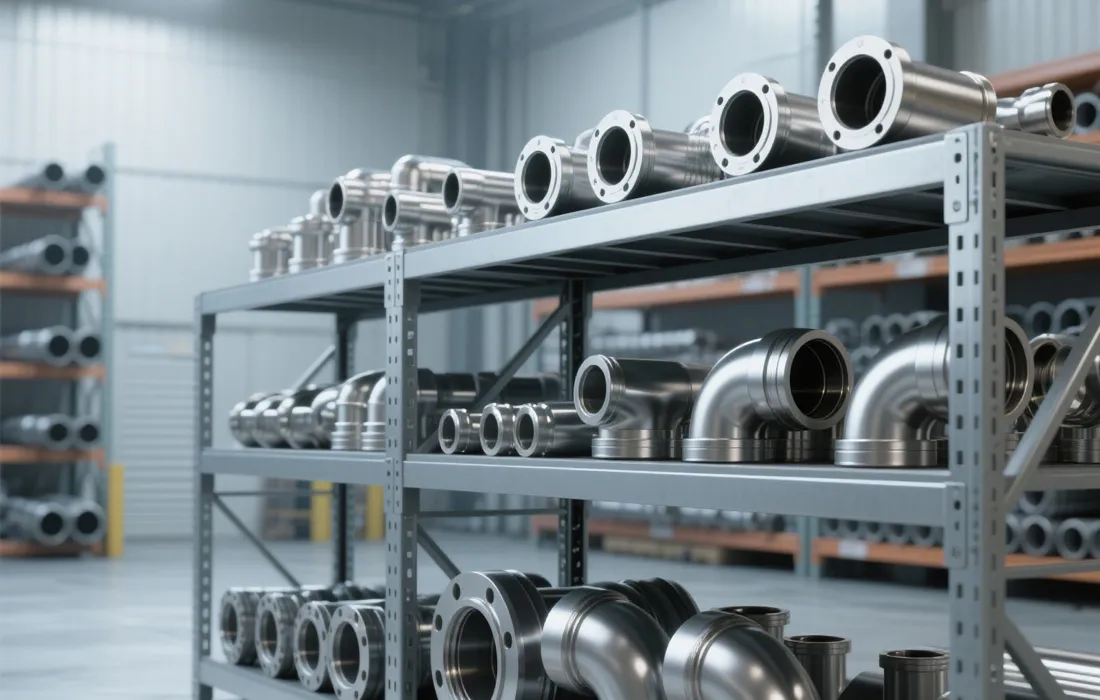
25mm stainless steel tube is a hollow, cylindrical section manufactured from various grades of stainless steel, most commonly 304/304L and 316/316L. Within the industrial landscape, it occupies a critical position as a fluid conveyance component, structural element, and hygienic conduit across a broad spectrum of sectors including food processing, pharmaceutical, chemical, oil & gas, construction, and automotive. Its core performance characteristics revolve around corrosion resistance, mechanical strength, weldability, and hygienic properties, dictated by its alloy composition and manufacturing processes. The demand for this product is driven by the increasing need for durable, corrosion-resistant materials in demanding environments and the ongoing modernization of industrial infrastructure. The selection of the appropriate stainless steel grade and wall thickness is paramount to ensuring optimal performance and longevity in specific applications, addressing industry pain points of premature failure, maintenance costs, and regulatory compliance.
Material Science & Manufacturing
The foundation of 25mm stainless steel tube lies in its material science. The most frequently utilized grades are austenitic stainless steels – 304/304L and 316/316L. 304/304L contains approximately 18-20% chromium and 8-10% nickel, providing excellent corrosion resistance in many environments. The “L” designation indicates low carbon content, minimizing carbide precipitation during welding, thereby enhancing weld corrosion resistance. 316/316L builds upon this composition with the addition of 2-3% molybdenum, dramatically improving resistance to chloride corrosion, particularly pitting and crevice corrosion – a common failure mode in marine and chemical processing applications. Raw materials are typically sourced as stainless steel billets or blooms.
Manufacturing processes primarily involve extrusion welding and seamless tube drawing. Extrusion welding starts with forming a solid billet into a hollow tube shape, followed by welding the seam and subsequent finishing operations. Seamless tube manufacturing begins with piercing a solid billet to create a hollow shell, followed by drawing through progressively smaller dies to achieve the desired 25mm outer diameter and wall thickness. Key parameter controls include temperature management during hot working (critical for grain structure refinement and preventing defects), reduction rate during cold drawing (affecting mechanical properties and surface finish), and annealing processes (to relieve stress and restore ductility). Surface finishing operations – pickling and passivation – are crucial for maximizing corrosion resistance by removing surface contaminants and forming a protective chromium oxide layer. Improper annealing or insufficient pickling can lead to localized corrosion and reduced lifespan.
Performance & Engineering
The performance of 25mm stainless steel tube is governed by a complex interplay of mechanical and environmental factors. Force analysis, particularly under pressure or bending loads, dictates the required wall thickness to prevent yielding or collapse. Stress concentration at weld seams or due to geometric discontinuities (e.g., bends) must be carefully considered in the design phase. Environmental resistance is paramount; exposure to chlorides, acids, or high temperatures can initiate corrosion. The chromium content forms a passive layer protecting the underlying steel, but this layer can be compromised by aggressive environments or mechanical damage.
Compliance requirements vary by industry. Food and pharmaceutical applications necessitate adherence to 3-A Sanitary Standards, ensuring cleanability and preventing bacterial growth. Pressure vessel applications require compliance with ASME Boiler and Pressure Vessel Code Section IX (Welding and Brazing Qualifications), governing welding procedures and non-destructive examination techniques. Oil & gas applications demand compliance with API 5L and NACE standards, addressing material selection for sour service environments. Furthermore, dimensional tolerances are critical; non-conformance can impact fit-up and system integrity. Finite element analysis (FEA) is frequently employed to optimize tube design and predict performance under various loading conditions. Material certifications (e.g., mill test reports) are essential for verifying compliance with specified material standards.
Technical Specifications
| Grade | Outer Diameter (mm) | Wall Thickness (mm) | Tensile Strength (MPa) | Yield Strength (MPa) | Corrosion Resistance |
|---|---|---|---|---|---|
| 304/304L | 25 | 1.5 | 515-725 | 205-310 | Excellent in many environments; susceptible to pitting in chloride environments. |
| 304/304L | 25 | 2.0 | 515-725 | 205-310 | Excellent in many environments; susceptible to pitting in chloride environments. |
| 316/316L | 25 | 1.5 | 485-690 | 170-240 | Superior to 304/304L in chloride environments; enhanced resistance to pitting and crevice corrosion. |
| 316/316L | 25 | 2.0 | 485-690 | 170-240 | Superior to 304/304L in chloride environments; enhanced resistance to pitting and crevice corrosion. |
| 316/316L | 25 | 3.0 | 485-690 | 170-240 | Superior to 304/304L in chloride environments; enhanced resistance to pitting and crevice corrosion. |
| ASTM A276 Type 304 | 25 | Variable | 515-725 | 205-310 | Conforms to ASTM A276 standards for corrosion resistance. |
Failure Mode & Maintenance
Common failure modes in 25mm stainless steel tube include pitting corrosion (initiated by chloride attack), crevice corrosion (occurring in shielded areas), stress corrosion cracking (induced by tensile stress and corrosive environments), fatigue cracking (resulting from cyclic loading), and erosion corrosion (caused by abrasive particles in fluid streams). Weld defects – porosity, incomplete fusion, or cracking – can also lead to premature failure. Galvanic corrosion can occur when stainless steel is coupled with dissimilar metals in an electrolyte.
Preventive maintenance is crucial for maximizing lifespan. Regular inspections for visual signs of corrosion (e.g., pitting, discoloration) are essential. Non-destructive testing (NDT) methods – ultrasonic testing, radiographic testing, or eddy current testing – can detect subsurface defects. Proper cleaning procedures, utilizing approved cleaning agents, should be implemented to remove contaminants. For applications involving chlorides, periodic passivation treatments can restore the protective chromium oxide layer. Weld inspections should be conducted to ensure weld integrity. Addressing sources of vibration or cyclic loading can mitigate fatigue cracking. Replacing damaged sections proactively avoids catastrophic failures and costly downtime. When storing, tubes should be protected from moisture and contaminants.
Industry FAQ
Q: What is the difference between 304L and 304 stainless steel, and which is preferable for welding?
A: The key difference is carbon content. 304L has a lower carbon content (typically <0.03%) than 304 (typically <0.08%). This lower carbon minimizes carbide precipitation during welding, which can deplete chromium and reduce weld corrosion resistance. Therefore, 304L is generally preferred for welding, particularly in corrosive environments, as it offers better weldability and corrosion resistance post-weld.
Q: How does molybdenum in 316/316L impact corrosion resistance compared to 304/304L?
A: Molybdenum significantly enhances resistance to pitting and crevice corrosion, especially in chloride-containing environments. Chloride ions can penetrate the passive chromium oxide layer, initiating localized corrosion. Molybdenum stabilizes the passive film, making it more resistant to chloride attack. This makes 316/316L the preferred choice for marine applications, chemical processing, and environments with high chloride concentrations.
Q: What are the limitations of stainless steel regarding corrosion, and are there scenarios where it's not suitable?
A: While highly corrosion-resistant, stainless steel isn't immune to all forms of corrosion. It’s susceptible to pitting and crevice corrosion in chloride environments, stress corrosion cracking under specific tensile stress and corrosive conditions, and galvanic corrosion when coupled with dissimilar metals. It’s also not ideal for extremely high temperatures (above 500°C) where oxidation becomes significant. In highly acidic or alkaline environments, certain grades may not perform adequately.
Q: What is passivation, and why is it important for stainless steel tubing?
A: Passivation is a chemical treatment used to remove free iron from the surface of stainless steel, enhancing the formation of a protective chromium oxide layer. This layer is responsible for the stainless steel's corrosion resistance. It's crucial because surface contaminants (e.g., iron particles from cutting or machining) can disrupt the passive layer, leading to localized corrosion. Passivation ensures a uniform, robust protective layer.
Q: What non-destructive testing (NDT) methods are commonly used to inspect 25mm stainless steel tubes for defects?
A: Common NDT methods include ultrasonic testing (UT) to detect internal flaws and measure wall thickness, radiographic testing (RT) to identify internal defects via X-rays, eddy current testing (ET) to detect surface and near-surface flaws, and dye penetrant testing (PT) to reveal surface cracks and discontinuities. The choice of method depends on the specific defect being sought and the application requirements.
Conclusion
25mm stainless steel tube stands as a vital component across numerous industries, its efficacy rooted in the judicious selection of alloy grade and meticulous manufacturing practices. The austenitic stainless steels, 304/304L and 316/316L, provide a balance of corrosion resistance, mechanical strength, and weldability that caters to a wide range of applications. Understanding the specific environmental factors and operating conditions is paramount to mitigating potential failure modes, such as pitting, crevice corrosion, and stress corrosion cracking.
Looking forward, advancements in alloy development and surface treatment technologies will further enhance the performance and lifespan of these tubes. The adoption of predictive maintenance strategies, incorporating NDT and data analytics, will allow for proactive identification of potential issues, minimizing downtime and optimizing operational efficiency. Continued adherence to international standards and best practices is critical to ensuring the reliable and safe utilization of 25mm stainless steel tube in demanding industrial settings.
