Introduction
Galvanized tubular steel represents a significant advancement in structural material application, particularly within the construction, infrastructure, and manufacturing sectors. It consists of carbon steel tubing coated with a layer of zinc through a process known as galvanization, typically hot-dip galvanizing. This process fundamentally alters the steel’s corrosion resistance, elevating its service life in harsh environments. Positioned within the industry chain as a semi-finished product, galvanized tubular steel serves as a foundational component for diverse applications, including scaffolding, fencing, handrails, structural frameworks, automotive components, and fluid conveyance systems. Core performance characteristics revolve around tensile strength, yield strength, ductility, corrosion protection afforded by the zinc coating, and weldability. The zinc layer functions as a barrier, providing cathodic protection even if the coating is scratched, preventing the underlying steel from rusting. Understanding these characteristics is crucial for engineers and procurement professionals when selecting materials for demanding applications.
Material Science & Manufacturing
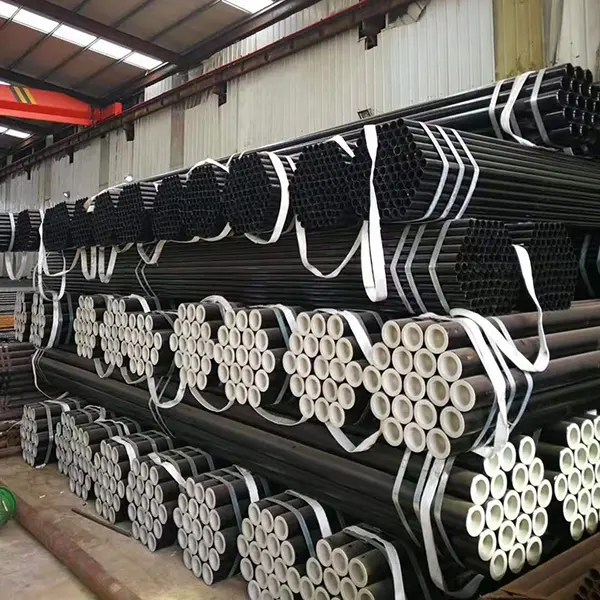
The base material for galvanized tubular steel is typically carbon steel, with common grades including ASTM A53, A500 (Grade B), and API 5L. These steels consist primarily of iron with varying concentrations of carbon (typically 0.05% to 0.25%), manganese, silicon, and phosphorus. The manufacturing process begins with the production of seamless or welded steel tubing. Seamless tubing is created by piercing a solid billet of steel, while welded tubing is formed by rolling steel strips and joining the edges via electric resistance welding (ERW) or high-frequency induction welding (HFIW). Post-tube formation, the steel undergoes a surface preparation process critical for galvanization. This includes cleaning to remove mill scale, rust, and other contaminants through pickling (using acids like hydrochloric or sulfuric acid) and fluxing. The galvanization process itself most commonly utilizes hot-dip galvanizing. Here, the steel tube is immersed in a molten zinc bath (typically 98% pure zinc) at a temperature of approximately 450°C (842°F). A metallurgical reaction occurs, forming layers of zinc-iron alloy (zeta, gamma, delta, and epsilon phases) bonded to the steel surface, culminating in a final outer layer of pure zinc. Parameter control is paramount; bath composition, steel surface cleanliness, immersion time, and cooling rate directly impact coating thickness, uniformity, and adhesion. Variations include pre-galvanized tubing where the steel is galvanized prior to fabrication, and after-fabrication galvanizing for complex structures.
Performance & Engineering
The performance of galvanized tubular steel is governed by several engineering considerations. Structural analysis, employing principles of mechanics of materials, determines load-bearing capacity based on section modulus, moment of inertia, and material yield strength. Buckling is a critical failure mode for thin-walled tubes under compressive loads, necessitating careful selection of wall thickness and support conditions. Environmental resistance is central to the material’s longevity. The zinc coating provides sacrificial protection against corrosion, meaning the zinc corrodes preferentially, protecting the steel. However, the rate of zinc corrosion is influenced by atmospheric conditions (sulfur dioxide levels, salinity, humidity) and exposure to chlorides. Cathodic protection effectiveness diminishes over time, necessitating periodic inspection and potential recoating. Compliance requirements vary by application. Construction projects must adhere to building codes (IBC, Eurocodes) dictating minimum material specifications and corrosion protection levels. Automotive applications require compliance with industry standards regarding fatigue resistance and impact strength. Weldability is another key engineering factor; while galvanized steel can be welded, precautions must be taken to avoid galvanizing fumes (zinc oxide) which are hazardous. Proper ventilation and use of appropriate welding parameters (e.g., lower heat input) are essential. Furthermore, the thermal expansion coefficient difference between steel and zinc necessitates careful consideration in designs involving joined dissimilar materials.
Technical Specifications
| Parameter | ASTM A53 Grade B | ASTM A500 Grade B | API 5L X42 | Hot-Dip Galvanizing Thickness (Typical) |
|---|---|---|---|---|
| Yield Strength (MPa) | 250 | 250 | 345 | N/A |
| Tensile Strength (MPa) | 370 | 450 | 485 | N/A |
| Wall Thickness (mm) | 2-12 | 2-6.35 | 6.4-25.4 | N/A |
| Outer Diameter (mm) | 1/2" - 8" | 3/4" - 6" | 21.3 - 1219 | N/A |
| Zinc Coating Weight (g/m²) | N/A | N/A | N/A | 50-150 (depending on steel thickness and process) |
| Corrosion Resistance (Salt Spray Test - hours) | N/A | N/A | N/A | >1000 (depending on coating thickness) |
Failure Mode & Maintenance
Galvanized tubular steel, despite its corrosion resistance, is susceptible to several failure modes. Uniform corrosion, although slow due to the zinc layer, will eventually occur as the zinc is consumed. Localized corrosion, such as pitting corrosion, is more concerning, often initiated by defects in the zinc coating or the presence of chlorides. White rust (zinc carbonate) can form on the surface in humid environments, accelerating corrosion if not addressed. Mechanical failures include fatigue cracking, particularly under cyclic loading, and denting or buckling due to impact. Weld-induced failure can arise from improper welding techniques leading to hydrogen embrittlement or cracking in the heat-affected zone. Galvanized coatings can also suffer from creep, a slow deformation under sustained stress at elevated temperatures. Maintenance is crucial for extending service life. Regular inspection for signs of corrosion (rust spots, blistering of the coating) is paramount. Damaged coatings should be repaired promptly using zinc-rich paints or re-galvanization. Cleaning to remove dirt, grime, and corrosive substances prevents accelerated corrosion. Periodic application of a protective coating (e.g., epoxy or polyurethane) over the galvanized surface further enhances protection. In environments with high chloride exposure, more frequent inspection and maintenance are required. Proper storage of tubular steel, protected from the elements, is also essential to prevent premature corrosion.
Industry FAQ
Q: What is the primary difference between ASTM A53 and A500 galvanized tubular steel in terms of application suitability?
A: ASTM A53 is generally used for applications requiring moderate strength and ductility, such as plumbing, fire protection systems, and low-pressure fluid transport. ASTM A500 Grade B, conversely, possesses higher yield and tensile strengths, making it more appropriate for structural applications, scaffolding, and fencing where greater load-bearing capacity is critical. The higher strength of A500 allows for thinner wall thicknesses for equivalent load resistance, potentially reducing material costs.
Q: How does the zinc coating thickness impact the long-term corrosion resistance of galvanized tubular steel?
A: Coating thickness is directly proportional to corrosion resistance. A thicker zinc coating provides more sacrificial protection, extending the time it takes for the underlying steel to be exposed to corrosive elements. Typically, thicker coatings are specified for more aggressive environments (e.g., marine applications, industrial areas with high sulfur dioxide levels). However, excessively thick coatings can lead to issues such as spalling or cracking during thermal cycling.
Q: What welding techniques are recommended for galvanized tubular steel, and what precautions should be taken?
A: Shielded Metal Arc Welding (SMAW) and Gas Metal Arc Welding (GMAW) are commonly used. However, proper ventilation is essential to remove zinc oxide fumes, which are harmful. Lower heat input is recommended to minimize distortion and prevent changes in the metallurgical properties of the steel. The galvanization should be removed from the weld area prior to welding, and the weld area should be re-galvanized post-welding to restore corrosion protection.
Q: Can galvanized tubular steel be powder coated? Is this a beneficial practice?
A: Yes, galvanized steel can be powder coated, and it's often a highly beneficial practice. The galvanizing provides a superior base for adhesion, resulting in a more durable and long-lasting finish. However, proper surface preparation is critical. The galvanized surface must be cleaned and slightly roughened to ensure optimal adhesion of the powder coating. Powder coating provides an additional layer of corrosion protection and allows for aesthetic customization.
Q: What are the limitations of hot-dip galvanizing regarding dimensional tolerances?
A: Hot-dip galvanizing can cause slight dimensional changes. The zinc coating adds thickness, and the cooling process can introduce minor distortion. Precise dimensional tolerances are difficult to maintain. For applications requiring extremely tight tolerances, alternative corrosion protection methods may be more suitable or post-galvanizing machining may be necessary. The accumulation of zinc on inner diameters can also be a consideration for tubing.
Conclusion
Galvanized tubular steel offers a robust and cost-effective solution for a wide range of structural and engineering applications. Its inherent strength, coupled with the superior corrosion resistance provided by the zinc coating, ensures a long service life even in challenging environments. Understanding the material science, manufacturing processes, and potential failure modes is critical for selecting the appropriate grade of steel and ensuring proper fabrication and maintenance practices.
Future advancements in galvanizing technology, such as the development of more environmentally friendly zinc alloys and improved coating uniformity, will further enhance the performance and sustainability of galvanized tubular steel. Continued research into corrosion mechanisms and the optimization of protective coating systems will be essential for addressing the evolving demands of the construction, infrastructure, and manufacturing industries.
