
Introduction
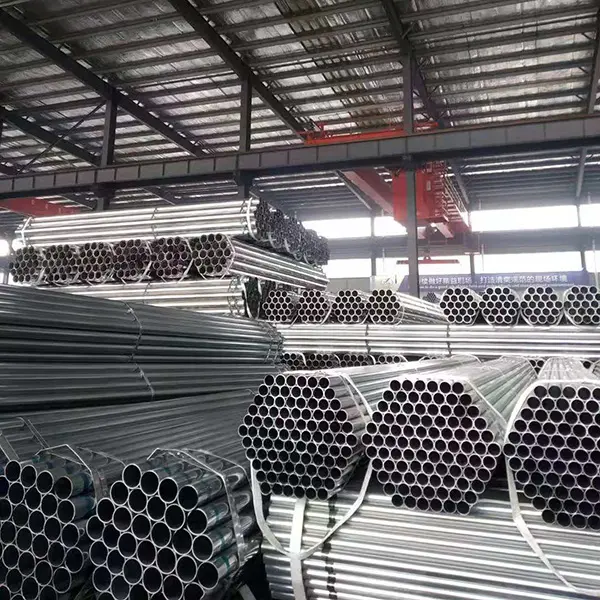
Galvanized tubular steel, encompassing welded and seamless configurations, constitutes a critical component within the broader steel pipe industry. Its primary function is to provide corrosion resistance to carbon steel, achieved through the application of a zinc coating. This process dramatically extends the service life of the steel in harsh environments, making it a preferred material in construction, infrastructure, agricultural, and industrial applications. Galvanized tubular differentiates itself from bare steel through the inherent sacrificial protection offered by the zinc layer, preventing base metal corrosion even when the coating is scratched or compromised. The technical position within the supply chain involves steel production, forming (welding or seamless extrusion), cleaning, galvanizing (hot-dip or electrogalvanizing), and finishing processes. Core performance characteristics include tensile strength, yield strength, corrosion resistance (measured in salt spray hours), dimensional accuracy, and weldability (for welded tubulars). The industry faces ongoing challenges relating to coating uniformity, hydrogen embrittlement susceptibility, and the increasing demand for higher-performance coatings with enhanced durability and reduced environmental impact.
Material Science & Manufacturing
The base material for galvanized tubular is typically carbon steel, conforming to specifications like ASTM A53, A500 (for structural applications), or API 5L (for pipeline applications). The steel's composition significantly influences its weldability, ductility, and susceptibility to hydrogen embrittlement during the galvanizing process. Key elements include carbon, manganese, silicon, phosphorus, and sulfur, each requiring precise control. The manufacturing process begins with steel billet or coil, which is then formed into tubular shapes via either welding or seamless extrusion. Welded tubulars utilize electric resistance welding (ERW) or submerged arc welding (SAW) techniques. ERW involves forming the steel strip and welding the seam using electrical current, while SAW utilizes a granular flux to shield the weld and provide a high-quality, robust seam. Seamless tubulars are created by piercing a solid billet and subsequently drawing it through dies to achieve the desired diameter and wall thickness. Following forming, rigorous cleaning is essential to remove mill scale, rust, and other contaminants. This typically involves pickling with hydrochloric or sulfuric acid, followed by rinsing and fluxing. The galvanizing process, most commonly hot-dip galvanizing, involves immersing the cleaned steel in a molten zinc bath (typically 98% pure zinc) at a temperature of around 450°C (842°F). The zinc metallurgically bonds with the steel surface, forming a series of zinc-iron alloy layers, culminating in an outer layer of pure zinc. Critical process parameters include immersion time, zinc bath temperature, cooling rate, and post-treatment procedures like chromate conversion coating (though increasingly restricted due to environmental concerns) or passivates. Electrogalvanizing, an alternative method, uses an electrolytic process to deposit a zinc coating, offering thinner, more uniform coatings, but with generally lower corrosion resistance than hot-dip galvanizing.
Performance & Engineering
The performance of galvanized tubular is dictated by several engineering considerations. Structural applications necessitate accurate assessment of load-bearing capacity, bending moment resistance, and buckling stability. Finite element analysis (FEA) is frequently employed to model stress distribution under various loading scenarios. Corrosion resistance is a paramount concern, particularly in environments with high salinity, humidity, or exposure to industrial pollutants. The zinc coating provides cathodic protection; zinc corrodes preferentially, protecting the underlying steel. The rate of zinc corrosion, and thus the longevity of the coating, is influenced by environmental factors and the coating thickness. Environmental resistance is also affected by the formation of corrosion byproducts like zinc oxides and hydroxides, which can affect coating adhesion. Compliance requirements vary significantly based on the application and geographic location. Building codes, such as the International Building Code (IBC), specify minimum requirements for galvanized tubular used in structural applications. Pipeline applications are subject to regulations set forth by organizations like DOT (Department of Transportation) and API (American Petroleum Institute). The design must account for pressure ratings, temperature fluctuations, and potential external loads. Weldability is a critical factor for welded tubulars. Preheating and post-weld heat treatment may be required to minimize the risk of hydrogen-induced cracking (HIC) and maintain adequate mechanical properties in the heat-affected zone. Galvanized surfaces can be challenging to weld due to the presence of zinc fumes, requiring specialized welding techniques and ventilation systems.
Technical Specifications
| Parameter | ASTM A53 Grade B (Typical) | ASTM A500 Grade B (Structural) | API 5L X42 (Pipeline) | Electrogalvanized Coating Weight |
|---|---|---|---|---|
| Yield Strength (MPa) | 250 | 345 | 345 | N/A – Coating Property |
| Tensile Strength (MPa) | 400 | 450 | 485 | N/A – Coating Property |
| Minimum Coating Thickness (µm) | 85 (Hot-Dip) | 76 (Hot-Dip) | N/A | 15-25 |
| Salt Spray Resistance (Hours) | >500 | >600 | N/A | >240 |
| Wall Thickness Range (mm) | 2-12 | 2-16 | 6.4-25.4 | N/A – Applied to various thicknesses |
| Diameter Range (mm) | 21.3-667 | 21.3-667 | 10.2-1219 | N/A – Applied to various diameters |
Failure Mode & Maintenance
Galvanized tubular can experience several failure modes in service. Uniform corrosion occurs when the zinc coating is depleted, exposing the underlying steel to the environment. This is accelerated in highly corrosive environments. Localized corrosion, including pitting and crevice corrosion, can occur due to imperfections in the coating or the presence of contaminants. Pitting is particularly detrimental as it concentrates stress and can lead to premature failure. Hydrogen embrittlement is a serious concern, particularly with high-strength steels. During hot-dip galvanizing, atomic hydrogen can diffuse into the steel, reducing its ductility and susceptibility to cracking. Mechanical damage, such as dents, scratches, and impact, can compromise the coating and expose the steel to corrosion. Fatigue cracking can occur under cyclic loading, particularly at weld points or stress concentrations. Oxidation of the zinc coating over time can lead to a reduction in its protective properties. Maintenance strategies include regular inspection for coating damage, cleaning to remove contaminants, and application of protective coatings or repair compounds to compromised areas. For pipelines, cathodic protection is frequently employed to supplement the galvanizing and provide additional corrosion protection. In cases of severe corrosion or mechanical damage, replacement of the tubular section may be necessary. Preventative measures include proper material selection based on the service environment, careful handling during installation, and adherence to recommended maintenance schedules.
Industry FAQ
Q: What is the primary difference between hot-dip galvanizing and electrogalvanizing in terms of corrosion protection?
A: Hot-dip galvanizing provides significantly superior corrosion protection due to the thicker coating and the formation of a metallurgical bond with the steel, resulting in a more robust and durable barrier. The hot-dip process creates a series of zinc-iron alloy layers, offering enhanced sacrificial protection. Electrogalvanizing, while providing a more uniform and aesthetically pleasing finish, typically results in a thinner coating with reduced corrosion resistance.
Q: How does the carbon content of the steel affect its galvanizability and susceptibility to hydrogen embrittlement?
A: Higher carbon content generally decreases galvanizability, leading to poorer coating adhesion and increased reactivity with the molten zinc. High-carbon steels are more prone to hydrogen embrittlement, as they readily absorb atomic hydrogen during the galvanizing process. Pre-treatment processes and post-galvanizing heat treatments can mitigate these issues, but careful steel selection is critical.
Q: What are the limitations of using galvanized tubular in acidic environments?
A: While galvanized coatings provide excellent corrosion protection in many environments, they are susceptible to attack by strong acids. Acids can dissolve the zinc coating, accelerating corrosion of the underlying steel. The severity of the attack depends on the acid concentration, temperature, and exposure duration. In highly acidic environments, alternative corrosion-resistant materials may be necessary.
Q: What are the common causes of coating defects in hot-dip galvanizing, and how can they be prevented?
A: Common coating defects include white rust (zinc oxide), black rust (iron oxide), and bare spots. White rust is caused by moisture reacting with the zinc surface and can be prevented with proper drying and passivation. Black rust forms when iron is exposed due to coating defects and requires addressing the underlying cause. Bare spots result from inadequate surface preparation and can be prevented with thorough cleaning and fluxing.
Q: How do different welding processes impact the integrity of the galvanized coating at the weld zone?
A: Welding disrupts the galvanized coating in the heat-affected zone. Shielded Metal Arc Welding (SMAW) and Gas Metal Arc Welding (GMAW) require post-weld galvanizing touch-up or coating repair. Submerged Arc Welding (SAW) offers better coating coverage along the weld seam due to the flux shielding, minimizing the need for extensive repair. Proper welding parameters and techniques are crucial to minimize coating damage and maintain corrosion protection.
Conclusion
Galvanized tubular steel remains a cornerstone material across numerous industries due to its effective corrosion protection and cost-effectiveness. The manufacturing process, encompassing steel production, forming, and the galvanizing process itself, demands meticulous control of parameters to ensure coating quality and structural integrity. Understanding the material science principles underlying zinc’s protective mechanisms and the potential failure modes is crucial for specifying the appropriate grade and coating thickness for a given application.
Future advancements in galvanizing technology are focused on developing environmentally friendly coating processes, improving coating uniformity, and enhancing resistance to specific corrosive environments. The increasing demand for lighter-weight and higher-strength materials will also drive innovation in galvanized tubular design and manufacturing. Continued research into advanced coating systems and corrosion mitigation techniques will be essential to extend the service life and sustainability of galvanized tubular structures.
