Introduction
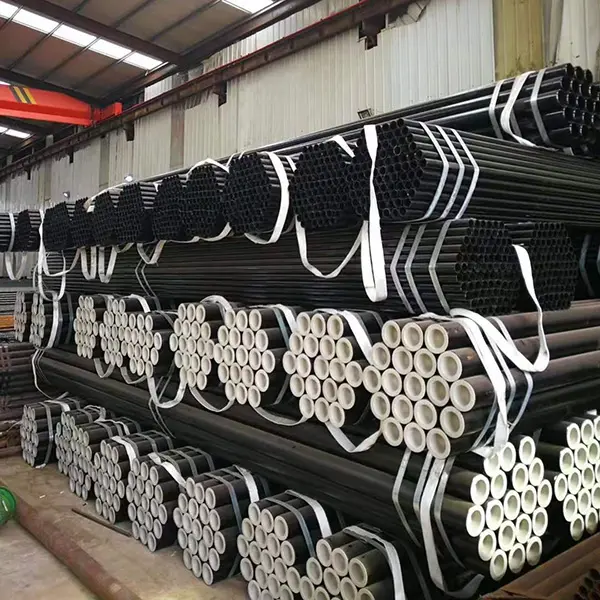
High pressure stainless steel tubing is a critical component in numerous industrial applications, ranging from oil and gas exploration and processing to chemical manufacturing, power generation, and analytical instrumentation. Its primary function is the safe and reliable conveyance of fluids and gases under elevated pressures and often, extreme temperatures. Unlike carbon steel tubing, stainless steel offers superior corrosion resistance, essential for maintaining system integrity and preventing contamination. This guide provides an in-depth technical overview of high pressure stainless steel tubing, covering material science, manufacturing processes, performance characteristics, potential failure modes, and relevant industry standards. The selection of appropriate tubing depends heavily on pressure rating, temperature limits, fluid compatibility, and specific industry regulations, all of which will be discussed. Core performance factors include burst pressure, yield strength, corrosion resistance, and dimensional accuracy.
Material Science & Manufacturing
The predominant material for high pressure tubing is austenitic stainless steel, particularly grades 304, 304L, 316, and 316L. 304/304L offers excellent corrosion resistance in many environments, while 316/316L includes molybdenum for enhanced resistance to chloride-induced pitting and crevice corrosion. The ‘L’ designation signifies low carbon content, minimizing carbide precipitation during welding, thereby preserving corrosion resistance in the heat-affected zone. Raw material selection begins with stringent chemical composition control, verified through techniques like Optical Emission Spectrometry (OES) and X-Ray Fluorescence (XRF). Manufacturing typically starts with seamless tube production via processes like extrusion and pilgering. Extrusion involves forcing a heated billet of stainless steel through a die, while pilgering employs a mandrel and rotating die to reduce the tube’s diameter and wall thickness incrementally. Following forming, tubes undergo annealing to relieve stress and improve ductility. Key parameters during annealing include temperature control (typically 1050-1150°C for 304/316) and cooling rate to prevent sensitization. Precision boring and honing are used to achieve tight dimensional tolerances and smooth inner surfaces, critical for minimizing flow restriction and preventing turbulence. Welding, when required for fabrication of assemblies, is generally performed using Gas Tungsten Arc Welding (GTAW) or Plasma Arc Welding (PAW), utilizing matching filler metals to maintain corrosion resistance. Post-weld heat treatment (PWHT) may be necessary to restore mechanical properties and alleviate residual stress. Surface passivation, involving treatment with nitric acid, is crucial for removing surface contaminants and establishing a chromium-rich protective layer.
Performance & Engineering
The performance of high pressure stainless steel tubing is fundamentally governed by its ability to withstand internal pressure without yielding, bursting, or experiencing fatigue failure. Force analysis utilizes the Barlow's formula (P = 2St/D), where P is internal pressure, S is tensile strength, t is wall thickness, and D is outer diameter. However, this is a simplification; finite element analysis (FEA) is often employed for complex geometries and loading conditions. Environmental resistance is paramount, particularly in corrosive environments. The pitting resistance equivalent number (PREN) is a valuable metric, calculated as %Cr + 3.3%Mo + 16%N, indicating a material’s resistance to localized corrosion. Temperature also significantly impacts performance. Elevated temperatures reduce yield strength and increase creep susceptibility. Cryogenic temperatures can induce embrittlement. Compliance requirements are stringent, dictated by industry-specific codes and standards. For example, ASME B31.3 governs process piping, while API 5L applies to pipeline transportation. Functional implementation often involves designing for specific flow rates, pressure drops, and thermal expansion/contraction. Expansion loops and flexible connectors are frequently incorporated to accommodate thermal movement and prevent stress concentration. Leak testing, typically employing helium leak detection, is critical to ensure the integrity of the tubing system. Consideration must be given to the effects of fluid velocity on erosion corrosion and potential for water hammer, which can induce significant pressure spikes.
Technical Specifications
| Parameter | Grade 304/304L | Grade 316/316L | Unit |
|---|---|---|---|
| Tensile Strength, Ultimate | 515-725 | 550-780 | MPa |
| Yield Strength, 0.2% Offset | 205-275 | 240-310 | MPa |
| Elongation (20mm gauge) | 40-50 | 40-50 | % |
| Hardness (Brinell) | 190-210 | 200-220 | HB |
| Corrosion Resistance (PREN) | 18-20 | 24-28 | - |
| Maximum Operating Temperature | 870 | 870 | °C |
Failure Mode & Maintenance
High pressure stainless steel tubing is susceptible to several failure modes. Fatigue cracking, induced by cyclic loading, is a common issue, particularly at welds and geometric discontinuities. Stress corrosion cracking (SCC) can occur in the presence of specific corrosive environments (e.g., chlorides) and tensile stress. Pitting corrosion, localized attack resulting in small cavities, can initiate at surface defects or inclusions. Creep, time-dependent deformation under sustained stress at elevated temperatures, can lead to gradual failure. Erosion corrosion, accelerated by high fluid velocity and abrasive particles, can wear away the tube wall. Oxidation, especially at high temperatures, can reduce wall thickness. Maintenance involves regular visual inspection for signs of corrosion, cracks, or deformation. Non-destructive testing (NDT) methods, such as ultrasonic testing (UT), radiographic testing (RT), and eddy current testing (ET), are crucial for detecting internal flaws. Hydrostatic testing, pressurizing the tubing with a liquid to a predetermined level, verifies its integrity. Preventive maintenance includes proper material selection, appropriate welding procedures, and regular cleaning to remove contaminants. Periodic recalibration of pressure gauges and relief valves is essential. If corrosion is detected, localized repair techniques or complete tubing replacement may be necessary. Maintaining accurate records of inspection and maintenance activities is critical for ensuring long-term reliability.
Industry FAQ
Q: What is the impact of weld quality on the burst pressure of stainless steel tubing?
A: Weld quality has a significant impact. Imperfections like porosity, incomplete fusion, and undercut act as stress concentrators, reducing the effective cross-sectional area and lowering the burst pressure. Full penetration welds with smooth transitions and minimal defects are crucial. Post-weld heat treatment can mitigate residual stress and improve weld strength, enhancing burst pressure performance. Non-destructive testing (NDT) is essential to verify weld integrity.
Q: How does the choice of end connection (e.g., threaded, welded, flared) affect the tubing’s overall performance?
A: The end connection method influences both pressure rating and potential leak paths. Welded connections generally offer the highest pressure capacity and leak tightness, but require skilled welders and PWHT. Threaded connections are easier to assemble but are more prone to leaks and have a lower pressure rating. Flared connections provide a good balance but require precise flaring tools and proper torque control. The selection depends on the application’s pressure requirements, temperature, and fluid compatibility.
Q: What are the common causes of corrosion in high-pressure stainless steel tubing systems, and how can they be mitigated?
A: Common causes include chloride attack (pitting and crevice corrosion), galvanic corrosion (due to dissimilar metal contact), and erosion corrosion (due to high fluid velocity). Mitigation strategies include selecting appropriate stainless steel grades (316/316L for chloride environments), using sacrificial anodes to prevent galvanic corrosion, controlling fluid velocity, implementing corrosion inhibitors, and ensuring proper surface passivation.
Q: What is the role of annealing in the manufacturing process, and how does it affect the tubing’s mechanical properties?
A: Annealing is a heat treatment process used to relieve internal stresses introduced during cold working (e.g., drawing, reducing). It improves ductility, toughness, and formability. Proper annealing parameters (temperature, heating rate, cooling rate) are crucial. Insufficient annealing can leave residual stress, while excessive annealing can reduce strength. The goal is to achieve a balance between ductility and strength.
Q: What are the considerations for selecting tubing size and wall thickness for a specific high-pressure application?
A: Tubing size (inner diameter) is determined by flow rate requirements. Wall thickness is calculated based on the operating pressure, allowable stress, and a safety factor, using formulas like Barlow's formula. The outer diameter must also be considered for compatibility with fittings and other components. Factors like fluid compatibility, temperature, and potential for corrosion also influence wall thickness selection. A higher safety factor is recommended for critical applications.
Conclusion
High pressure stainless steel tubing represents a critical engineering material in demanding industrial applications. The selection and implementation of this technology require a thorough understanding of material science principles, manufacturing processes, performance characteristics, and potential failure modes. Proper material selection, precision manufacturing, stringent quality control, and proactive maintenance are all essential for ensuring the safe and reliable operation of high-pressure systems.
Future advancements will likely focus on developing new stainless steel alloys with improved corrosion resistance, higher strength-to-weight ratios, and enhanced resistance to high-temperature creep. Improved NDT techniques and predictive modeling will further enhance the ability to assess tubing integrity and prevent failures. Continuous refinement of industry standards and best practices will also be crucial for maintaining the highest levels of safety and performance.
