Introduction
Hollow steel tube, also known as steel pipe, is a tubular section manufactured from steel, characterized by a hollow cross-section and often, though not always, seamless construction. It occupies a critical position within the broader steel industry chain, functioning as a semi-finished product used extensively in structural applications, mechanical engineering, fluid conveyance, and numerous other sectors. Core performance characteristics of hollow steel tubes revolve around its strength-to-weight ratio, corrosion resistance (dependent on alloy composition and surface treatment), dimensional accuracy, and weldability. Compared to solid steel bars of equivalent weight, hollow sections provide superior bending resistance and efficient material utilization. A key industry pain point lies in balancing cost-effectiveness with stringent demands for dimensional tolerances, material traceability, and adherence to increasingly complex international standards. Furthermore, consistent quality control throughout the manufacturing process is paramount to mitigate failure risks, especially in critical applications like high-pressure pipelines and structural supports.
Material Science & Manufacturing
The primary raw material for hollow steel tube production is steel, typically carbon steel, alloy steel (containing elements like chromium, molybdenum, nickel), or stainless steel. The chemical composition dictates the mechanical properties, corrosion resistance, and weldability of the final product. Carbon content, in particular, significantly influences hardness and ductility. Manufacturing processes vary based on the desired tube diameter, wall thickness, and application. Common methods include: Seamless Tube Manufacturing: This begins with solid steel billets heated to a plastic state, then pierced and elongated over a mandrel to create the hollow section. Critical parameters include piercing speed, mandrel reduction ratio, and reheating temperature, all impacting grain structure and dimensional accuracy. Welded Tube Manufacturing: Steel strips are formed into a cylindrical shape and welded along the seam. Two primary welding techniques are employed: Electric Resistance Welding (ERW) and High-Frequency Induction Welding (HFI). ERW relies on the heat generated by resistance to current flow, while HFI utilizes electromagnetic induction. Control of welding current, frequency, and strip edge preparation are vital to achieve a sound, defect-free weld. Cold Drawing/Cold Pilgering: These processes further refine the tube's dimensions and improve surface finish by drawing the tube through a series of dies. Lubrication and die profile are crucial for minimizing friction and maintaining dimensional control. Post-processing steps often include heat treatment (annealing, normalizing, quenching, and tempering) to achieve desired mechanical properties, pickling to remove scale, and surface coating (galvanizing, epoxy coating) for enhanced corrosion resistance. The metallographic structure is highly dependent on the cooling rate after heat treatment, impacting toughness and susceptibility to brittle fracture.
Performance & Engineering
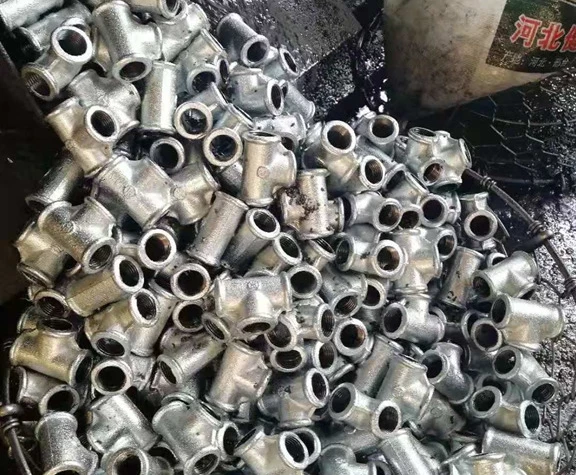
The performance of hollow steel tubes is governed by a combination of material properties and geometric parameters. Structural Analysis: In structural applications, tubes are subjected to axial loading, bending moments, and torsional stresses. Euler-Bernoulli beam theory and finite element analysis (FEA) are employed to predict stress distribution and deflection under load. The section modulus (Z) and moment of inertia (I) are critical geometric properties defining bending resistance. Corrosion Resistance: The susceptibility to corrosion depends on the steel alloy composition and the environment. Carbon steel tubes require protective coatings (galvanizing, epoxy, polyethylene) to prevent rust. Stainless steel tubes offer superior corrosion resistance due to the presence of chromium, forming a passive oxide layer. However, pitting corrosion and crevice corrosion can still occur in chloride-rich environments. Fluid Conveyance: For pipeline applications, hydrostatic pressure testing is essential to verify the tube's ability to withstand internal pressure without failure. Factors considered include yield strength, wall thickness, and weld integrity. Flow velocity and fluid properties influence pressure drop and potential erosion corrosion. Compliance & Standards: Hollow steel tubes must comply with relevant industry standards such as ASTM A53 (seamless and welded steel pipe), ASTM A500 (cold-formed welded and non-welded steel pipe), and EN 10210 (hollow sections). These standards specify requirements for chemical composition, mechanical properties, dimensional tolerances, and testing procedures. Environmental resistance also requires adherence to standards like ISO 12944 which defines corrosion protection of steel structures.
Technical Specifications
| Parameter | ASTM A53 Grade B (Typical) | ASTM A500 Grade C (Typical) | EN 10210 S235JR (Typical) | EN 10210 S355J2H (Typical) |
|---|---|---|---|---|
| Yield Strength (MPa) | 250 | 345 | 235 | 355 |
| Tensile Strength (MPa) | 370 | 450 | 360 | 490 |
| Elongation (%) | 22 | 20 | 20 | 22 |
| Wall Thickness (mm) | 2-12 | 2-8 | 2-12 | 3-20 |
| Outside Diameter (mm) | 1/2" - 8" | 1/2" - 12" | 15-610 | 15-1220 |
| Corrosion Resistance | Low (Requires Coating) | Low (Requires Coating) | Low (Requires Coating) | Low (Requires Coating) |
Failure Mode & Maintenance
Hollow steel tubes are susceptible to various failure modes depending on the application and environmental conditions. Corrosion-Induced Failure: This is the most common failure mode, particularly in corrosive environments. Uniform corrosion, pitting corrosion, and galvanic corrosion can all lead to wall thinning and eventual leakage or structural collapse. Fatigue Cracking: Cyclic loading can initiate fatigue cracks at stress concentration points (e.g., welds, dents, notches). Crack propagation is influenced by stress amplitude, mean stress, and material properties. Stress Corrosion Cracking (SCC): This occurs when tensile stress is combined with a corrosive environment, leading to brittle fracture. SCC is particularly prevalent in stainless steels exposed to chloride ions. Denting and Buckling: Impact loads or excessive external pressure can cause dents or buckling, reducing the tube's load-carrying capacity. Weld Defects: Porosity, incomplete fusion, and slag inclusions in welds can create weak points prone to failure. Maintenance: Regular inspection for corrosion, dents, and cracks is crucial. Protective coatings should be inspected and repaired as needed. Non-destructive testing (NDT) methods, such as ultrasonic testing (UT) and radiographic testing (RT), can be used to detect internal flaws. Periodic hydrostatic testing can verify the integrity of pressure-bearing tubes. Proper support structures and load distribution are essential to prevent overstressing and buckling. For pipelines, cathodic protection is frequently employed to mitigate corrosion.
Industry FAQ
Q: What is the difference between seamless and welded hollow steel tube in terms of mechanical properties?
A: Seamless tubes generally exhibit superior mechanical properties, particularly in terms of burst strength and resistance to fatigue cracking, due to the absence of a weld seam. The manufacturing process creates a uniform grain structure throughout the tube body. Welded tubes, while generally more cost-effective, have a heat-affected zone (HAZ) around the weld, which can have slightly altered mechanical properties and potentially reduced ductility. However, modern welding techniques and post-weld heat treatment can minimize these differences.
Q: How does wall thickness impact the allowable pressure in a hollow steel tube used for fluid conveyance?
A: Wall thickness is directly proportional to the allowable pressure. The Barlow's formula (P = 2St/D) illustrates this relationship, where P is the internal pressure, S is the tensile strength, t is the wall thickness, and D is the outside diameter. Increasing the wall thickness significantly increases the tube’s ability to withstand internal pressure, but also adds weight and cost.
Q: What are the typical surface treatments used to enhance corrosion resistance of carbon steel hollow sections?
A: Common surface treatments include galvanizing (zinc coating), epoxy coating, polyethylene coating, and painting. Galvanizing provides sacrificial protection, where the zinc corrodes preferentially, protecting the steel. Epoxy and polyethylene coatings create a barrier between the steel and the environment. Painting provides aesthetic appeal and can also offer some degree of corrosion protection, depending on the paint formulation.
Q: What non-destructive testing methods are commonly used to inspect hollow steel tubes for defects?
A: Ultrasonic testing (UT) is widely used to detect internal flaws such as cracks, porosity, and inclusions. Radiographic testing (RT) provides a visual representation of the internal structure but requires safety precautions due to radiation exposure. Magnetic particle inspection (MPI) is effective for detecting surface and near-surface defects in ferromagnetic materials. Eddy current testing (ECT) can detect surface cracks and variations in material thickness.
Q: What is the importance of material traceability in the manufacturing of hollow steel tubes for critical applications?
A: Material traceability is paramount for ensuring the integrity and reliability of hollow steel tubes in critical applications. It allows for the identification of the steel’s origin, chemical composition, manufacturing process, and heat treatment history. This information is essential for investigating failures, verifying compliance with standards, and maintaining quality control throughout the supply chain. It also facilitates efficient recall procedures if a defect is identified.
Conclusion
Hollow steel tubes represent a versatile and essential component across diverse industries. Their performance characteristics – defined by material selection, manufacturing processes, and adherence to rigorous engineering standards – dictate their suitability for structural, fluid conveyance, and specialized applications. Understanding the intricate interplay between material science, force analysis, and potential failure modes is critical for ensuring long-term reliability and mitigating risks.
Looking ahead, advancements in steel alloy development, welding technologies, and non-destructive testing methods will continue to enhance the performance and durability of hollow steel tubes. The increasing emphasis on sustainable construction and reduced material consumption will further drive the demand for high-strength, lightweight hollow sections. Continued investment in quality control and material traceability will remain paramount to upholding industry standards and ensuring the safe and reliable operation of critical infrastructure.
