
Introduction
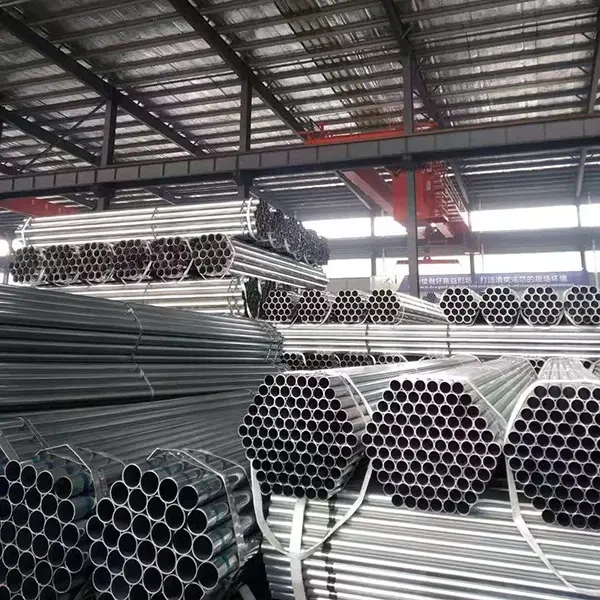
Hollow Structural Sections (HSS) represent a crucial category of metallic profiles widely utilized in load-bearing applications across diverse industries including construction, infrastructure, automotive, and energy. Unlike traditional solid sections, HSS possess a hollow cross-section – typically square, rectangular, or circular – offering a superior strength-to-weight ratio. This characteristic stems from the efficient distribution of material away from the neutral axis, maximizing resistance to bending and torsion. Within the industry chain, HSS are typically produced from steel (carbon, high-strength low alloy, or stainless) and, less commonly, aluminum. Core performance metrics encompass yield strength, tensile strength, weldability, corrosion resistance, and dimensional tolerances. Understanding these parameters is vital for engineers and procurement professionals to ensure structural integrity and optimize design efficiency. The rising demand for lightweight and high-performance structures is driving increased adoption of HSS, coupled with advancements in manufacturing processes and materials.
Material Science & Manufacturing
The foundational material for most HSS is carbon steel, specifically grades like ASTM A500 (Grade B, C) or EN 10210-2 (S235J2H, S355J2H). These steels exhibit varying levels of carbon content influencing weldability, ductility, and strength. High-Strength Low Alloy (HSLA) steels, such as ASTM A572, are favored for applications requiring increased yield strength and atmospheric corrosion resistance. Stainless steel HSS (e.g., 304/316) provides exceptional corrosion resistance but comes at a higher cost. Manufacturing processes vary based on shape and material. Cold-forming, involving pressing or rolling steel sheets into the desired shape, is common for producing square and rectangular HSS. This process work-hardens the material, increasing yield strength. Seamless HSS are produced via extrusion or piercing and rolling of billets, resulting in superior uniformity and weld integrity. Welded HSS are formed by rolling steel plates and subsequently welding the seam, requiring stringent quality control of the welding process (e.g., SAW, ERW) to avoid defects. Critical parameters during manufacturing include maintaining precise dimensional tolerances (±0.5% typically), controlling the heat-affected zone during welding to prevent metallurgical changes, and ensuring adequate surface preparation to enhance coating adhesion and corrosion protection. Material traceability, verified through mill test reports, is essential for quality assurance. The surface finish (e.g., pickling, galvanizing) is crucial for corrosion resistance and paint adhesion.
Performance & Engineering
The performance of HSS is fundamentally governed by its geometric properties (section modulus, moment of inertia) and material characteristics. Section modulus (S) dictates the section’s resistance to bending stress (σ = M/S, where M is the bending moment). Moment of inertia (I) quantifies the section’s resistance to deflection. HSS excels in torsional resistance compared to open sections due to its closed shape. Force analysis requires considering axial loads, bending moments, shear forces, and torsional loads. Buckling is a critical failure mode, particularly for slender HSS subjected to compressive loads. Local buckling (distortion of the wall) and global buckling (overall bending) must be assessed through appropriate stability checks as per AISC specifications (for steel) or relevant design codes. Environmental resistance involves assessing corrosion potential, especially in marine or chemically aggressive environments. Protective coatings (e.g., galvanizing, epoxy coatings) are employed to mitigate corrosion. Compliance requirements vary by region and application, dictating load-carrying capacity, fire resistance, and seismic performance. For example, in seismic zones, HSS connections must be designed to exhibit ductile behavior to dissipate energy during earthquakes. Functional implementation often involves fabrication techniques like welding, bolting, or riveting. Welding requires qualified welders and appropriate weld procedures to maintain structural integrity. Connection design must account for load transfer mechanisms and potential stress concentrations.
Technical Specifications
| Material Grade | Yield Strength (MPa) | Tensile Strength (MPa) | Minimum Wall Thickness (mm) |
|---|---|---|---|
| ASTM A500 Grade B | 250 | 400 | 1.65 |
| ASTM A500 Grade C | 345 | 550 | 2.06 |
| EN 10210-2 S235J2H | 235 | 360-520 | 1.5 |
| EN 10210-2 S355J2H | 355 | 490-630 | 2.0 |
| ASTM A572 Grade 50 | 345 | 450-550 | 1.83 |
| Stainless Steel 304/316 | 205-290 | 517-724 | 1.5 |
Failure Mode & Maintenance
HSS are susceptible to various failure modes. Corrosion is a prevalent concern, particularly in exposed environments, leading to material loss and reduced section properties. Fatigue cracking can occur under cyclic loading, initiated at stress concentrations (e.g., weld toes, corners). Local buckling, as previously mentioned, compromises stability under compressive loads. Delamination can occur in welded HSS due to incomplete fusion or hydrogen embrittlement. Creep, a time-dependent deformation under sustained stress, is relevant at elevated temperatures. Oxidation, particularly at high temperatures, reduces material thickness and strength. Maintenance strategies include regular visual inspections to identify corrosion, cracks, or deformation. Protective coatings should be periodically inspected and recoated as needed. Welds should be examined using non-destructive testing (NDT) methods like ultrasonic testing (UT) or radiographic testing (RT) to detect internal flaws. Connections should be checked for looseness or damage. In areas prone to corrosion, cathodic protection may be implemented. Load monitoring can help identify potential overload conditions. For critical applications, periodic structural health monitoring (SHM) using sensors and data analysis can provide early warning of potential failures. Prompt repair of any identified defects is crucial to prevent catastrophic failure.
Industry FAQ
Q: What is the impact of cold-forming on the mechanical properties of HSS?
A: Cold-forming increases the yield strength of HSS due to work hardening, but it also reduces ductility and weldability. The extent of these effects depends on the degree of deformation. Engineers must account for these changes when designing structures using cold-formed HSS.
Q: How does weld quality affect the performance of welded HSS connections?
A: Weld quality is paramount. Defects such as porosity, lack of fusion, or undercut significantly reduce the strength and fatigue resistance of the connection. Qualified welders, appropriate welding procedures, and thorough inspection using NDT methods are essential.
Q: What corrosion protection methods are most effective for HSS in marine environments?
A: Hot-dip galvanizing provides excellent corrosion protection. Epoxy coatings, often applied over galvanized steel, offer an additional layer of protection. Cathodic protection can also be used in particularly aggressive environments.
Q: How do I determine the buckling resistance of a slender HSS column?
A: Buckling resistance is determined using established buckling equations (e.g., Euler buckling formula, tangent modulus method) specified in relevant design codes (AISC, Eurocode). These calculations consider the material properties, geometry, and effective length of the column.
Q: What is the significance of material traceability and mill test reports?
A: Material traceability ensures that the HSS used in a project meets specified quality standards. Mill test reports provide detailed information about the material's chemical composition, mechanical properties, and manufacturing process, verifying its compliance with relevant standards.
Conclusion
Hollow Structural Sections represent a sophisticated and versatile building block in modern engineering design. Their high strength-to-weight ratio, coupled with efficient material utilization, make them ideal for a broad spectrum of applications. However, realizing their full potential requires a thorough understanding of their material science, manufacturing processes, and potential failure modes. Careful consideration of factors such as corrosion resistance, buckling stability, weld quality, and appropriate protective measures is crucial to ensure long-term structural integrity and performance.
Future advancements in HSS technology will likely focus on developing higher-strength materials, optimizing manufacturing processes to reduce costs and improve quality, and incorporating advanced monitoring systems for proactive structural health assessment. Adherence to established industry standards and rigorous quality control procedures remain paramount to guaranteeing the safe and reliable use of HSS in increasingly demanding applications.
