Introduction
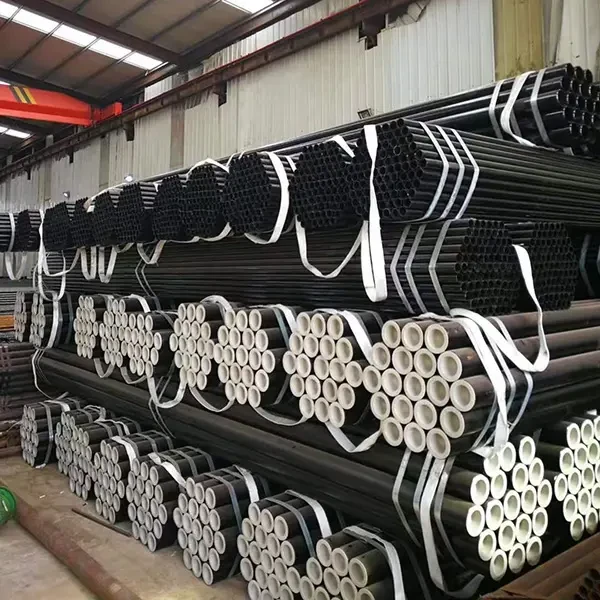
Large steel tubes, typically defined as having an outer diameter exceeding 24 inches (610mm), represent a critical component in numerous industrial applications, ranging from pipeline transmission and structural engineering to oil and gas exploration and power generation. Their technical positioning within the industry chain is significant, serving as a fundamental element in infrastructure projects and process industries. These tubes are not merely conduits; they are engineered structures designed to withstand high pressures, extreme temperatures, and corrosive environments. Core performance characteristics encompass tensile strength, yield strength, elongation, impact toughness, corrosion resistance, and dimensional accuracy. The growing demand for robust and reliable infrastructure drives the continuous development and refinement of large steel tube manufacturing processes and material compositions. Addressing industry pain points like weld integrity, consistent material properties across large diameters, and stringent quality control is paramount.
Material Science & Manufacturing
The primary raw material for large steel tubes is carbon steel, although alloy steels containing chromium, molybdenum, nickel, and other elements are frequently employed to enhance specific properties. The chemical composition directly influences mechanical properties such as strength, ductility, and weldability. Carbon content dictates hardness and tensile strength, while alloying elements contribute to corrosion resistance and high-temperature performance. Manufacturing typically involves several key processes: steelmaking (basic oxygen furnace or electric arc furnace), continuous casting, hot rolling (to form billets or blooms), mandrel rolling or extrusion (to achieve desired diameter and wall thickness), heat treatment (normalizing, quenching, tempering) to refine microstructure and optimize mechanical properties, non-destructive testing (NDT) like ultrasonic testing, radiographic testing, and magnetic particle inspection to detect defects, and finally, finishing processes such as beveling, coating, and hydrostatic testing. Critical parameter control during hot rolling, particularly temperature and reduction ratios, is essential to avoid defects like laps and seams. Welding, often using submerged arc welding (SAW) or gas tungsten arc welding (GTAW), requires precise control of welding parameters (current, voltage, travel speed, shielding gas composition) to ensure complete fusion and minimize residual stress. Chemical compatibility between the base metal and weld metal is crucial to prevent corrosion initiation at the weld.

Performance & Engineering
The performance of large steel tubes is governed by fundamental principles of structural mechanics. Force analysis considers internal pressure, axial loads, bending moments, and torsional stresses. Wall thickness is a primary determinant of pressure containment capability, calculated using formulas derived from the Barlow equation or Lame’s equation, accounting for material yield strength and a design factor. Environmental resistance is critical, particularly in corrosive environments. Corrosion can manifest as uniform corrosion, pitting corrosion, crevice corrosion, or stress corrosion cracking. Material selection, coatings (epoxy, polyurethane, polyethylene), and cathodic protection are employed to mitigate corrosion. Buckling is a potential failure mode under compressive loads, especially for thin-walled tubes. Engineering designs must incorporate buckling analysis to ensure structural stability. Compliance requirements vary by application and region, encompassing standards set by organizations like ASME (American Society of Mechanical Engineers), API (American Petroleum Institute), and EN (European Norms). Functional implementation necessitates careful consideration of load paths, stress concentrations, and fatigue life. For example, in pipeline applications, hydrostatic testing is performed to verify pressure integrity and detect leaks. Finite element analysis (FEA) is frequently used to model stress distributions and optimize tube designs.
Technical Specifications
| Parameter | Unit | ASTM A53 Grade B | API 5L X65 |
|---|---|---|---|
| Outer Diameter | inches | 24 - 48 | 20 - 48 |
| Wall Thickness | inches | 0.25 - 1.0 | 0.28 - 1.5 |
| Yield Strength (Minimum) | psi | 36,000 | 65,000 |
| Tensile Strength (Minimum) | psi | 58,000 | 80,000 |
| Elongation (Minimum) | % | 22 | 20 |
| Charpy V-Notch Impact Toughness (20°F) | ft-lbs | 20 | 40 |
Failure Mode & Maintenance
Large steel tubes are susceptible to various failure modes. Fatigue cracking, induced by cyclic loading, can initiate at stress concentrations (e.g., welds, dents, scratches) and propagate over time, leading to catastrophic failure. Corrosion-related failures include pitting corrosion, leading to localized material loss, and stress corrosion cracking, where tensile stress combined with a corrosive environment causes brittle fracture. Delamination can occur in coated tubes due to insufficient adhesion or coating defects. Oxidation at high temperatures can degrade the material's mechanical properties. Manufacturing defects, such as inclusions and porosity, can also serve as failure initiation sites. Maintenance strategies include regular visual inspections for corrosion, cracks, and dents; non-destructive testing (ultrasonic testing, radiographic testing) to detect internal defects; periodic hydrostatic testing to verify pressure integrity; and application of protective coatings. For corrosion prevention, proper surface preparation before coating application is crucial. Weld repairs should be performed by qualified personnel using appropriate welding procedures. Monitoring of operating conditions (pressure, temperature, fluid composition) is essential to prevent exceeding design limits.
Industry FAQ
Q: What is the primary difference between seamless and welded large steel tubes, and when would you specify one over the other?
A: Seamless tubes are manufactured without a welded seam, offering superior strength and resistance to cracking under high pressure and cyclic loading. Welded tubes are typically more cost-effective and readily available in larger diameters and heavier wall thicknesses. Seamless tubes are preferred for critical applications like high-pressure pipelines, pressure vessels, and nuclear power plants. Welded tubes are commonly used for structural applications, water transmission, and low-pressure pipelines where cost is a significant factor.
Q: How does the specified heat treatment affect the mechanical properties of a large steel tube?
A: Heat treatment is critical for refining the microstructure and optimizing mechanical properties. Normalizing improves machinability and uniformizes the grain structure. Quenching and tempering increase strength and toughness, but can also induce residual stresses. Stress relieving reduces residual stresses, minimizing the risk of stress corrosion cracking. The specific heat treatment process is tailored to the steel grade and desired mechanical properties.
Q: What are the key considerations when selecting a coating for a large steel tube operating in a marine environment?
A: In marine environments, corrosion resistance is paramount. Epoxy coatings offer good adhesion and barrier properties, but can be susceptible to UV degradation. Polyurethane coatings provide excellent UV resistance and durability. Fusion bonded epoxy (FBE) coatings are commonly used for pipeline applications, providing superior corrosion protection. Cathodic protection (sacrificial anodes or impressed current) can be used in conjunction with coatings to enhance corrosion resistance. The coating system must be compatible with the steel substrate and the marine environment.
Q: What non-destructive testing (NDT) methods are most commonly used for inspecting large steel tubes, and what defects can each method detect?
A: Ultrasonic testing (UT) is widely used to detect internal flaws like cracks, porosity, and inclusions. Radiographic testing (RT) provides a visual image of internal defects. Magnetic particle inspection (MPI) detects surface and near-surface cracks in ferromagnetic materials. Liquid penetrant testing (PT) detects surface cracks and discontinuities. Eddy current testing (ECT) can detect surface cracks, variations in material thickness, and conductivity changes.
Q: How do different international standards (e.g., ASME, API, EN) impact the manufacturing and testing requirements for large steel tubes?
A: International standards dictate the specific manufacturing processes, material requirements, testing procedures, and quality control measures that must be followed. ASME standards (e.g., ASME B31.3) govern the design and construction of process piping. API standards (e.g., API 5L) specify requirements for line pipe used in oil and gas transmission. EN standards (e.g., EN 10208) define technical delivery conditions for seamless steel tubes. Compliance with these standards is essential for ensuring the safety, reliability, and performance of large steel tubes.
Conclusion
Large steel tubes are engineered components whose performance is governed by a complex interplay of material science, manufacturing processes, and engineering principles. Selecting the appropriate material, employing rigorous quality control, and implementing effective maintenance strategies are critical for ensuring long-term reliability and preventing catastrophic failures. The increasing demands for high-strength, corrosion-resistant tubes necessitate continuous innovation in material compositions, welding techniques, and non-destructive testing methods.
Looking forward, the industry is focused on developing advanced steel alloys with enhanced properties, optimizing manufacturing processes to reduce costs and improve efficiency, and integrating digital technologies (e.g., machine learning, predictive maintenance) to optimize tube performance and extend service life. Furthermore, adherence to evolving international standards and a commitment to sustainable manufacturing practices are essential for meeting the challenges of a dynamic global market.
