Introduction
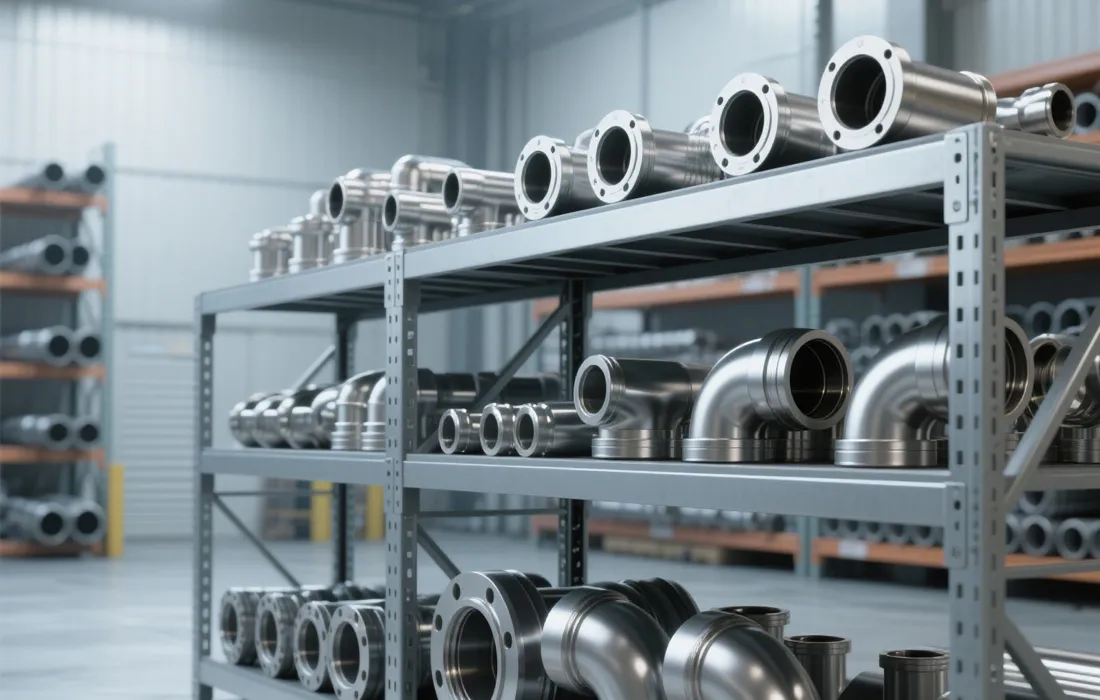
Perforated metal tube is a versatile engineered component characterized by precisely formed holes in a cylindrical metal shell. Positioned within the industrial supply chain as a semi-finished good, it bridges raw material suppliers (steel, aluminum, stainless steel, etc.) and downstream manufacturers across diverse sectors including filtration, sound attenuation, architectural design, and automotive engineering. Its core performance characteristics revolve around controlled air/fluid permeability, strength-to-weight ratio, and aesthetic flexibility. Unlike solid metal tubing, perforated tube offers a specifically engineered balance between structural integrity and the ability to pass substances through its surface. The strategic placement, size, and pattern of perforations dictate the tube's functional efficacy, making it crucial for applications where controlled flow is paramount. A critical industry pain point lies in ensuring consistent hole quality, minimizing burrs, and achieving tight tolerances to guarantee optimal performance in demanding applications. The choice of material and perforation pattern significantly impacts corrosion resistance and structural fatigue life.
Material Science & Manufacturing
The primary materials used in perforated metal tube production include carbon steel (AISI 1018, AISI 1020), stainless steel (304, 316L), aluminum (6061, 5052), and specialized alloys like titanium and nickel alloys depending on the application's environmental and mechanical demands. Carbon steel offers high strength and affordability, but is susceptible to corrosion. Stainless steel provides superior corrosion resistance but at a higher cost. Aluminum is lightweight and corrosion-resistant, suitable for non-structural applications. Material selection hinges on factors such as operating temperature, corrosive environment, and required mechanical properties.
Manufacturing processes typically involve several stages. The starting material is usually metal sheet or coil. Initial fabrication forms the sheet into a cylindrical tube via welding (TIG, MIG, seam welding) or roll forming. Precise control of welding parameters (current, voltage, shielding gas) is critical to avoid weld defects that compromise structural integrity and corrosion resistance. Following tube formation, perforation is achieved through processes like punching, laser cutting, or drilling. Punching is cost-effective for high-volume production and regular patterns. Laser cutting offers greater precision and design flexibility, capable of intricate patterns and tight tolerances, albeit at a higher cost. Drilling is used for larger holes and lower production volumes. Deburring and edge treatment follow to remove sharp edges and improve surface finish. Key parameter control involves maintaining consistent hole diameter, pitch, and pattern accuracy, as well as minimizing burr formation and material distortion. Post-processing may include surface treatments like galvanization, powder coating, or passivation to enhance corrosion resistance and aesthetics.

Performance & Engineering
The performance of perforated metal tube is governed by principles of fluid dynamics, structural mechanics, and material science. Force analysis considers hoop stress due to internal pressure or external loads, bending moments from unsupported spans, and shear stresses around the perforations. The presence of holes introduces stress concentrations, making fatigue life a critical design consideration. Finite Element Analysis (FEA) is frequently employed to optimize hole pattern, tube wall thickness, and material selection to maximize structural integrity. Environmental resistance is crucial; corrosion resistance is enhanced by material selection (stainless steel, aluminum) and protective coatings (galvanization, powder coating). For applications involving high temperatures, creep resistance and oxidation stability become important factors. Acoustic performance is leveraged in sound attenuation applications; the hole size and pattern influence sound absorption coefficients. Compliance requirements vary by industry. For example, in the pharmaceutical industry, tubes used in filtration must meet stringent sanitary standards (3A Sanitary Standards). In the aerospace industry, materials and manufacturing processes must adhere to AMS (Aerospace Material Specifications) standards. Furthermore, the effective open area (the percentage of the tube's surface area that is open due to the perforations) directly influences flow rate and pressure drop, requiring careful engineering design to meet specific application requirements.
Technical Specifications
| Material Grade | Outer Diameter (mm) | Wall Thickness (mm) | Hole Diameter (mm) |
|---|---|---|---|
| AISI 304 Stainless Steel | 25.4 | 2.0 | 3.0 |
| Aluminum 6061-T6 | 50.8 | 3.0 | 6.0 |
| AISI 1018 Carbon Steel | 101.6 | 4.0 | 10.0 |
| AISI 316L Stainless Steel | 38.1 | 2.5 | 4.0 |
| Titanium Grade 2 | 19.05 | 1.5 | 2.0 |
| Aluminum 5052-H32 | 76.2 | 3.5 | 8.0 |
Failure Mode & Maintenance
Perforated metal tube is susceptible to several failure modes. Fatigue cracking is common in applications with cyclic loading, originating at hole edges due to stress concentration. Corrosion, particularly pitting corrosion in chloride-rich environments, can weaken the tube wall and lead to leaks. Erosion, caused by abrasive particles in flowing fluids, can enlarge perforations and reduce structural integrity. Delamination can occur in multi-layered tubes or those with poor weld quality. Creep deformation, at elevated temperatures, can lead to dimensional changes and loss of structural capacity. Oxidation at high temperatures weakens the metal.
Maintenance strategies include regular visual inspections for signs of corrosion, cracks, or deformation. Non-destructive testing methods, such as ultrasonic testing or eddy current testing, can detect subsurface defects. Cleaning to remove abrasive particles or corrosive contaminants is essential. Protective coatings should be inspected for damage and repaired as needed. For critical applications, scheduled replacement based on predicted service life (calculated from stress analysis and corrosion rate data) is recommended. Implementing a preventative maintenance program, including periodic pressure testing and visual checks, can significantly extend the service life of perforated metal tube installations. Repair welding should only be performed by qualified personnel using appropriate welding procedures to maintain structural integrity and corrosion resistance.
Industry FAQ
Q: What is the impact of hole pitch on the structural integrity of the tube?
A: Decreasing the hole pitch (reducing the distance between holes) generally reduces the remaining cross-sectional area of the tube wall, leading to lower bending strength and increased susceptibility to fatigue cracking. A smaller pitch also concentrates stress more significantly around the perforations. Conversely, increasing the hole pitch enhances structural strength but reduces the open area for flow. A careful balance must be achieved based on application requirements.
Q: How does material selection affect corrosion resistance in a saltwater environment?
A: In saltwater environments, stainless steel alloys (316L being superior to 304) and titanium offer significantly better corrosion resistance than carbon steel or aluminum. Carbon steel requires robust protective coatings (galvanization, epoxy coatings) to prevent rapid corrosion. Aluminum forms a protective oxide layer, but this can be compromised in highly chloride-rich environments. The specific alloy composition and heat treatment also play a crucial role.
Q: What are the limitations of laser cutting versus punching for creating perforations?
A: Laser cutting offers greater precision, design flexibility, and the ability to create intricate patterns without tooling costs. However, it's typically slower and more expensive than punching, particularly for high-volume production with simple patterns. Punching is more cost-effective for large-scale production of regular patterns, but tooling costs can be significant for complex designs. Laser cutting also produces a smaller heat-affected zone, minimizing material distortion.
Q: What is the significance of the "open area" percentage, and how is it calculated?
A: The "open area" percentage represents the proportion of the tube's surface area that is open due to the perforations. It directly impacts flow rate and pressure drop. It is calculated as: (Total Area of Holes / Total Surface Area of Tube) x 100%. A higher open area allows for greater flow but reduces structural strength.
Q: What quality control measures are essential during the manufacturing process?
A: Essential quality control measures include dimensional inspection of hole diameter, pitch, and pattern accuracy; visual inspection for burrs and surface defects; material certification to verify chemical composition; weld inspection (if applicable) using non-destructive testing methods; and pressure testing to ensure leak-tightness. Statistical Process Control (SPC) should be implemented to monitor process parameters and maintain consistent quality.
Conclusion
Perforated metal tube represents a vital engineered component, offering a tailored solution for applications demanding controlled permeability and structural integrity. Its effectiveness hinges on careful material selection, precise manufacturing control, and a thorough understanding of the interplay between fluid dynamics, structural mechanics, and corrosion science. Achieving optimal performance requires balancing competing factors such as strength, flow rate, corrosion resistance, and cost.
Future trends will likely focus on advanced materials (e.g., shape memory alloys, high-entropy alloys) to enhance performance in extreme environments, the integration of additive manufacturing techniques for complex geometries and customized perforation patterns, and the development of smart tubes with embedded sensors for real-time monitoring of structural health and flow parameters. Continual innovation in manufacturing processes and material science will expand the applications and capabilities of perforated metal tube across diverse industries.
