Introduction
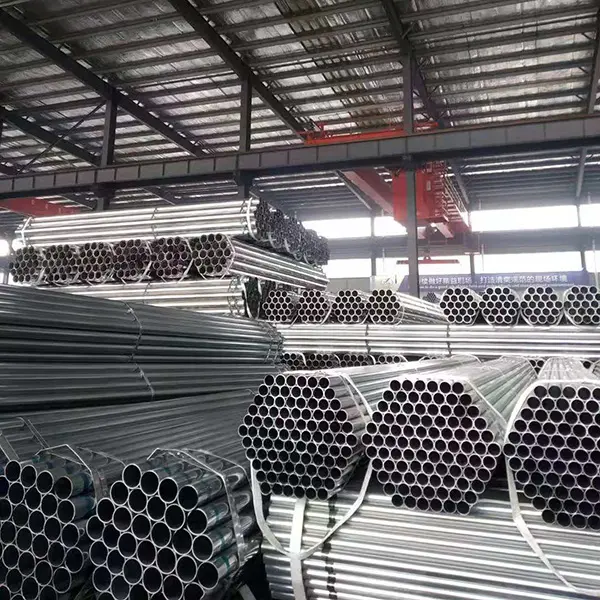
Rolled steel tube, encompassing both welded and seamless varieties, represents a critical component within numerous industrial sectors. Positioned within the supply chain as a semi-finished product, it serves as the foundational material for fabricated structures, pressure systems, mechanical components, and fluid conveyance networks. Its inherent strength, dimensional accuracy, and cost-effectiveness render it a preferred alternative to forged or cast components in many applications. Core performance characteristics include yield strength, tensile strength, corrosion resistance (dependent on alloy composition and coating), dimensional tolerances, and pressure bearing capacity. The selection of appropriate rolled steel tube is dictated by the specific operational demands, encompassing pressure, temperature, chemical environment, and required lifespan. This guide provides a comprehensive technical overview of rolled steel tube, detailing its material science, manufacturing processes, performance parameters, failure modes, and applicable industry standards.
Material Science & Manufacturing
Rolled steel tube is primarily manufactured from carbon steel (ASTM A53, A106), alloy steel (ASTM A335 P11, P22, P91), and stainless steel (ASTM A312, 304/304L, 316/316L) grades. The raw material, typically steel billet or bloom, undergoes a series of processes to achieve the desired tubular form. For seamless tube, the process begins with piercing a solid billet using a rotary piercing process. This is followed by mandrel rolling and subsequent cold drawing or hot rolling to achieve precise dimensions and wall thickness. Key parameters in seamless tube manufacturing include piercing temperature (1200-1300°C), mandrel reduction ratio, and drawing speed. For welded tube, flat steel strips are formed into a cylindrical shape and then welded along the seam using either Electric Resistance Welding (ERW) – offering high speed and low cost – or Submerged Arc Welding (SAW) – providing high strength and suitable for thicker walls. Post-welding, the tubes undergo heat treatment (normalizing, quenching and tempering) to relieve stress and refine the microstructure. Chemical composition profoundly impacts mechanical properties; increased carbon content enhances strength but reduces weldability. Alloying elements like chromium, molybdenum, and nickel contribute to improved corrosion resistance and high-temperature performance. Microstructural control, focusing on grain size and phase transformation, is crucial for achieving desired ductility and toughness. Surface finish is controlled through pickling (acid cleaning) and coating applications such as galvanization or epoxy powder coating to enhance corrosion protection.
Performance & Engineering
The performance of rolled steel tube is governed by its mechanical properties and resistance to external factors. Force analysis involves assessing the tube’s ability to withstand internal pressure (burst pressure), external loads (bending moments, axial compression), and torsional stresses. Burst pressure calculations, employing Barlow’s formula (P = 2St/D, where P=pressure, S=tensile strength, t=wall thickness, D=outer diameter), are critical for pressure vessel and pipeline applications. Environmental resistance is a key consideration, particularly concerning corrosion. Atmospheric corrosion is mitigated through protective coatings; however, in aggressive environments (e.g., seawater, chemical processing), alloy selection is paramount. Stress corrosion cracking (SCC) can occur in susceptible materials exposed to specific corrosive agents under tensile stress. Finite Element Analysis (FEA) is extensively utilized to model stress distribution under various loading conditions, optimizing tube geometry and material selection. Compliance requirements vary based on industry and application. Pressure vessels adhere to ASME Boiler and Pressure Vessel Code Section VIII Division 1. Pipelines are subject to API 5L and DOT regulations. Structural applications must meet AISC standards. Cyclic loading and fatigue resistance are evaluated through S-N curve analysis, determining the number of cycles to failure at specific stress amplitudes. The weld seam, in welded tube, represents a critical area for inspection and quality control, utilizing Non-Destructive Testing (NDT) methods like Ultrasonic Testing (UT) and Radiographic Testing (RT) to detect flaws.
Technical Specifications
| Standard | Material Grade | Outer Diameter (mm) | Wall Thickness (mm) | Minimum Yield Strength (MPa) | Tensile Strength (MPa) |
|---|---|---|---|---|---|
| ASTM A53 Gr. B | Carbon Steel | 21.3 - 660.4 | 2.0 - 25.4 | 250 | 450 |
| ASTM A106 Gr. B | Carbon Steel | 10.2 - 762 | 2.6 - 19.1 | 250 | 485 |
| ASTM A335 P11 | 1.25Cr-0.5Mo Steel | 13.7 - 323.9 | 2.8 - 16.3 | 205 | 415 |
| ASTM A312 304/304L | Stainless Steel | 6.35 - 762 | 0.8 - 12.7 | 205 | 515 |
| ASTM A312 316/316L | Stainless Steel | 6.35 - 762 | 0.8 - 12.7 | 205 | 550 |
| EN 10208-2 | S235JRH | 10.2 - 660.4 | 2.0 - 20.0 | 235 | 360-585 |
Failure Mode & Maintenance
Rolled steel tube is susceptible to several failure modes, contingent upon operating conditions and material selection. Corrosion, as previously mentioned, is a primary concern, leading to material loss and eventual perforation. Fatigue cracking can occur under cyclic loading, initiated at stress concentrators (weld seams, dents, scratches). Creep, a time-dependent deformation under sustained load at elevated temperatures, is relevant in high-temperature applications. Erosion corrosion, caused by the impingement of abrasive particles on the tube surface, is prevalent in fluid transport systems. Hydrogen embrittlement can occur in high-strength steels exposed to hydrogen-containing environments, resulting in brittle fracture. Maintenance strategies are crucial for extending service life. Regular visual inspections for corrosion, dents, and cracks are essential. Non-destructive testing (UT, RT, Magnetic Particle Inspection) should be conducted periodically to assess wall thickness and detect internal flaws. Protective coatings should be inspected and repaired as needed. For pipelines, pigging operations remove internal deposits and corrosion products. In critical applications, stress relieving heat treatment can mitigate residual stresses. Proper welding procedures and qualified welders are paramount to prevent weld-related failures. Regular hydrostatic testing verifies the structural integrity of pressure systems.
Industry FAQ
Q: What is the difference between seamless and welded steel tube, and when should each be used?
A: Seamless tubes are manufactured from a solid billet without a weld seam, offering superior strength and pressure-bearing capacity, making them ideal for critical applications like high-pressure pipelines and pressure vessels. Welded tubes, produced by welding flat steel strips, are generally more cost-effective and suitable for less demanding applications like structural supports, low-pressure fluid transfer, and general fabrication. The choice depends on the required strength, pressure rating, and budget constraints.
Q: How does the carbon equivalent (CE) of a steel grade impact its weldability?
A: Carbon Equivalent (CE) is a measure of the steel's tendency to form martensite during welding, which can lead to cracking. Higher CE values indicate lower weldability. Steel grades with lower CE values are generally easier to weld and less prone to cracking. Welding procedures may require preheating and post-weld heat treatment for higher CE materials.
Q: What is the significance of NACE MR0175/ISO 15156 in selecting steel tubes for sour service applications?
A: NACE MR0175/ISO 15156 is a widely recognized standard for materials selection in hydrogen sulfide (H2S)-containing environments, known as "sour service." This standard specifies acceptable materials and hardness limitations to prevent sulfide stress cracking (SSC). Selecting materials compliant with this standard is critical in oil and gas production and processing to ensure the long-term integrity of equipment.
Q: What are the advantages of using stainless steel tubes over carbon steel tubes in corrosive environments?
A: Stainless steel tubes offer significantly higher corrosion resistance due to the presence of chromium, which forms a passive oxide layer that protects the underlying metal. While carbon steel requires protective coatings, stainless steel often eliminates the need for coatings in many corrosive environments, reducing maintenance costs and extending service life. Specific stainless steel grades (e.g., 316/316L) offer enhanced resistance to pitting and crevice corrosion.
Q: What types of non-destructive testing (NDT) are commonly used to inspect rolled steel tubes?
A: Common NDT methods include Ultrasonic Testing (UT) for detecting internal flaws and measuring wall thickness, Radiographic Testing (RT) for identifying weld defects, Magnetic Particle Inspection (MPI) for detecting surface and near-surface cracks in ferromagnetic materials, and Liquid Penetrant Testing (PT) for revealing surface flaws. Eddy current testing can also be employed for surface crack detection and material sorting.
Conclusion
Rolled steel tube remains a foundational material in a diverse range of industrial applications. Its selection and successful implementation require a thorough understanding of material science principles, manufacturing processes, and performance characteristics. A robust consideration of potential failure modes, coupled with proactive maintenance strategies, is crucial for maximizing service life and ensuring operational safety.
Future developments in rolled steel tube technology will likely focus on advanced alloy compositions offering enhanced corrosion resistance and strength-to-weight ratios, alongside innovative manufacturing processes enabling tighter dimensional tolerances and improved surface finishes. Furthermore, increased integration of digital technologies, such as sensor-based monitoring and predictive maintenance algorithms, will contribute to optimized asset management and enhanced reliability.
