
Introduction
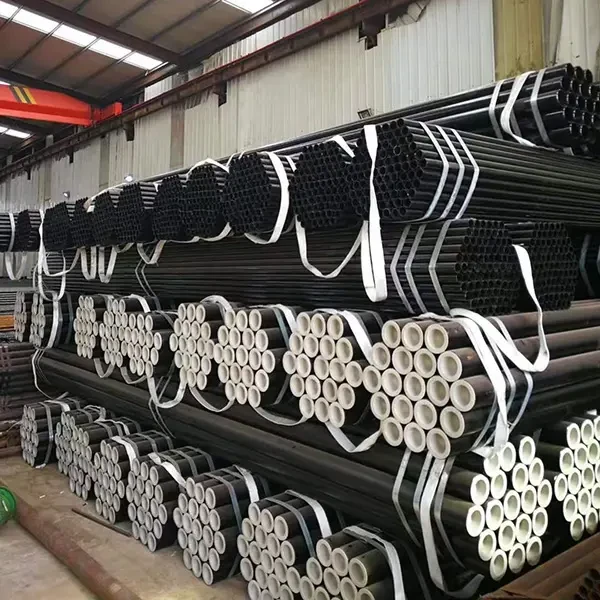
Stainless steel tubular products represent a critical component across numerous industries, including chemical processing, oil and gas, food and beverage, pharmaceutical, construction, and power generation. These products, encompassing seamless and welded tubing, are characterized by their corrosion resistance, high strength-to-weight ratio, and hygienic properties. Positioned within the material supply chain following raw material sourcing (iron ore, chromium, nickel, molybdenum) and steelmaking, stainless steel tubular products undergo forming, welding (if applicable), heat treatment, and finishing processes. Core performance characteristics revolve around maintaining structural integrity under pressure, temperature, and corrosive environments, alongside ensuring dimensional accuracy and surface finish appropriate for specific applications. The selection of the appropriate grade of stainless steel, wall thickness, and manufacturing process is paramount to achieving optimal performance and longevity.
Material Science & Manufacturing
Stainless steel tubular products are predominantly manufactured from austenitic, ferritic, martensitic, and duplex stainless steel grades. Austenitic stainless steels (304/304L, 316/316L) offer excellent corrosion resistance due to the addition of chromium (typically 18-24%) and nickel (typically 8-10%). Ferritic stainless steels (430) possess good ductility and corrosion resistance but lower strength than austenitic grades. Martensitic stainless steels (410) are heat treatable to achieve high hardness and strength, suitable for applications requiring wear resistance. Duplex stainless steels combine austenitic and ferritic phases, providing high strength and enhanced resistance to stress corrosion cracking. The raw materials’ chemical composition dictates the final properties. Manufacturing processes significantly impact the final product's characteristics. Seamless tubing is typically produced via extrusion, piercing, or drawing processes, resulting in a homogenous structure without weld seams, offering superior strength and pressure resistance. Welded tubing, conversely, is manufactured by forming and welding steel strips or sheets. Common welding methods include TIG (GTAW) and laser welding, requiring precise control of heat input and shielding gases to minimize weld defects and maintain corrosion resistance. Post-weld heat treatment (PWHT) is often employed to relieve residual stresses and enhance mechanical properties. Key parameter control involves maintaining precise chemical composition during steelmaking, consistent temperature and pressure during forming, accurate welding parameters, and effective quality control measures like hydrostatic testing and non-destructive examination (NDE) such as radiographic testing (RT), ultrasonic testing (UT), and eddy current testing (ET).
Performance & Engineering
The performance of stainless steel tubular products is governed by factors including mechanical strength (yield strength, tensile strength, elongation), corrosion resistance, pressure rating, and temperature resistance. Force analysis is crucial in determining the appropriate wall thickness to withstand internal or external pressure, bending moments, and axial loads. Stress concentration at weld seams, particularly in welded tubing, must be carefully considered during design. Environmental resistance is a primary concern, necessitating careful material selection based on the specific corrosive environment. Chloride pitting corrosion, crevice corrosion, and intergranular corrosion are common failure mechanisms in chloride-rich environments. Passivation treatments, involving surface oxidation to form a protective chromium oxide layer, are employed to enhance corrosion resistance. Compliance requirements vary based on industry and application. For pressure vessel applications, adherence to ASME Boiler and Pressure Vessel Code (Section IX for welding qualifications) is mandatory. For hygienic applications in the food and beverage industry, compliance with 3-A Sanitary Standards is essential. For pharmaceutical applications, adherence to cGMP (current Good Manufacturing Practices) guidelines and USP Class VI standards for biocompatibility is required. Finite element analysis (FEA) is frequently used to simulate stress distribution and predict performance under various loading conditions. The selection of appropriate joining methods, such as welding or mechanical fittings, also significantly impacts overall performance.
Technical Specifications
| Grade | Tensile Strength (MPa) | Yield Strength (MPa) | Elongation (%) | Corrosion Resistance |
|---|---|---|---|---|
| 304/304L | 517-724 | 205-276 | 30-45 | Excellent (general corrosion) |
| 316/316L | 517-724 | 205-276 | 30-45 | Superior (chloride resistance) |
| 430 | 483-586 | 276-345 | 15-25 | Good (mildly corrosive environments) |
| 410 | 552-724 | 276-414 | 10-20 | Moderate (requires surface treatment) |
| Duplex 2205 | 620-896 | 345-483 | 20-25 | Excellent (SCC and pitting resistance) |
| Wall Thickness (mm) | 0.5 - 10 | 0.5 - 20 | 0.5 - 30 | Variable based on grade |
Failure Mode & Maintenance
Stainless steel tubular products can experience several failure modes in service. Fatigue cracking can occur under cyclic loading, particularly at weld seams or stress concentrators. Pitting corrosion, initiated by localized breakdown of the passive layer, can lead to localized metal loss and eventual perforation. Crevice corrosion develops in confined spaces where stagnant fluids accumulate, promoting localized corrosion. Intergranular corrosion occurs along grain boundaries due to sensitization (chromium carbide precipitation) caused by improper heat treatment. Galvanic corrosion can occur when dissimilar metals are in contact in a corrosive environment. Oxidation at elevated temperatures can lead to scaling and reduced wall thickness. Maintenance strategies include regular visual inspection for signs of corrosion, cracking, or deformation. Non-destructive testing (NDT) methods, such as ultrasonic testing and eddy current testing, can detect subsurface defects. Passivation treatments can be reapplied to restore corrosion resistance. Protective coatings, such as epoxy or polyurethane, can provide an additional barrier against corrosion. Proper cleaning and disinfection procedures are essential for hygienic applications. For high-temperature applications, periodic annealing may be necessary to relieve stress and restore ductility. Routine hydrostatic testing verifies the structural integrity of pressure-containing systems.
Industry FAQ
Q: What is the impact of molybdenum content on the corrosion resistance of stainless steel tubular products, particularly in chloride-rich environments?
A: Molybdenum significantly enhances the pitting corrosion resistance of stainless steel, particularly in chloride-containing environments. Adding molybdenum to austenitic stainless steels like 316/316L stabilizes the passive layer and reduces the susceptibility to localized corrosion attacks. Higher molybdenum content generally correlates with improved resistance, making 316/316L a preferred choice for marine applications, chemical processing, and pharmaceutical industries where chloride exposure is prevalent.
Q: How does the welding process affect the corrosion resistance of stainless steel tubing, and what precautions should be taken?
A: Welding can compromise the corrosion resistance of stainless steel if not performed correctly. Heat input during welding can lead to sensitization (chromium carbide precipitation) in the heat-affected zone (HAZ), making it susceptible to intergranular corrosion. Precautions include using low heat input welding processes like TIG (GTAW), employing appropriate shielding gases (argon), minimizing weld time, and utilizing post-weld heat treatment (PWHT) to eliminate sensitization. Proper surface cleaning before welding is also crucial to remove contaminants that can promote corrosion.
Q: What are the key differences between seamless and welded stainless steel tubing, and when should each be selected?
A: Seamless tubing is manufactured without a weld seam, resulting in a homogenous structure and superior mechanical properties, particularly in terms of burst strength and fatigue resistance. Welded tubing is more cost-effective to produce but has a weld seam that can be a potential point of weakness. Seamless tubing is preferred for high-pressure applications, critical structural components, and situations where maximum reliability is paramount. Welded tubing is suitable for lower-pressure applications, decorative purposes, and general engineering applications where cost is a significant factor.
Q: How important is surface finish (Ra value) for stainless steel tubing used in hygienic applications, such as food processing?
A: Surface finish is critically important in hygienic applications. A smoother surface finish (lower Ra value) reduces the ability of bacteria and other microorganisms to adhere and proliferate. Regulatory standards like 3-A Sanitary Standards specify maximum Ra values for stainless steel surfaces in contact with food products. Typically, an Ra value of 32 µin (0.8 µm) or less is required for cleanability and prevention of bacterial growth.
Q: What are the considerations when selecting stainless steel tubing for cryogenic applications (extremely low temperatures)?
A: For cryogenic applications, austenitic stainless steels like 304L and 316L are generally preferred due to their good ductility and toughness at low temperatures. However, certain grades can experience a ductile-to-brittle transition at extremely low temperatures. Careful material selection based on the specific temperature range and stress levels is essential. Impact testing is often required to ensure adequate toughness and prevent brittle fracture.
Conclusion
Stainless steel tubular products are indispensable materials in a wide array of industries, offering a unique combination of corrosion resistance, mechanical strength, and hygienic properties. The selection of the appropriate grade, manufacturing process, and surface finish is crucial to achieving optimal performance and longevity. Understanding the potential failure modes and implementing appropriate maintenance strategies are essential for ensuring the reliable operation of systems utilizing these products.
Future developments in stainless steel technology will likely focus on enhancing corrosion resistance through alloy optimization, improving manufacturing processes for tighter tolerances and reduced weld defects, and developing novel surface treatments for enhanced biocompatibility and cleanability. Continued adherence to rigorous industry standards and quality control measures will remain paramount to maintaining the integrity and reliability of stainless steel tubular products in demanding applications.
