Introduction
Steel pipes are fundamental components in a vast array of industries, including oil and gas, construction, water conveyance, and manufacturing. Their role extends beyond simple fluid or material transport; they often constitute critical structural elements subjected to high pressures, temperatures, and corrosive environments. This technical guide focuses on the intricacies of steel pipe production, material properties, performance characteristics, potential failure modes, and relevant industry standards. We will examine the considerations crucial for a steel pipe exporter serving a global B2B market, addressing the technical demands and compliance requirements of diverse applications. The primary objective is to provide a comprehensive resource for engineers, procurement managers, and quality control personnel involved in the specification, sourcing, and utilization of steel pipes.
Material Science & Manufacturing
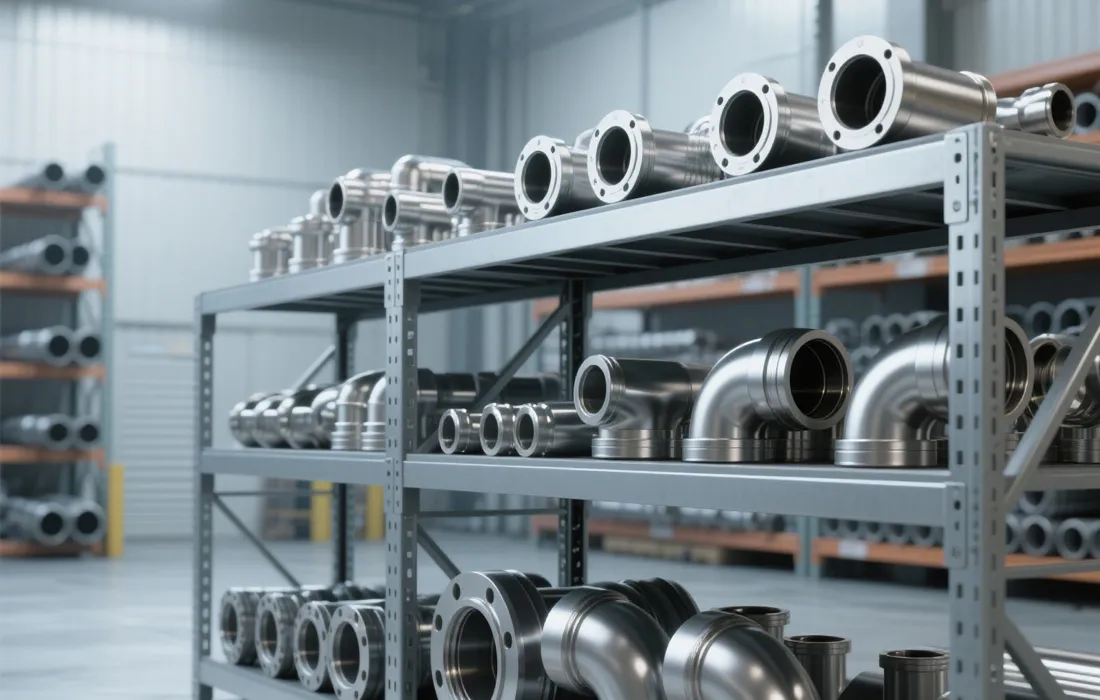
The core material for steel pipes is, predictably, steel. However, the specific alloy composition dictates the pipe’s performance characteristics. Common grades include carbon steel (ASTM A53, A106), alloy steel (ASTM A335, P11, P22), and stainless steel (ASTM A312, 304, 316). Carbon steel offers cost-effectiveness and good weldability but is susceptible to corrosion. Alloy steels provide enhanced strength, creep resistance, and corrosion resistance, crucial for high-temperature and high-pressure applications. Stainless steels offer superior corrosion resistance due to the presence of chromium, making them ideal for chemical processing and sanitary applications. Manufacturing processes vary depending on pipe size, wall thickness, and material grade. Seamless pipes are produced through processes like mandrel mill, extrusion, or rotary piercing, resulting in a uniform structure with no weld seams, offering superior pressure-bearing capacity. Welded pipes, manufactured through Electric Resistance Welding (ERW), Double Submerged Arc Welding (DSAW), or spiral welding, are more cost-effective but require rigorous weld inspection and non-destructive testing (NDT) to ensure structural integrity. Key manufacturing parameters include controlled cooling rates to manage grain size and hardness, precise chemical composition control to meet alloy specifications, and adherence to stringent dimensional tolerances. Hydrogen embrittlement is a significant concern during welding; minimizing hydrogen pickup during the process and post-weld heat treatment are essential to prevent cracking. The presence of non-metallic inclusions (sulfides, oxides) can act as stress concentrators and reduce fracture toughness, necessitating careful control of steelmaking practices and deoxidation processes.
Performance & Engineering
The performance of steel pipes is governed by several critical engineering factors. Tensile strength, yield strength, and elongation define the pipe’s ability to withstand tensile loads without permanent deformation or fracture. Impact toughness, measured using Charpy V-notch testing, indicates resistance to brittle fracture, particularly at low temperatures. Creep resistance, essential for high-temperature applications, determines the pipe’s ability to resist deformation under sustained stress. Corrosion resistance is paramount, and depends on the alloy composition and the service environment. Galvanizing, epoxy coatings, and cathodic protection are commonly employed to enhance corrosion resistance in carbon steel pipes. Pressure ratings are calculated based on Barlow's formula (P = 2St/D, where P is pressure, S is tensile strength, t is wall thickness, and D is diameter) and modified by appropriate safety factors. Buckling analysis is crucial for long, slender pipes subjected to compressive loads. Finite element analysis (FEA) is frequently used to model complex stress distributions and predict pipe behavior under various loading conditions. Compliance with API 5L, the standard for line pipe, dictates stringent requirements for hydrostatic testing, non-destructive examination, and traceability. Furthermore, the selection of appropriate lifting and handling techniques is critical to prevent damage during transportation and installation. Fatigue analysis, considering cyclic loading, is vital for applications where pipes are subjected to repeated stress variations, such as offshore pipelines or reciprocating compressor lines.
Technical Specifications
| Parameter | ASTM A53 Grade B (Carbon Steel) | ASTM A335 P11 (Alloy Steel) | ASTM A312 304/304L (Stainless Steel) | API 5L X42 (Line Pipe) |
|---|---|---|---|---|
| Yield Strength (MPa) | 250 | 205 | 205 | 345 |
| Tensile Strength (MPa) | 400 | 415 | 517 | 485 |
| Elongation (%) | 23 | 20 | 30 | 21 |
| Charpy V-Notch (20°C, J) | 45 | 60 | 75 | 40 |
| Maximum Carbon Equivalent (CE) | 0.31 | 0.35 | 0.08 | 0.45 |
| Corrosion Rate (mm/year in seawater) | 0.5-1.0 | 0.1-0.2 | <0.01 | 0.3-0.8 |
Failure Mode & Maintenance
Steel pipes are susceptible to various failure modes. Corrosion is a primary concern, leading to pitting, crevice corrosion, and galvanic corrosion, particularly in marine environments or when dissimilar metals are in contact. Stress corrosion cracking (SCC) can occur in specific environments (e.g., chlorides, sulfides) under tensile stress. Fatigue cracking arises from cyclic loading, initiating at stress concentrators like weld seams or dents. Hydrogen embrittlement can cause brittle fracture in high-strength steels. Erosion-corrosion occurs in pipelines transporting abrasive fluids at high velocities. Manufacturing defects, such as weld imperfections, inclusions, or lamination, can also lead to premature failure. Regular inspection and maintenance are crucial for preventing failures. Non-destructive testing (NDT) methods, including ultrasonic testing (UT), radiographic testing (RT), magnetic particle inspection (MPI), and liquid penetrant inspection (LPI), are used to detect flaws. Internal inspection using intelligent pigs (pipeline inspection gauges) can assess corrosion, cracking, and wall thinning. Cathodic protection systems can mitigate corrosion by applying a protective potential. Coating repairs and replacements are essential for maintaining barrier protection. Regular pressure testing verifies the integrity of the pipeline. Detailed record-keeping of inspection results and maintenance activities is vital for tracking pipe condition and predicting remaining life. Proper storage procedures, protecting pipes from moisture and contaminants, are essential to prevent corrosion during storage and transportation.
Industry FAQ
Q: What is the significance of the PQR (Procedure Qualification Record) in welded pipe fabrication?
A: The PQR is a documented record of the welding process parameters used to qualify a welding procedure. It demonstrates that the chosen welding procedure can consistently produce welds meeting the specified mechanical properties and quality requirements. It’s essential for ensuring weld integrity and compliance with codes like ASME Section IX and API 1104. Without a valid PQR, the welds cannot be confidently used in critical applications.
Q: How does the wall thickness of a steel pipe affect its pressure-bearing capacity?
A: The pressure-bearing capacity of a steel pipe is directly proportional to its wall thickness, as defined by Barlow's formula (P = 2St/D). Increasing the wall thickness significantly increases the pipe’s ability to withstand internal pressure. However, increasing wall thickness also increases the pipe’s weight and cost. The optimal wall thickness is determined by a balance between pressure requirements, cost considerations, and structural efficiency.
Q: What are the differences between NACE MR0175/ISO 15156 and API 5L regarding material selection for sour service applications?
A: API 5L specifies requirements for line pipe used in oil and gas transmission, including chemical composition and mechanical properties. NACE MR0175/ISO 15156 focuses specifically on materials for sour service environments containing hydrogen sulfide (H2S). It provides detailed guidelines on material selection, hardness limitations, and environmental factors to prevent sulfide stress cracking (SSC). Compliance with both standards is typically required for sour service applications.
Q: What role does heat treatment play in the manufacturing of steel pipes, and why is it critical?
A: Heat treatment is a crucial step in steel pipe manufacturing. It controls the microstructure of the steel, influencing its mechanical properties like hardness, strength, and ductility. Processes like normalizing, annealing, and quenching and tempering are used to achieve desired properties. Heat treatment also relieves residual stresses introduced during welding or forming, preventing distortion and cracking. Incorrect heat treatment can lead to catastrophic failure.
Q: What are the advantages and disadvantages of using ERW (Electric Resistance Welding) versus seamless pipes?
A: ERW pipes are generally more cost-effective and can be produced in a wider range of diameters. However, the weld seam is a potential point of weakness, requiring rigorous NDT. Seamless pipes offer superior strength and pressure-bearing capacity due to the absence of a weld seam, making them ideal for critical applications. However, they are typically more expensive and may have limitations in available sizes and shapes.
Conclusion
The selection and application of steel pipes require a thorough understanding of material science, manufacturing processes, performance characteristics, and potential failure modes. A steel pipe exporter must provide not only a product but also the technical expertise to guide clients in choosing the appropriate pipe grade, dimensions, and specifications for their specific applications. Strict adherence to industry standards, coupled with robust quality control procedures, is paramount for ensuring product reliability and safety.
Looking ahead, advancements in steel alloys, welding technologies, and non-destructive testing methods will continue to enhance the performance and longevity of steel pipes. The growing emphasis on sustainability will drive the development of more corrosion-resistant materials and environmentally friendly coating systems. A successful steel pipe exporter will remain at the forefront of these innovations, providing cutting-edge solutions to meet the evolving needs of a global market.
