Introduction
Tubular steel pipe, encompassing both welded and seamless constructions, represents a foundational element in numerous industrial applications. Positioned centrally within the broader metallic materials industry, it serves as a critical intermediary between raw steel production and finished products ranging from structural engineering components to fluid conveyance systems. Its core performance characteristics – encompassing strength, ductility, corrosion resistance (depending on alloy composition and coating), and dimensional accuracy – dictate its suitability across diverse sectors. Unlike solid steel bars, tubular profiles offer a high strength-to-weight ratio, making them advantageous in applications where weight reduction is paramount. The industry currently faces challenges related to fluctuating raw material costs (iron ore, alloying elements), increasingly stringent environmental regulations regarding manufacturing processes, and the demand for higher-performance alloys tailored to specific, demanding operating conditions. This guide provides a comprehensive technical overview of tubular steel pipe, covering material science, manufacturing processes, performance parameters, failure modes, and relevant industry standards.
Material Science & Manufacturing
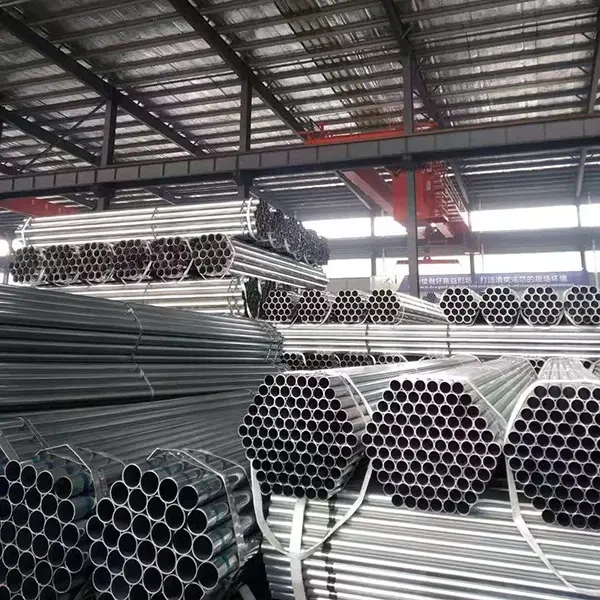
The primary raw material for tubular steel pipe is carbon steel, typically produced through the Basic Oxygen Furnace (BOF) or Electric Arc Furnace (EAF) processes. Alloying elements such as manganese, silicon, chromium, and nickel are added to tailor mechanical properties. Common steel grades include ASTM A53 Grade B (carbon steel), A106 Grade B (high-temperature service), and API 5L Grades X42 to X80 (pipeline applications). The choice of grade impacts weldability, tensile strength, yield strength, and corrosion resistance. Manufacturing processes are broadly categorized into seamless and welded pipe production. Seamless pipe is created by piercing a solid billet of steel and subsequently drawing or rolling it to the desired dimensions. Key parameters controlled during this process include billet temperature, piercing speed, and mandrel reduction rate. Welded pipe is manufactured by forming a strip of steel into a cylindrical shape and then welding the seam. Common welding methods include Electric Resistance Welding (ERW), submerged arc welding (SAW), and High-Frequency Induction Welding (HFIW). Critical control parameters for welded pipe involve welding current, voltage, speed, and the precise alignment of the steel strip. Post-welding processes such as heat treatment (normalizing, annealing, quenching and tempering) are employed to refine the microstructure, relieve residual stresses, and enhance mechanical properties. Surface finishing processes, including pickling, oiling, and coating (galvanizing, epoxy coating, polyethylene coating), are applied to improve corrosion resistance and aesthetics.
Performance & Engineering
The performance of tubular steel pipe is governed by a complex interplay of factors including material properties, geometric characteristics (diameter, wall thickness, length), and applied loads. Structural analysis, employing principles of statics and mechanics of materials, is crucial for determining the pipe's load-carrying capacity. Key engineering considerations include hoop stress (resulting from internal pressure), axial stress (from external loads), bending stress, and torsional stress. For fluid conveyance applications, hydraulic analysis is performed to assess pressure drop, flow velocity, and potential for erosion or cavitation. Corrosion resistance is a critical performance parameter, particularly in aggressive environments. The selection of appropriate alloy compositions and protective coatings is paramount. Compliance requirements vary depending on the application and geographic location. For pressure vessels, codes such as ASME Boiler and Pressure Vessel Code Section VIII Division 1 are mandatory. Pipeline applications are governed by API 5L and relevant regulatory bodies. Environmental resistance must also be considered, including resistance to UV degradation, temperature extremes, and chemical attack. Furthermore, fatigue resistance is critical in cyclic loading scenarios, requiring careful consideration of stress concentration factors and material fatigue properties. Non-destructive testing (NDT) methods, such as ultrasonic testing, radiographic testing, and magnetic particle inspection, are employed to detect defects and ensure structural integrity.
Technical Specifications
| Parameter | ASTM A53 Grade B | API 5L X42 | EN 10210-2 S235JR | ASTM A106 Grade B |
|---|---|---|---|---|
| Yield Strength (MPa) | 250 | 345 | 235 | 276 |
| Tensile Strength (MPa) | 400-530 | 485-620 | 360-530 | 483-621 |
| Elongation (%) | 23 | 21 | 21 | 21 |
| Outside Diameter (mm) | 10.3-660 | 21.3-1219 | 6-660 | 19.1-660 |
| Wall Thickness (mm) | 2-25 | 2.2-25.4 | 1.5-25 | 2.2-25.4 |
| Carbon Equivalent (%CE) | 0.31 max | 0.45 max | 0.43 max | 0.31 max |
Failure Mode & Maintenance
Tubular steel pipe is susceptible to various failure modes depending on the application and operating conditions. Corrosion is a prevalent failure mechanism, manifesting as general corrosion, pitting corrosion, crevice corrosion, or stress corrosion cracking. The initiation and propagation of corrosion are influenced by the presence of moisture, oxygen, chlorides, and other corrosive agents. Fatigue cracking can occur under cyclic loading, particularly at stress concentration points such as welds or geometric discontinuities. Creep rupture, a time-dependent failure mode, is significant at elevated temperatures. Mechanical damage, including denting, bending, or puncture, can compromise structural integrity. Welding defects, such as porosity, slag inclusions, or incomplete fusion, can lead to premature failure. Regular inspection and maintenance are crucial for mitigating these risks. Visual inspection for signs of corrosion or damage should be performed periodically. Non-destructive testing (NDT) methods, such as ultrasonic testing and radiographic testing, can detect subsurface defects. Protective coatings should be inspected for integrity and repaired as needed. Cathodic protection systems can be employed to mitigate corrosion in underground or submerged applications. Preventive maintenance programs, including cleaning, lubrication, and component replacement, can extend the service life of tubular steel pipe systems. Detailed failure analysis should be conducted in the event of a failure to identify the root cause and implement corrective actions.
Industry FAQ
Q: What is the difference between seamless and welded pipe, and when should each be used?
A: Seamless pipe is manufactured without a weld seam, offering superior strength and pressure-handling capabilities. It's preferred for critical applications like high-pressure pipelines and pressure vessels. Welded pipe is more cost-effective and readily available, suitable for less demanding applications like structural supports, low-pressure fluid transport, and general fabrication. The choice depends on the required pressure rating, load conditions, and budget.
Q: How does the carbon equivalent (CE) affect the weldability of tubular steel pipe?
A: A higher carbon equivalent indicates a greater susceptibility to hydrogen-induced cracking during welding. Higher CE materials require more stringent welding procedures, such as preheating and post-weld heat treatment, to prevent cracking. Lower CE materials generally exhibit better weldability.
Q: What are the common types of corrosion encountered in tubular steel pipe, and how can they be prevented?
A: Common corrosion types include general corrosion, pitting corrosion, crevice corrosion, and stress corrosion cracking. Prevention strategies include selecting corrosion-resistant alloys, applying protective coatings (e.g., galvanizing, epoxy coating), using cathodic protection, and employing corrosion inhibitors.
Q: What NDT methods are commonly used to inspect tubular steel pipe for defects?
A: Common NDT methods include ultrasonic testing (UT) for detecting subsurface flaws, radiographic testing (RT) for identifying internal defects, magnetic particle inspection (MPI) for detecting surface and near-surface cracks, and liquid penetrant inspection (LPI) for detecting surface discontinuities.
Q: How do different heat treatments impact the mechanical properties of tubular steel pipe?
A: Heat treatments like normalizing refine the grain structure and improve toughness; annealing relieves internal stresses and enhances ductility; and quenching and tempering increase strength and hardness. The specific heat treatment process is selected based on the desired mechanical properties and the steel grade.
Conclusion
Tubular steel pipe remains an indispensable material across a wide spectrum of industrial sectors due to its versatility, strength-to-weight ratio, and cost-effectiveness. A thorough understanding of its material science, manufacturing processes, and performance characteristics is crucial for ensuring safe and reliable operation. The increasing demand for high-performance alloys, coupled with evolving environmental regulations, necessitates continuous innovation in manufacturing techniques and corrosion protection strategies.
Future developments will likely focus on the adoption of advanced materials like high-strength low-alloy (HSLA) steels and duplex stainless steels, alongside enhanced welding technologies and non-destructive testing methods. Furthermore, the integration of digital technologies, such as predictive maintenance algorithms and corrosion monitoring systems, will play an increasingly important role in optimizing the lifecycle management of tubular steel pipe infrastructure.
