
Apr . 01, 2024 17:55 Back to list
Air Pressure Gauge how to read air pressure gauge Performance Analysis
Introduction
Air pressure gauges are fundamental instruments in numerous industrial processes, ranging from pneumatic systems and HVAC to automotive maintenance and aerospace engineering. These gauges provide a visual indication of pressure, typically measured in pounds per square inch (PSI), bars, kilopascals (kPa), or millimeters of mercury (mmHg). Accurate pressure monitoring is critical for operational efficiency, safety, and the prevention of equipment damage. A misread gauge can lead to system malfunctions, potentially hazardous conditions, and costly downtime. This guide provides a comprehensive overview of air pressure gauge operation, encompassing construction, reading techniques, common error sources, and relevant industry standards. Understanding the intricacies of these instruments is paramount for any engineer, technician, or procurement professional involved in systems reliant on pneumatic or hydraulic power. The following sections will detail material composition, manufacturing processes influencing accuracy, performance considerations, potential failure modes, and best practices for gauge maintenance and calibration.
Material Science & Manufacturing
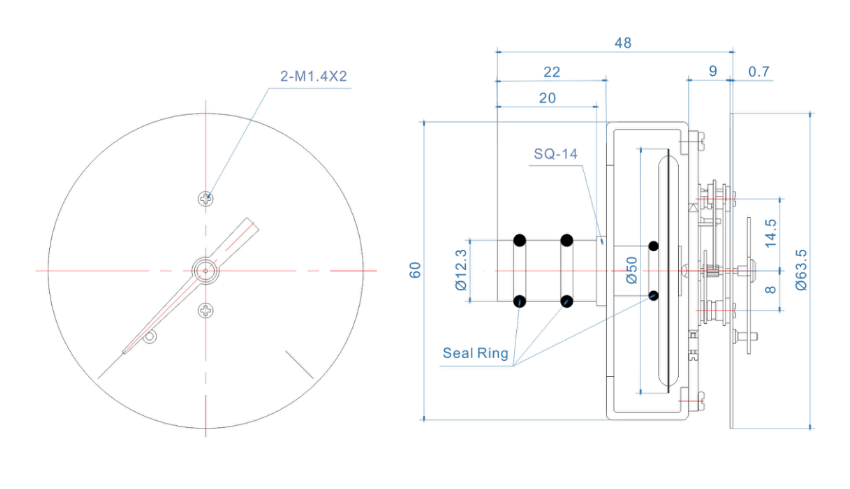
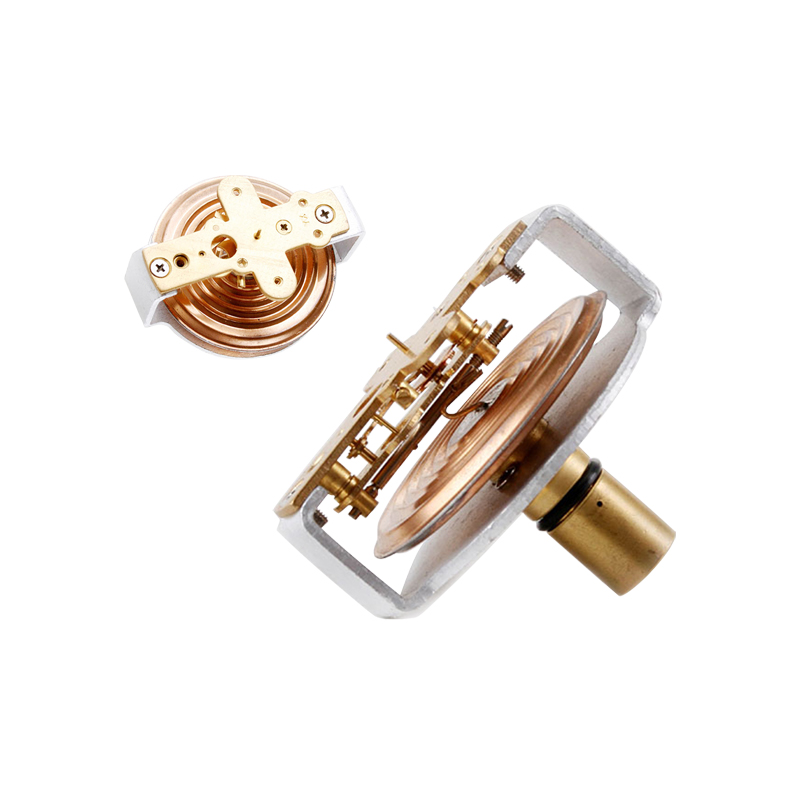
The construction of a typical air pressure gauge involves several key materials, each chosen for specific properties. The gauge case is often constructed from steel, stainless steel, or aluminum alloy, providing mechanical protection and corrosion resistance. The Bourdon tube – the primary sensing element – is commonly manufactured from beryllium copper, brass, or steel alloys. Beryllium copper is favored for its excellent elasticity and resistance to fatigue, crucial for repeated pressure cycles. Brass offers good machinability and cost-effectiveness for lower-pressure applications. The gauge window is typically made of tempered glass or polycarbonate for clarity and impact resistance. Manufacturing processes include deep drawing for the Bourdon tube, precision machining for internal components, and brazing or welding for assembly. Parameter control during Bourdon tube forming is particularly critical. Heat treatment processes affect the material’s spring characteristics, directly impacting accuracy. Variations in wall thickness or ovality during drawing can introduce non-linearity. Calibration procedures, often utilizing deadweight testers as standards, are employed to compensate for manufacturing tolerances. The quality of the sealing compounds used in gauge assembly is also vital; leaks can lead to inaccurate readings and corrosion within the instrument. Furthermore, the dial face printing process requires high precision to ensure clear and accurate scale markings.
Performance & Engineering
The performance of an air pressure gauge is directly related to its ability to accurately translate pressure into a readable indication. Force analysis within the gauge centers on the stress distribution within the Bourdon tube. As pressure increases, the tube attempts to straighten, generating a force transmitted through a linkage mechanism to the gauge pointer. The linkage geometry is engineered to provide a linear relationship between pressure and pointer deflection. Environmental resistance is a crucial performance factor. Temperature fluctuations can affect the material properties of the Bourdon tube and linkage, leading to drift in the zero point. Exposure to corrosive atmospheres can degrade the materials, compromising accuracy and longevity. Vibration and shock can also induce errors, particularly in gauges without internal damping mechanisms. Compliance requirements, dictated by industry regulations, necessitate accurate and reliable pressure measurement. For example, in process control applications, gauges must meet stringent accuracy standards (e.g., Class 1A or 1AA per ASME B40.100). Functional implementation also includes consideration of gauge range selection. Choosing a gauge with an appropriate range ensures optimal resolution and accuracy. Over-ranging a gauge (exposing it to pressure beyond its specified limit) can cause permanent damage, while under-ranging it (using a gauge with a range much higher than the expected pressure) reduces sensitivity.
Technical Specifications
| Parameter | Typical Value/Range | Accuracy Class (ASME B40.100) | Operating Temperature Range (°C) |
|---|---|---|---|
| Pressure Range | 0-10 PSI to 0-10,000 PSI | 1A, 1AA, 2A, 3A | -20 to 60 |
| Case Material | Steel, Stainless Steel, Aluminum | N/A | N/A |
| Bourdon Tube Material | Beryllium Copper, Brass, Steel Alloy | N/A | N/A |
| Connection Size | 1/8" NPT, 1/4" NPT, 1/2" NPT | N/A | N/A |
| Dial Size | 2", 2.5", 4", 6" | N/A | N/A |
| Accuracy | ±0.5% of span (typical) | Varies by Class | N/A |
Failure Mode & Maintenance
Air pressure gauges are susceptible to various failure modes. Fatigue cracking of the Bourdon tube, particularly at points of high stress concentration, is a common issue, often resulting from repeated pressure cycling. Delamination of the dial face or window can occur due to exposure to UV radiation or harsh chemicals. Degradation of the internal lubrication can lead to increased friction and sluggish pointer movement. Oxidation and corrosion of metal components can compromise accuracy and eventually cause complete failure. Zero drift, a gradual shift in the zero point, is often caused by temperature fluctuations or material creep. Maintenance solutions include regular visual inspection for physical damage, leak testing of the connection, and periodic calibration against a known standard. Calibration should be performed at least annually, or more frequently in critical applications. Avoid exposing gauges to extreme temperatures, corrosive substances, or excessive vibration. When replacing a gauge, ensure the new unit has the appropriate pressure range and accuracy class for the application. Proper installation, including the use of thread sealant on the connection, can prevent leaks and ensure accurate readings. If a gauge exhibits erratic behavior or significant zero drift, it should be removed from service and either repaired or replaced.
Industry FAQ
Q: What is the significance of the accuracy class (e.g., 1A, 2A) specified on an air pressure gauge?
A: The accuracy class, as defined by standards like ASME B40.100, indicates the maximum permissible error expressed as a percentage of the gauge's span. Class 1A gauges have the highest accuracy (±0.25% of span), while Class 3A gauges have the lowest (±3% of span). Selecting the appropriate class depends on the criticality of the application and the required level of precision.
Q: How does temperature affect the accuracy of an air pressure gauge?
A: Temperature fluctuations can cause the Bourdon tube and other internal components to expand or contract, leading to zero drift or changes in the calibration. Extreme temperatures can also affect the viscosity of internal lubricants, increasing friction and potentially causing sluggish pointer movement. Gauges designed for wider temperature ranges or with temperature compensation features are available for applications where temperature control is limited.
Q: What is the proper procedure for calibrating an air pressure gauge?
A: Calibration requires comparing the gauge reading to a known pressure standard, typically a deadweight tester or a calibrated electronic pressure transducer. The gauge is subjected to pressures at various points within its range, and any deviations from the standard are recorded. Adjustments are made to the gauge mechanism to minimize the error. Calibration should be performed by a qualified technician using certified equipment.
Q: What are the common causes of leaks in an air pressure gauge?
A: Leaks can occur at the gauge connection, within the Bourdon tube (due to cracks or defects), or around the case gasket. Proper installation with thread sealant is crucial to prevent leaks at the connection. Internal leaks often indicate a failing Bourdon tube and require gauge replacement. Case gasket leaks can be addressed by tightening the case screws or replacing the gasket.
Q: How often should an air pressure gauge be replaced?
A: The replacement frequency depends on the application and operating conditions. Generally, gauges should be replaced if they exhibit signs of damage, significant inaccuracies after calibration, or consistent leaks. A preventative maintenance schedule including annual inspection and calibration is recommended. In critical applications, a shorter replacement cycle may be warranted.
Conclusion
Air pressure gauges, while seemingly simple instruments, rely on intricate engineering and precise manufacturing to deliver accurate and reliable pressure measurements. Understanding the materials used, manufacturing processes, performance characteristics, and potential failure modes is essential for ensuring their effective operation and longevity. Proper installation, regular maintenance, and periodic calibration are critical for maintaining accuracy and preventing costly downtime. Selecting the appropriate gauge for a specific application, considering factors like pressure range, accuracy class, and environmental conditions, is paramount for optimal performance.
The continued development of pressure sensing technology focuses on enhancing accuracy, improving durability, and integrating digital communication capabilities. Smart gauges, incorporating features like data logging, remote monitoring, and self-diagnostics, are becoming increasingly prevalent in industrial applications. Adherence to relevant industry standards (ASME, ISO) is vital for ensuring the quality and reliability of air pressure gauges, ultimately contributing to safer and more efficient industrial processes.
 English
  Arabic
  China
China  China (Taiwan)
  Danish
  Dutch
Dutch  French
  German
  Greek
Greek  Hindi
Hindi  Indonesian
  Italian
  Japanese
  Korean
  Latin
Latin  Polish
  Portuguese
  Russian
  Spanish
  Turkish