
Apr . 01, 2024 17:55 Back to list
Gas Station Air Pressure Gauges Material Science and Performance

Introduction
The ubiquitous presence of pneumatic tires in modern transportation necessitates readily available tire inflation solutions. While commonly associated with automotive maintenance, the provision of air pressure measurement and inflation services is a standard amenity at most retail gasoline stations. This technical guide details the functionality, construction, accuracy standards, and maintenance considerations surrounding air pressure gauges found at gas stations, focusing on the critical aspects for both providers and consumers. These gauges aren’t simply convenience tools; they represent a crucial component in vehicle safety and fuel efficiency. This document will address the types of gauges utilized, the underlying physics of pressure measurement, common failure modes, and pertinent industry standards related to accuracy and calibration.
Material Science & Manufacturing
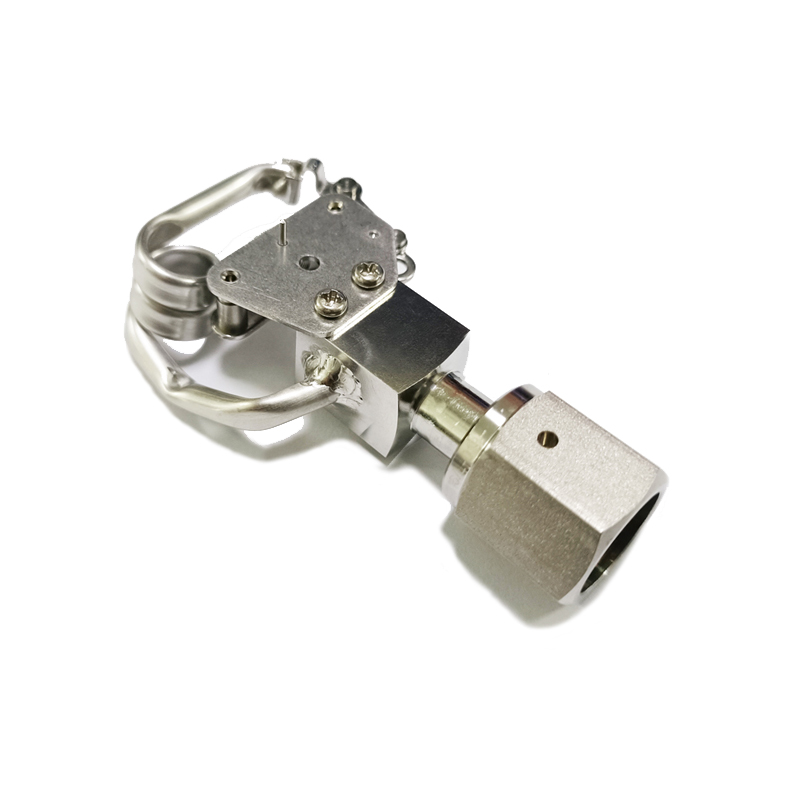
Gas station air pressure gauges commonly employ two primary technologies: mechanical (analog) and digital. Mechanical gauges rely on a Bourdon tube, typically constructed from beryllium copper or steel alloy. Beryllium copper is preferred for its higher elasticity and resistance to corrosion, allowing for greater sensitivity and longevity, but at a higher material cost. The manufacturing process for Bourdon tubes involves precision forming, heat treatment for stress relief, and meticulous calibration. Steel alloys offer a more economical option but require coatings to mitigate corrosion. Digital gauges utilize strain gauge sensors bonded to a diaphragm. These sensors are often made from polysilicon or silicon on sapphire for enhanced stability and accuracy. Manufacturing requires microfabrication techniques, including photolithography and etching, to create the delicate sensor structures. The housings of both analog and digital gauges are typically constructed from reinforced polymers (ABS, Polycarbonate) chosen for impact resistance and weatherability. Sealing components are often made of nitrile rubber (NBR) or Viton fluoroelastomer for compatibility with compressed air and resistance to temperature fluctuations. The air delivery hoses are generally reinforced PVC, selected for flexibility and burst resistance. The nozzle, which interfaces with the tire valve stem, is commonly brass, selected for durability and compatibility with valve core materials.
Performance & Engineering
The performance of gas station air pressure gauges is governed by fundamental principles of fluid mechanics and material science. Accuracy is paramount, and gauges must comply with specified tolerances (discussed in the Standards section). Force analysis reveals that the Bourdon tube in analog gauges undergoes torsional stress proportional to the applied pressure. The degree of bending is translated into a visible reading via a mechanical linkage. Digital gauges rely on the piezoresistive effect – the change in electrical resistance of the strain gauge material under stress. Signal conditioning circuitry amplifies and processes this signal to provide a digital readout. Environmental resistance is critical, especially given the outdoor exposure. Gauges must withstand temperature variations (-40°C to 60°C), humidity, and exposure to UV radiation. Engineering considerations also include the flow rate of air delivery, which impacts inflation time, and the durability of the hose and nozzle connections to prevent air leaks. The design must also incorporate safety features, such as pressure relief valves in the air compressor system to prevent over-inflation, and robust electrical insulation in digital models. Compliance requirements often dictate regular calibration and certification of the gauges to ensure accuracy and public safety.
Technical Specifications
| Parameter | Analog Gauge (Typical) | Digital Gauge (Typical) | Air Compressor Output Pressure |
|---|---|---|---|
| Pressure Range | 0-60 PSI (0-414 kPa) | 0-120 PSI (0-827 kPa) | 90-150 PSI (620-1034 kPa) |
| Accuracy | ± 3% of full scale | ± 1% of full scale | ± 5% of set point |
| Resolution | 1 PSI | 0.1 PSI | N/A |
| Operating Temperature | -20°C to 60°C (-4°F to 140°F) | -10°C to 50°C (14°F to 122°F) | 0°C to 40°C (32°F to 104°F) |
| Hose Length | 18-24 inches | 18-24 inches | 25-50 feet |
| Housing Material | ABS Plastic | ABS Plastic | Steel/Cast Iron |
Failure Mode & Maintenance
Air pressure gauges at gas stations are susceptible to several failure modes. Analog gauges often experience mechanical drift due to wear and tear on the Bourdon tube and linkage, leading to inaccurate readings. Corrosion of the Bourdon tube, particularly in humid environments, can also cause failure. Digital gauges can fail due to sensor drift, electronic component failure (e.g., capacitor degradation, IC malfunction), or display issues. Air leaks at hose connections are a common problem, reducing air delivery pressure and inflating tires inefficiently. Another frequent failure is damage to the nozzle, resulting in air escaping around the valve stem. Preventative maintenance is crucial. Regular visual inspection of hoses and nozzles for cracks, wear, and damage is essential. Calibration checks should be performed at least annually, utilizing a calibrated pressure standard. Digital gauges should be tested for battery life and display functionality. Analog gauges require periodic cleaning and lubrication of the mechanical linkage. Air compressor systems need routine maintenance, including draining moisture from the air tank, checking filter cleanliness, and inspecting the pressure relief valve. Prompt replacement of damaged components is critical to ensure accuracy and safety.
Industry FAQ
Q: Why do gas station air pressure gauges sometimes read differently than my personal gauge?
A: Discrepancies can arise due to several factors. Gas station gauges undergo significant use and are often subject to environmental exposure and physical impact, leading to calibration drift. Personal gauges, particularly higher-quality digital models, tend to be more precisely calibrated and less affected by these factors. Additionally, the accuracy specification of gas station gauges is typically wider (+/-3%) than that of precision personal gauges (+/-1% or better). Lastly, tire pressure can change with temperature; a gauge reading taken immediately after driving will differ from one taken after the tire has cooled.
Q: What is the acceptable tolerance for tire pressure when using a gas station air pump?
A: Generally, a tolerance of +/- 2 PSI is considered acceptable when using a gas station air pump, assuming the gauge is reasonably calibrated. However, it’s always best to verify the pressure with a known accurate gauge, especially for critical applications like performance driving or long-distance travel. Refer to your vehicle's tire placard (usually located on the driver's side doorjamb) for the recommended tire pressure.
Q: How often should gas stations calibrate their air pressure gauges?
A: While there isn’t a universal legal requirement, best practice dictates annual calibration by a qualified technician using a traceable pressure standard. Some jurisdictions may have specific regulations. Proactive calibration ensures accuracy and minimizes the risk of inaccurate readings leading to under- or over-inflated tires.
Q: What causes the digital display on a gas station air pump to malfunction?
A: Common causes include power surges, moisture ingress, and component failure. The electronic circuitry is susceptible to damage from voltage spikes, particularly during thunderstorms. Condensation can corrode internal components. Over time, capacitors can degrade, and integrated circuits may fail. Regular inspection and maintenance can help identify and address these issues.
Q: Are all gas station air compressors equipped with a moisture separator? And why is that important?
A: Not all gas station air compressors are equipped with a moisture separator, however, their inclusion is vital. Air compressors condense water vapor during the compression process. If this moisture isn’t removed, it can be delivered to the tires, leading to corrosion of the wheel and potential damage to the tire pressure monitoring system (TPMS). Moisture separators remove this water, ensuring clean, dry air is delivered.
Conclusion
The air pressure gauges found at gas stations, while seemingly simple devices, represent a complex interplay of material science, engineering, and metrological principles. Ensuring their accurate operation is critical for vehicle safety, fuel efficiency, and tire longevity. Regular maintenance, including calibration, inspection, and component replacement, is essential to mitigate common failure modes. Understanding the limitations of these gauges – particularly their inherent accuracy tolerances – is vital for consumers.
Looking forward, advancements in sensor technology and data analytics will likely lead to the development of “smart” air pressure systems at gas stations, incorporating automated calibration checks, remote monitoring, and enhanced diagnostic capabilities. The integration of these systems with vehicle TPMS sensors could provide real-time pressure readings and personalized inflation recommendations. Ultimately, continued focus on accuracy, reliability, and user safety will drive innovation in this ubiquitous aspect of vehicle maintenance.
 English
  Arabic
  China
China  China (Taiwan)
  Danish
  Dutch
Dutch  French
  German
  Greek
Greek  Hindi
Hindi  Indonesian
  Italian
  Japanese
  Korean
  Latin
Latin  Polish
  Portuguese
  Russian
  Spanish
  Turkish