
Apr . 01, 2024 17:55 Back to list
Gauge Pressure what is gauge pressure Performance Analysis
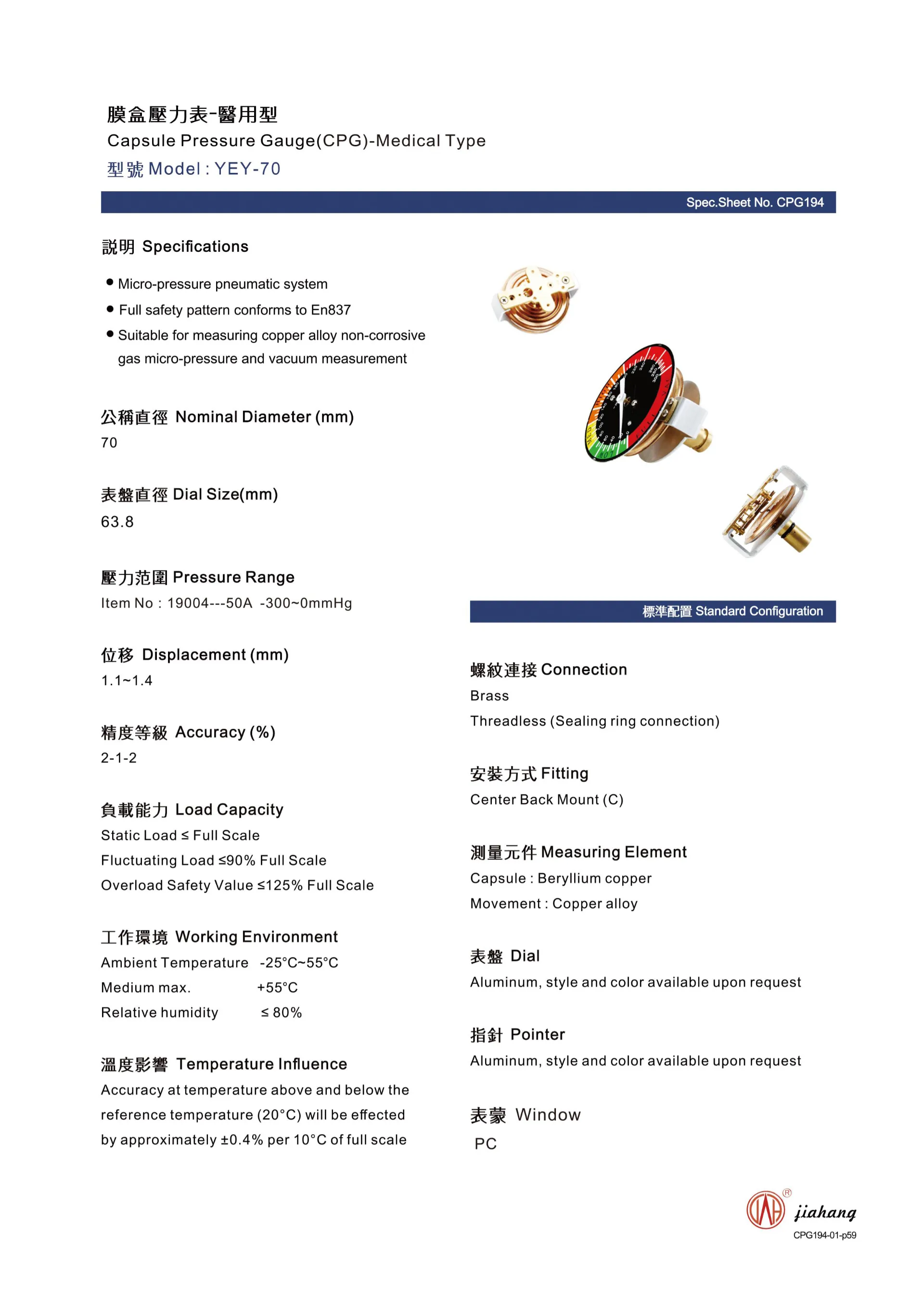
Introduction
Gauge pressure is a measurement of pressure relative to ambient atmospheric pressure. Unlike absolute pressure, which references a perfect vacuum, gauge pressure utilizes the surrounding atmospheric pressure as its zero point. This makes it a particularly relevant metric in numerous industrial applications where monitoring pressure differentials – the pressure above or below atmospheric – is crucial. Its prevalence stems from its practical utility in systems designed to operate within a defined pressure range relative to their environment. The accurate measurement and control of gauge pressure are fundamental to process efficiency, safety, and product quality across industries ranging from pneumatic systems and hydraulic machinery to chemical processing and meteorology. This guide provides an in-depth exploration of gauge pressure, encompassing its underlying principles, material considerations for sensing elements, common applications, failure modes, and relevant industry standards. Core pain points addressed include ensuring accurate calibration, compensating for temperature variations, and mitigating corrosion in harsh environments. Understanding gauge pressure’s nuances is vital for engineers, technicians, and procurement professionals alike.
Material Science & Manufacturing
The fabrication of gauge pressure sensors relies heavily on materials exhibiting specific elastic properties, corrosion resistance, and compatibility with the measured fluid. Common materials include stainless steels (304, 316, 17-4 PH) chosen for their strength and resistance to a wide range of corrosive agents. Nickel alloys (Inconel, Hastelloy) are employed in extremely harsh environments involving high temperatures and aggressive chemicals. For diaphragms, materials like titanium and certain polymers (PTFE, PVDF) are utilized when flexibility and chemical inertness are paramount. Manufacturing processes vary depending on the sensor type. Bourdon tubes are formed through bending and welding of seamless tubing, requiring precise control of forming parameters to ensure linearity and repeatability. Strain gauge-based sensors involve the deposition of thin-film strain gauges onto a diaphragm or other sensing element, utilizing sputtering or other vacuum deposition techniques. Piezoresistive sensors, often made of silicon, are manufactured using microfabrication techniques including etching, doping, and deposition. Critical parameters during manufacturing include heat treatment to relieve residual stresses, surface finishing to minimize hysteresis, and calibration to establish a traceable pressure-output relationship. Maintaining tight tolerances throughout the manufacturing process is crucial to minimize drift and maximize sensor accuracy. The choice of welding techniques (TIG, laser welding) impacts the structural integrity and corrosion resistance of the sensor. Furthermore, material selection must account for the fluid's viscosity, density, and potential for clogging or crystallization.
Performance & Engineering
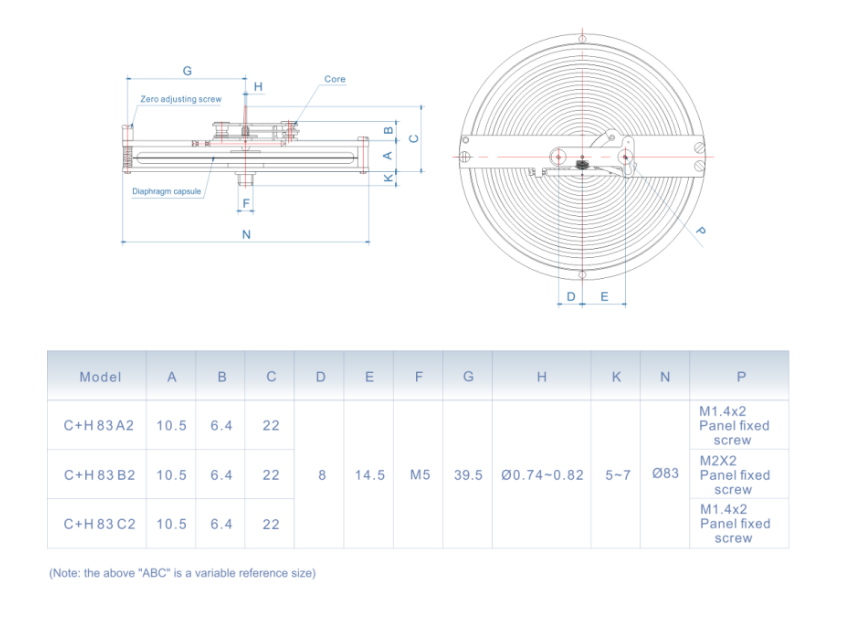
The performance of a gauge pressure sensor is characterized by several key engineering parameters. Accuracy, defined as the deviation between the measured pressure and the true pressure, is paramount. Linearity quantifies the sensor’s ability to provide an output proportional to the applied pressure. Hysteresis, the difference in output for the same pressure applied in increasing versus decreasing directions, indicates material memory and potential non-repeatability. Resolution denotes the smallest pressure increment the sensor can detect. Thermal stability is crucial, as temperature fluctuations can induce errors due to material expansion or changes in the sensor’s zero point and span. Force analysis is critical in diaphragm-based sensors. The diaphragm experiences both radial and tangential stresses proportional to the pressure difference. Finite element analysis (FEA) is frequently employed to optimize diaphragm geometry and material thickness to minimize stress concentration and maximize sensitivity. Environmental resistance is another vital consideration. Sensors must withstand temperature extremes, humidity, vibration, and shock without degradation in performance. Compliance with industry standards (e.g., IEC 60700 for pressure sensors) dictates stringent testing requirements for these parameters. Long-term stability necessitates careful selection of materials and construction techniques to minimize drift and maintain accuracy over the sensor’s operational lifespan. Understanding the fluid mechanics involved, including potential for cavitation or laminar/turbulent flow, is essential for accurate measurement in fluid systems.
Technical Specifications
| Parameter | Unit | Typical Range | Accuracy (Typical) |
|---|---|---|---|
| Pressure Range | psi | 0-100 to 0-10,000 | ±0.25% FS |
| Operating Temperature | °C | -40 to +85 | N/A |
| Media Compatibility | - | Stainless Steel: General Purpose; Hastelloy: Corrosive Media | N/A |
| Output Signal | - | 4-20 mA, 0-5 V, 0-10 V | N/A |
| Connection Type | - | 1/4" NPT, 1/2" NPT, G1/4 | N/A |
| Hysteresis | % FS | <0.1% | N/A |
Failure Mode & Maintenance
Gauge pressure sensors are susceptible to various failure modes. Diaphragm rupture, often caused by overpressure events or material fatigue, is a catastrophic failure. Drift, a gradual change in the sensor’s output, can result from creep, corrosion, or changes in the internal electronics. Zero shift, a change in the sensor’s output at zero pressure, can be induced by temperature variations or contamination. Hysteresis can increase over time due to material degradation or the accumulation of contaminants. Corrosion, particularly in harsh chemical environments, can lead to sensor malfunction or failure. Strain gauge debonding, a common failure mode in strain gauge-based sensors, can be caused by thermal stress or mechanical shock. For maintenance, regular calibration is essential to ensure accuracy. Periodic inspection for corrosion or physical damage is crucial. Filtering the measured fluid prevents clogging and contamination. Proper electrical grounding minimizes noise and interference. In applications involving vibrating environments, shock absorption measures can extend sensor life. Regularly checking the sensor’s connections for tightness prevents signal loss. Replacing sensors proactively based on their service life or after exposure to extreme conditions minimizes the risk of unexpected failures. Diagnostic tools, such as signal analyzers and thermal imagers, can aid in identifying and troubleshooting sensor problems.
Industry FAQ
Q: What is the difference between gauge pressure, absolute pressure, and vacuum pressure?
A: Gauge pressure is relative to atmospheric pressure, absolute pressure is relative to a perfect vacuum, and vacuum pressure is the amount by which a pressure is below atmospheric pressure. Gauge pressure is commonly used in industrial applications, while absolute pressure is important in scientific and aerospace fields. Vacuum pressure is vital for processes like distillation and freeze-drying.
Q: How does temperature affect gauge pressure readings?
A: Temperature variations can cause thermal expansion or contraction of the sensor’s components, leading to zero shift and span errors. Temperature compensation techniques, either hardware-based or software-based, are employed to minimize these effects. The sensor's datasheet will specify the temperature coefficient, indicating the expected change in output per degree Celsius.
Q: What materials are best suited for gauge pressure sensors used in corrosive environments?
A: Nickel alloys like Hastelloy and Inconel, as well as certain grades of stainless steel (e.g., 316), offer excellent corrosion resistance. The specific material selection depends on the nature of the corrosive fluid and the operating temperature. Protective coatings, such as PTFE or PFA, can also enhance corrosion resistance.
Q: How can I ensure the accuracy of my gauge pressure measurements?
A: Regular calibration using a traceable standard is paramount. Ensure the sensor is properly vented to atmosphere. Minimize vibration and shock. Select a sensor with appropriate accuracy and resolution for the application. Filter the measured fluid to prevent clogging. Implement temperature compensation.
Q: What is the typical lifespan of a gauge pressure sensor?
A: The lifespan varies depending on the operating conditions, material quality, and application. Typical lifespans range from 5 to 10 years, but can be significantly longer with proper maintenance and in benign environments. Harsh environments, extreme temperatures, and corrosive fluids can shorten the lifespan considerably.
Conclusion
Gauge pressure measurement is a cornerstone of numerous industrial processes, and understanding its intricacies is crucial for efficient and reliable operation. The selection of appropriate materials, meticulous manufacturing processes, and rigorous performance testing are all essential to ensure accurate and stable readings. Failure modes are varied, but proactive maintenance and regular calibration can significantly extend sensor life and prevent costly downtime.
Looking ahead, advancements in microfabrication techniques and the development of new materials will continue to drive improvements in gauge pressure sensor performance, enabling higher accuracy, increased durability, and expanded application possibilities. The integration of wireless communication and data analytics will also facilitate remote monitoring and predictive maintenance, further enhancing the value and reliability of these critical measurement devices.
 English
  Arabic
  China
China  China (Taiwan)
  Danish
  Dutch
Dutch  French
  German
  Greek
Greek  Hindi
Hindi  Indonesian
  Italian
  Japanese
  Korean
  Latin
Latin  Polish
  Portuguese
  Russian
  Spanish
  Turkish