
Apr . 01, 2024 17:55 Back to list
Pressure Gauge Calibration how do you calibrate a pressure gauge
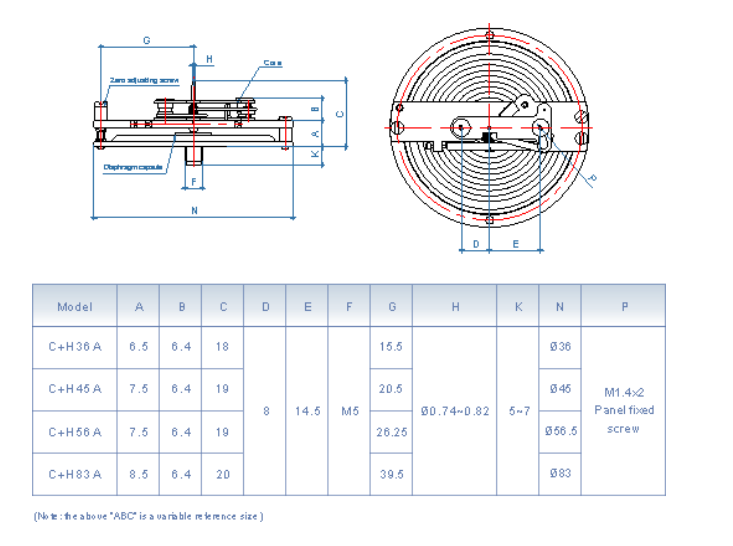
Introduction
Pressure gauges are ubiquitous in industrial processes, providing critical feedback for control, safety, and efficiency. Calibration, the process of comparing a gauge's readings to a known standard, is paramount to ensuring accuracy and reliability. This guide details the principles, procedures, and considerations involved in calibrating pressure gauges, addressing common challenges and adherence to industry standards. Inaccurate pressure readings can lead to process upsets, equipment damage, and potential safety hazards, making regular calibration a non-negotiable aspect of operational integrity. This document focuses on the calibration of mechanical, digital, and smart pressure gauges commonly found in industrial applications, specifically those utilizing Bourdon tube, diaphragm, and strain gauge technologies. The core performance characteristic scrutinized during calibration is the gauge's ability to accurately represent applied pressure across its specified range, factoring in linearity, hysteresis, and repeatability.
Material Science & Manufacturing
The accuracy and longevity of a pressure gauge are inherently tied to the material science and manufacturing processes employed in its construction. Bourdon tubes, commonly crafted from beryllium copper, spring steel, or stainless steel, exhibit specific elastic properties critical for accurate deflection proportional to applied pressure. Beryllium copper offers superior corrosion resistance and elastic recovery, while spring steel provides high strength at a lower cost. Stainless steel is favored in harsh environments. The manufacturing of Bourdon tubes involves precise forming, heat treatment, and welding. Heat treatment is crucial for relieving stresses introduced during forming and achieving the desired spring characteristics. Diaphragm gauges utilize materials like Hastelloy, Monel, or titanium for corrosion resistance, particularly in applications involving aggressive media. These diaphragms are often welded to a thicker support structure. Strain gauge-based pressure sensors rely on silicon or polysilicon diaphragms with bonded strain gauges. The sensitivity of these gauges depends on the piezoresistive properties of the strain gauge material. Manufacturing involves precise microfabrication techniques like photolithography and etching. All gauge components require careful selection of elastomers for seals and gaskets, considering chemical compatibility and temperature ranges. Failure to account for material properties like creep resistance, thermal expansion coefficients, and fatigue strength significantly impacts calibration stability and long-term performance.
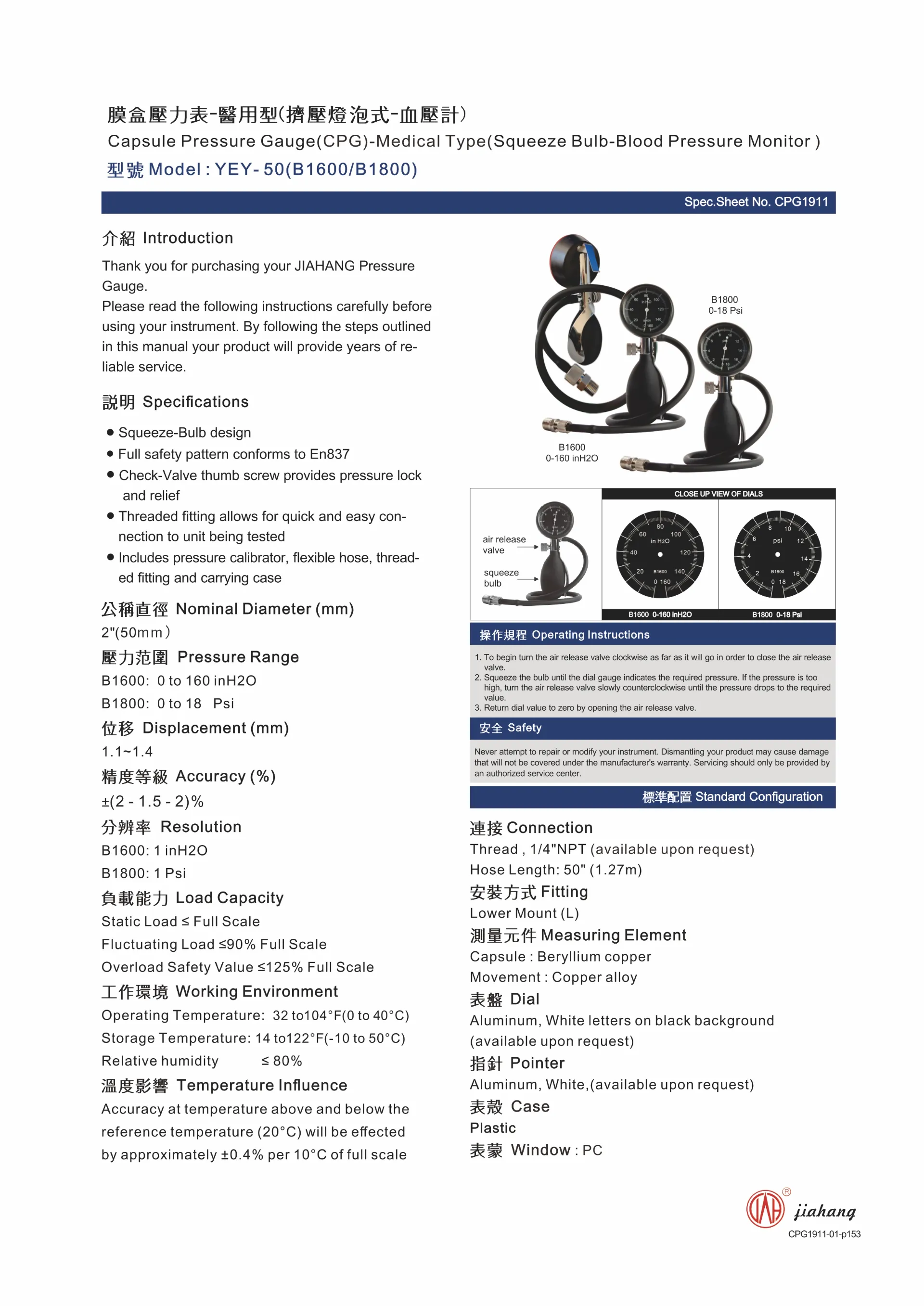
Performance & Engineering
Calibrating a pressure gauge necessitates understanding the engineering principles governing its operation and potential error sources. Linearity, the degree to which the gauge's output corresponds proportionally to the applied pressure, is a primary performance metric. Hysteresis, the difference in readings for increasing and decreasing pressure, indicates energy loss within the mechanism. Repeatability assesses the consistency of readings for the same pressure. Environmental factors such as temperature, humidity, and vibration can significantly affect performance. Temperature drift, where the zero point or span shifts with temperature changes, must be accounted for. Vibration can induce oscillations and inaccurate readings. Force analysis dictates the stresses within the Bourdon tube or diaphragm under pressure. Finite Element Analysis (FEA) is often employed during the design phase to optimize geometry and minimize stress concentrations. Compliance requirements, such as those mandated by ASME B40.100 for pressure gauges, specify acceptable tolerances for accuracy, repeatability, and drift. Functional implementation during calibration involves applying known pressures using a calibrated pressure source (deadweight tester, pressure controller) and comparing the gauge’s output to the standard. Compensation techniques, such as digital correction algorithms in smart gauges, are employed to minimize errors.
Technical Specifications
| Parameter | Unit | Typical Value (0-100 psi Gauge) | Accuracy Class |
|---|---|---|---|
| Pressure Range | psi | 0-100 | 2.5% FS |
| Accuracy | % of Full Scale (FS) | ±2.5 | 3A |
| Repeatability | % of FS | ≤0.5 | 4A |
| Hysteresis | % of FS | ≤1.0 | - |
| Operating Temperature | °F | -20 to 180 | - |
| Process Connection | 1/4" NPT (Female) | - |
Failure Mode & Maintenance
Pressure gauge failures can stem from various causes. Fatigue cracking in Bourdon tubes, particularly near welded joints, is common with cyclical pressure fluctuations. Corrosion, especially in environments containing chlorides or sulfides, can weaken the tube and lead to leaks or rupture. Zero drift, a gradual shift in the zero point, can be caused by material creep or internal component wear. Hysteresis can increase over time due to friction within the mechanism. Diaphragm gauges are susceptible to rupture from overpressure events or corrosion. Strain gauges can experience drift or failure due to temperature extremes or electrical interference. Delamination of coatings on diaphragms can affect accuracy. Preventive maintenance includes regular visual inspection for leaks, corrosion, and damage. Periodic calibration is crucial to detect and correct drift. Lubrication of moving parts (where applicable) reduces friction and wear. Protection from vibration and extreme temperatures extends gauge life. In case of failure, proper root cause analysis is essential to prevent recurrence. Replacement with a gauge meeting the original specifications is paramount. Avoid overpressure scenarios by implementing appropriate pressure relief devices.
Industry FAQ
Q: What is the acceptable calibration interval for a pressure gauge in a chemical processing plant?
A: The acceptable calibration interval depends on the criticality of the application, the severity of the process environment, and regulatory requirements. Generally, a yearly calibration is recommended for critical applications. However, gauges exposed to corrosive media, high vibration, or extreme temperatures may require more frequent calibration – potentially every 6 months or even quarterly. Following a major process upset or maintenance event, recalibration is advisable. Refer to ASME B40.100 guidelines for specific recommendations.
Q: What is the difference between field calibration and laboratory calibration?
A: Field calibration is performed on-site, typically using a portable pressure calibrator. It is convenient but may have lower accuracy due to environmental influences. Laboratory calibration is conducted in a controlled environment with precision calibration standards and traceable instrumentation, offering higher accuracy and traceability. For critical applications requiring high accuracy, laboratory calibration is preferred.
Q: How do you account for ambient temperature during calibration?
A: Ambient temperature can affect gauge readings. During calibration, record the ambient temperature and, if possible, perform the calibration at a stable temperature. Some calibrators have built-in temperature compensation features. For high-accuracy applications, apply temperature correction factors based on the gauge's temperature coefficient.
Q: What type of pressure source is most suitable for calibrating a 0-1000 psi gauge?
A: For a 0-1000 psi gauge, a hydraulic deadweight tester or a precision pressure controller capable of generating and maintaining pressures up to 1000 psi with appropriate accuracy is recommended. Pneumatic pressure sources are typically limited to lower pressures. The pressure source's accuracy must be at least four times better than the gauge's required accuracy.
Q: How do you determine if a pressure gauge is beyond economical repair?
A: A pressure gauge is considered beyond economical repair if the cost of parts and labor exceeds a significant percentage (typically 70-80%) of the cost of a new gauge. Recurring failures, significant corrosion, irreparable damage to the Bourdon tube or diaphragm, or inability to achieve calibration within acceptable tolerances are indicators of the need for replacement.
Conclusion
Effective pressure gauge calibration is a cornerstone of reliable industrial operations, inextricably linked to material science, precision engineering, and adherence to established standards. The process necessitates a thorough understanding of gauge mechanics, potential error sources, and the appropriate calibration techniques. By prioritizing regular calibration and implementing robust maintenance practices, operators can minimize process variability, enhance safety, and prolong the lifespan of their instrumentation.
The future of pressure gauge calibration will likely involve increasing integration of digital technology, including smart gauges with self-calibration capabilities and wireless communication for remote monitoring and data analysis. Advanced diagnostic tools and predictive maintenance algorithms will further optimize calibration intervals and prevent unexpected failures. Continued adherence to international standards and a commitment to ongoing training for calibration technicians will remain essential for ensuring the accuracy and reliability of pressure measurements in increasingly complex industrial environments.
 English
  Arabic
  China
China  China (Taiwan)
  Danish
  Dutch
Dutch  French
  German
  Greek
Greek  Hindi
Hindi  Indonesian
  Italian
  Japanese
  Korean
  Latin
Latin  Polish
  Portuguese
  Russian
  Spanish
  Turkish