
Apr . 01, 2024 17:55 Back to list
Pressure Gauge how to read the pressure gauge Performance Analysis
Introduction
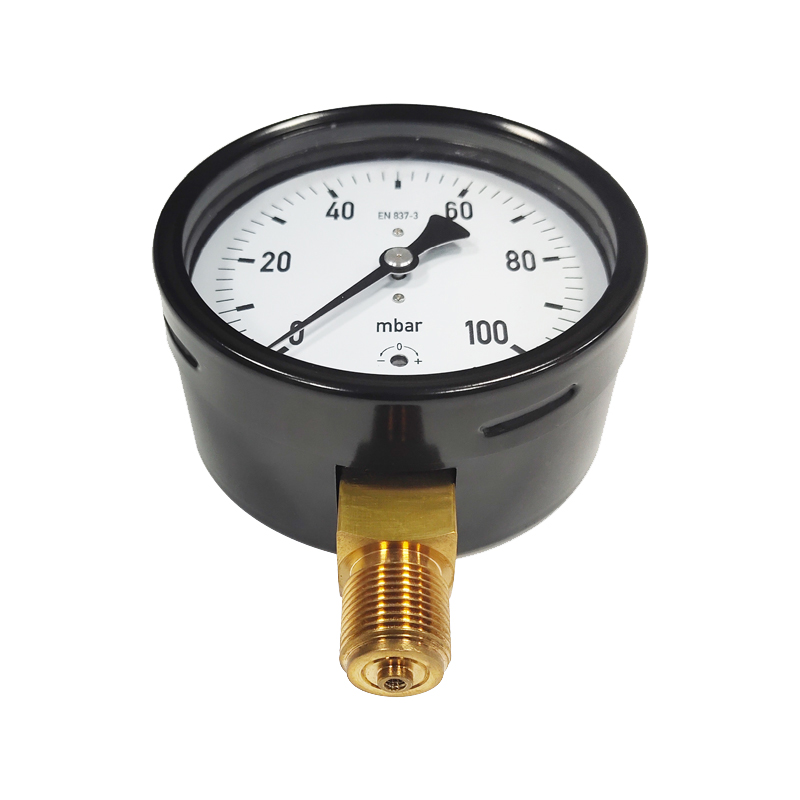
Pressure gauges are fundamental instruments in industrial process control, providing a visual indication of force exerted by a fluid (liquid or gas) against a surface. Their accurate reading is critical for maintaining system integrity, ensuring process efficiency, and preventing catastrophic failures. This guide details the principles of pressure gauge operation, methods for accurate reading, common types, and considerations for selection and maintenance. The industrial chain position of pressure gauges lies within the instrumentation and control segment, acting as a critical interface between process variables and operator response. Core performance revolves around accuracy, repeatability, and robustness in diverse operational environments. Common pain points within industry include misinterpretation of scales, parallax errors during reading, instrument drift leading to inaccurate data, and selecting the incorrect gauge for the application (leading to premature failure or inaccurate readings). Proper understanding of these elements is crucial for plant engineers, maintenance technicians, and procurement specialists.
Material Science & Manufacturing
The construction of a typical Bourdon tube pressure gauge involves several critical material choices and manufacturing processes. The Bourdon tube itself is frequently manufactured from beryllium copper alloys (providing excellent corrosion resistance and elasticity), phosphor bronze, or stainless steel (304, 316 for enhanced chemical compatibility). The material selection is dictated by the fluid being measured; aggressive media require highly corrosion-resistant alloys. The manufacturing process begins with forming a metal tube into a C-shape or spiral, utilizing techniques like hot forming or cold drawing. Heat treatment is then applied to relieve stresses and enhance the elastic properties of the tube. The gauge case is generally constructed from steel or aluminum, often with a protective coating (e.g., epoxy powder coating) for environmental resistance. The dial face is commonly made of aluminum with a durable, UV-resistant printed scale. Key parameter control during manufacturing includes precise dimensional control of the Bourdon tube’s wall thickness and curvature, ensuring linearity and accuracy. Welding processes (TIG, laser welding) are used to connect the Bourdon tube to the movement mechanism, requiring meticulous control of heat input to prevent distortion and material degradation. Calibration is performed against NIST-traceable standards, crucial for maintaining accuracy and compliance.
Performance & Engineering
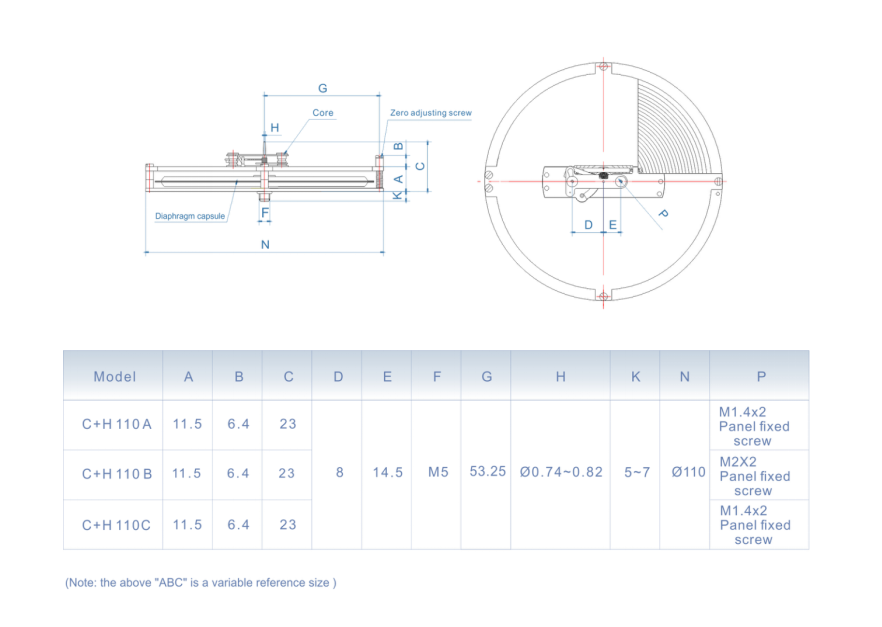
The performance of a pressure gauge is fundamentally governed by the principles of elastic deformation and force transmission. The Bourdon tube experiences stress proportional to the applied pressure, causing it to straighten or unwind. This mechanical movement is translated through a linkage mechanism (typically a sector and pinion gear) to rotate a pointer on the dial. Engineering considerations include the selection of appropriate gear ratios to optimize sensitivity and accuracy across the gauge's pressure range. Environmental resistance is paramount; gauges operating in harsh conditions must withstand temperature fluctuations, vibration, shock, and potentially corrosive atmospheres. Pressure gauges undergo rigorous testing to meet industry standards, including cycle testing (simulating repeated pressure changes) and shock and vibration testing. Compliance requirements vary by industry; for example, gauges used in food and beverage applications must meet sanitary standards (3-A Sanitary Standards), while those used in hazardous locations must be intrinsically safe (ATEX, IECEx). Force analysis involves calculating the stress within the Bourdon tube, ensuring it remains within its elastic limit to prevent permanent deformation. The gauge's accuracy is also affected by factors like mounting orientation (vertical mounting generally provides the most accurate readings) and the effects of gravity.
Technical Specifications
| Parameter | Unit | Typical Range | Accuracy (Full Scale) |
|---|---|---|---|
| Pressure Range | psi / kPa / bar | 0-100 psi to 0-10,000 psi | ±1.0% |
| Case Material | - | Steel, Stainless Steel, Aluminum | - |
| Bourdon Tube Material | - | Beryllium Copper, Phosphor Bronze, Stainless Steel | - |
| Connection Size | NPT / BSPT | 1/8", 1/4", 1/2" | - |
| Operating Temperature | °F / °C | -40°F to 200°F (-40°C to 93°C) | - |
| Dial Size | inches / mm | 2.5", 4", 6" | - |
Failure Mode & Maintenance
Common failure modes in pressure gauges include tube rupture (due to overpressure or fatigue), linkage wear (leading to inaccurate readings), and zero drift (resulting in a gradual shift in the indicated pressure). Fatigue cracking can occur in the Bourdon tube due to repeated pressure cycles, especially if the gauge is subjected to excessive vibration. Delamination of the dial face can occur due to UV exposure or chemical attack. Oxidation of internal components (particularly in gauges exposed to corrosive environments) can lead to corrosion and malfunction. Regular maintenance is crucial for preventing these failures. This includes visual inspection for physical damage (cracks, dents), checking for leaks around the connection, and performing periodic calibration against a known standard. Lubrication of the linkage mechanism can reduce wear and ensure smooth operation. For gauges used in critical applications, consider implementing a preventative maintenance schedule that includes regular replacement of the gauge after a specified service life. Analyzing failed gauges through metallurgical examination can provide valuable insights into the root cause of failure and inform future material selection or design improvements. Avoid exposing gauges to sudden pressure surges or temperatures beyond their specified limits.
Industry FAQ
Q: What is the impact of ambient temperature on pressure gauge accuracy?
A: Ambient temperature affects the elasticity of the Bourdon tube and the expansion/contraction of the linkage mechanism. Significant temperature fluctuations can cause zero drift and introduce errors in the reading. Gauges are typically calibrated at a specific temperature (e.g., 68°F/20°C), and accuracy is best maintained when operating near that temperature. Consider using a gauge with a temperature compensation mechanism for applications with wide temperature variations.
Q: How do I account for parallax error when reading a pressure gauge?
A: Parallax error occurs when the observer's line of sight is not perpendicular to the dial face, leading to an inaccurate reading. To minimize parallax error, always view the gauge directly from the front, ensuring your eye is level with the pointer. Some gauges feature mirror bands behind the pointer, which help align your eye and reduce the error.
Q: What is the difference between gauge pressure, absolute pressure, and vacuum pressure?
A: Gauge pressure is measured relative to atmospheric pressure. Absolute pressure is measured relative to a perfect vacuum. Vacuum pressure is measured relative to atmospheric pressure, indicating a pressure below atmospheric. It’s crucial to understand which pressure type a gauge is measuring to interpret the reading correctly. Conversion formulas can be used to convert between these pressure types.
Q: What are the common causes of pressure gauge oscillation or pulsation?
A: Oscillation or pulsation can be caused by pressure fluctuations in the process fluid, vibration of the system, or resonance within the gauge itself. Installing a pulsation dampener or snubber upstream of the gauge can help stabilize the reading. Ensure the gauge is securely mounted to minimize vibration.
Q: What safety precautions should be taken when replacing a pressure gauge?
A: Before replacing a pressure gauge, always isolate the process and depressurize the system completely. Wear appropriate personal protective equipment (PPE), including safety glasses and gloves. Use the correct tools and techniques to avoid damaging the connection threads. Inspect the new gauge for any defects before installation. Follow all relevant safety procedures and lockout/tagout protocols.
Conclusion
Accurate pressure gauge reading is a cornerstone of safe and efficient industrial operations. Understanding the underlying principles of operation, material science, and potential failure modes is critical for selecting the appropriate gauge for the application and ensuring its long-term reliability. Addressing pain points such as parallax errors, environmental influences, and proper maintenance procedures will mitigate inaccuracies and prevent potentially catastrophic failures.
Furthermore, compliance with relevant industry standards (discussed below) is paramount for ensuring safety and regulatory adherence. Continuous monitoring, regular calibration, and preventative maintenance practices are essential for maintaining the integrity of pressure measurement systems and optimizing process control. Investing in high-quality gauges and providing comprehensive training to personnel will yield significant long-term benefits.
 English
  Arabic
  China
China  China (Taiwan)
  Danish
  Dutch
Dutch  French
  German
  Greek
Greek  Hindi
Hindi  Indonesian
  Italian
  Japanese
  Korean
  Latin
Latin  Polish
  Portuguese
  Russian
  Spanish
  Turkish