
Apr . 01, 2024 17:55 Back to list
Pressure Gauges how to read pressure gauges Performance Analysis
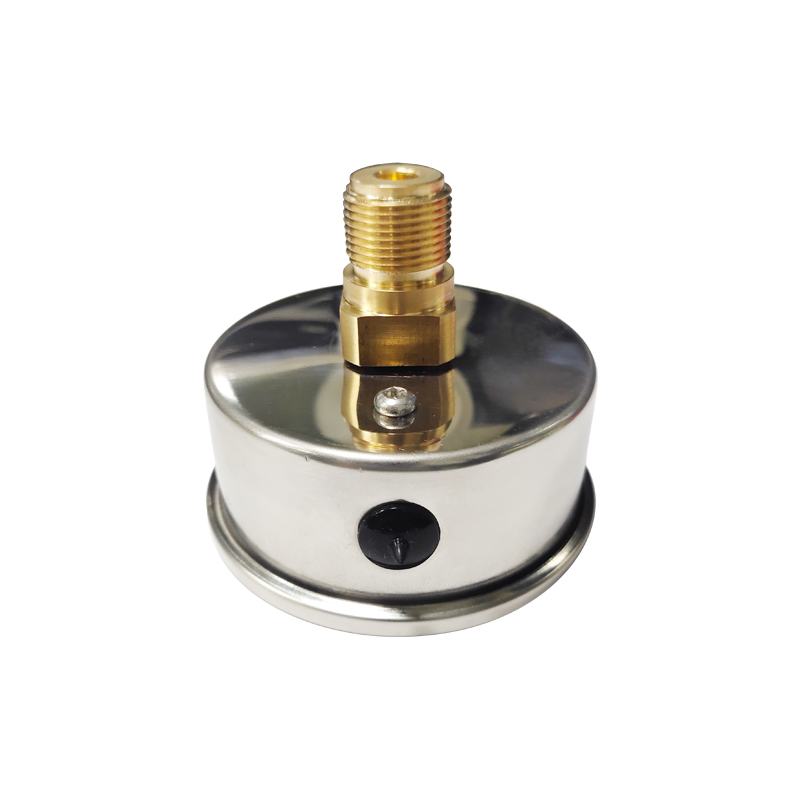
Introduction
Pressure gauges are fundamental instruments in industrial process control, safety systems, and a diverse range of engineering applications. Their primary function is to measure and display the pressure of a fluid – gas or liquid – within a system. Understanding how to accurately read and interpret pressure gauge indications is crucial for operational efficiency, equipment protection, and worker safety. This guide provides a comprehensive technical overview of pressure gauge operation, reading methodologies, common types, and relevant industry standards. The core performance of a pressure gauge hinges on its accuracy, repeatability, and ability to withstand the specific process conditions (pressure range, temperature, media compatibility). A misread gauge or a gauge improperly selected for the application can lead to process upsets, equipment damage, or catastrophic failure. This document targets engineers, technicians, procurement specialists, and safety personnel involved in the specification, installation, operation, and maintenance of pressure measurement systems.
Material Science & Manufacturing
The construction of a pressure gauge involves a complex interplay of material science and precision manufacturing. Bourdon tubes, diaphragms, and pressure sensors are fabricated from materials selected for their elastic properties, corrosion resistance, and compatibility with the measured fluid. Commonly used materials include beryllium copper, stainless steel (304, 316, 316L), Hastelloy, and Monel. The Bourdon tube, a curved, hollow metal tube, is the core element in many mechanical gauges. When pressure is applied, the tube attempts to straighten, and this movement is translated into a rotational force driving the gauge pointer. Manufacturing involves cold drawing or seamless extrusion to create the tube, followed by heat treatment to achieve the desired spring characteristics. Diaphragm gauges utilize a flexible diaphragm that deflects under pressure. Diaphragms are typically made from stainless steel or other alloys, often with specialized coatings to enhance corrosion resistance. The manufacturing process for diaphragms involves deep drawing and meticulous quality control to ensure uniform thickness and flatness. Electronic pressure sensors rely on piezoresistive, capacitive, or inductive principles. Silicon is a common material for piezoresistive sensors, due to its high sensitivity to strain. Manufacturing involves semiconductor fabrication techniques, including etching, doping, and metallization. Critical parameters during manufacturing include dimensional accuracy, surface finish, weld integrity (if applicable), and leak testing. Material selection must consider the fluid’s chemical composition, temperature, and pressure range to prevent corrosion, erosion, or material fatigue.
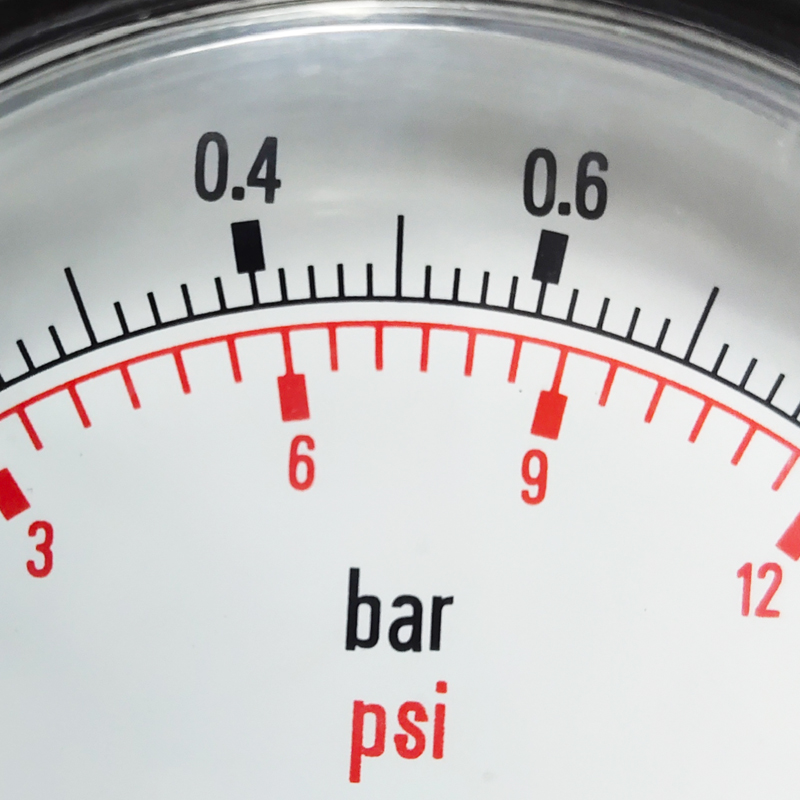
Performance & Engineering
Pressure gauge performance is dictated by several engineering principles. Accuracy, defined as the deviation between the indicated pressure and the actual pressure, is paramount. This is influenced by hysteresis (the difference in readings when approaching a given pressure from increasing or decreasing directions), linearity (the consistency of the reading across the pressure range), and repeatability (the ability to reproduce the same reading under identical conditions). Environmental factors significantly affect performance. Temperature variations can cause expansion or contraction of the gauge components, leading to drift in readings. Vibration can induce errors, particularly in mechanical gauges. The gauge housing is engineered to provide protection against these environmental influences. Force analysis is critical in the design of Bourdon tubes and diaphragms. The relationship between pressure and deflection must be precisely calculated to ensure accurate readings. Finite element analysis (FEA) is often employed to optimize the geometry and material properties of these components. Compliance with industry standards is essential. ASME B40.100 provides standards for pressure gauge accuracy and testing. Safety considerations are also paramount. Gauges installed in hazardous environments must meet appropriate explosion-proof certifications (e.g., ATEX, IECEx). Proper venting and pressure relief mechanisms should be incorporated into the system to prevent overpressure scenarios. Furthermore, the gauge’s connection type (NPT, BSP, etc.) must be compatible with the process piping to ensure a leak-tight seal.
Technical Specifications
| Gauge Type | Pressure Range (psi) | Accuracy (% of span) | Connection Size (inches) |
|---|---|---|---|
| Bourdon Tube | 0-300 | ±3% | 1/8" NPT |
| Diaphragm | 0-100 | ±2% | 1/4" BSP |
| Digital Pressure Transmitter | 0-5000 | ±0.25% | 1/2" NPT |
| Glycerin-Filled | 0-600 | ±2.5% | 3/8" NPT |
| Stainless Steel | 0-10000 | ±1% | 1/2" BSP |
| Low Pressure Digital | 0-100 | ±0.1% | 1/4" NPT |
Failure Mode & Maintenance
Pressure gauge failures can manifest in several ways. Zero drift, where the gauge consistently reads a non-zero pressure when no pressure is applied, is a common issue often caused by mechanical hysteresis or internal component wear. Parallex error is prevalent if the user is not viewing the gauge at a 90-degree angle. Catastrophic failure, such as case rupture or tube breakage, can occur due to overpressure, material fatigue, or corrosion. Slow response time or sluggish pointer movement may indicate a blocked impulse line or internal friction. In electronic gauges, sensor drift or signal loss can lead to inaccurate readings. Corrosion, particularly in harsh environments, is a significant failure mode. Vibration can cause fatigue cracking in the Bourdon tube or diaphragm. Proper maintenance is crucial for extending gauge lifespan and ensuring accuracy. Regular visual inspection should be conducted to check for physical damage, leaks, or corrosion. Periodically comparing the gauge reading to a calibrated reference standard is essential for verifying accuracy. Impulse lines should be cleaned regularly to remove debris and prevent blockages. Glycerin-filled gauges require periodic inspection of the glycerin level. For digital gauges, battery replacement and firmware updates may be necessary. Preventive maintenance programs, including scheduled calibration and replacement, can significantly reduce the risk of unexpected failures.
Industry FAQ
Q: What is the difference between gauge pressure, absolute pressure, and differential pressure, and how does this affect gauge selection?
A: Gauge pressure is measured relative to atmospheric pressure. Absolute pressure is measured relative to a perfect vacuum. Differential pressure is the difference between two pressures. Selecting the correct gauge depends on the application. If the reference point is atmospheric, a gauge pressure gauge is appropriate. If an absolute reference is required (e.g., vacuum applications), an absolute pressure gauge is needed. Differential pressure gauges are used to measure pressure drops across filters or flow elements.
Q: How do I account for temperature effects on pressure gauge readings?
A: Temperature variations can affect the accuracy of pressure gauges. Most gauges are calibrated at a specific temperature (typically 20°C or 68°F). Temperature compensation mechanisms may be incorporated into some gauges, particularly high-precision instruments. For critical applications, it's essential to apply temperature correction factors or use gauges with built-in temperature compensation.
Q: What is the significance of the gauge’s accuracy class?
A: The accuracy class defines the maximum permissible error as a percentage of the gauge’s span. For example, a Class 1.0 gauge has a maximum error of ±1% of the span. Choosing the appropriate accuracy class depends on the application’s requirements. Critical applications, such as safety systems, require higher accuracy gauges.
Q: What are the potential hazards associated with using an improperly selected or maintained pressure gauge?
A: Improperly selected or maintained pressure gauges can lead to inaccurate readings, potentially causing process upsets, equipment damage, or even catastrophic failures. Overpressure scenarios can result in gauge rupture, posing a safety hazard. Corrosion can lead to leaks and environmental contamination.
Q: What is the recommended calibration interval for pressure gauges?
A: The recommended calibration interval depends on the gauge type, application criticality, and environmental conditions. Generally, mechanical gauges should be calibrated annually, while digital gauges may require calibration less frequently. Critical applications or harsh environments may necessitate more frequent calibration.
Conclusion
Accurate pressure measurement is indispensable in numerous industrial processes, and a thorough understanding of pressure gauge principles, materials, and maintenance is paramount. This guide has detailed the core aspects of pressure gauge technology, from material science and manufacturing considerations to performance characteristics and potential failure modes. Selecting the appropriate gauge type, accounting for environmental factors, and implementing a robust maintenance program are essential for ensuring reliable and safe operation.
Future advancements in pressure sensing technology will likely focus on miniaturization, wireless communication, and enhanced accuracy. The integration of digital sensors with IoT platforms will enable real-time monitoring and predictive maintenance capabilities. Continued adherence to industry standards and best practices will remain crucial for maintaining the integrity and safety of pressure measurement systems.
 English
  Arabic
  China
China  China (Taiwan)
  Danish
  Dutch
Dutch  French
  German
  Greek
Greek  Hindi
Hindi  Indonesian
  Italian
  Japanese
  Korean
  Latin
Latin  Polish
  Portuguese
  Russian
  Spanish
  Turkish