
Apr . 01, 2024 17:55 Back to list
Tire Pressure Gauge how to use performance analysis
Introduction
Tire pressure gauges are critical instruments for maintaining vehicle safety and optimal tire performance. These devices measure the pressure of air within a tire, expressed in pounds per square inch (PSI), bar, or kilopascals (kPa). Accurate tire inflation is paramount; underinflation leads to increased rolling resistance, reduced fuel efficiency, and accelerated tire wear, while overinflation results in a harsh ride and compromised handling. The gauge’s technical position in the automotive maintenance chain is fundamental, representing the first step in a proactive tire management strategy. Core performance parameters revolve around accuracy, repeatability, and durability, contributing to extended tire life and minimized risk of tire-related incidents. Modern gauges range from simple mechanical designs to sophisticated digital models employing pressure sensors and LCD displays.
Material Science & Manufacturing
The construction of tire pressure gauges varies based on complexity, but commonly involves materials selected for their elasticity, corrosion resistance, and precision. Mechanical gauges rely on a Bourdon tube, typically manufactured from beryllium copper alloy. Beryllium copper is chosen for its high yield strength, excellent spring characteristics, and resistance to corrosion. The tube is formed by bending a flat metal strip into a curved shape and welding the ends. Calibration is crucial, achieved through precision machining and stress testing. Digital gauges utilize silicon-based piezoresistive pressure sensors. These sensors change electrical resistance proportional to applied pressure. Sensor housing is often constructed from stainless steel (304 or 316 grade) for durability and chemical inertness. Manufacturing processes for digital gauges include semiconductor fabrication, micro-electromechanical systems (MEMS) integration, and circuit board assembly. Plastic housings are typically produced via injection molding using acrylonitrile butadiene styrene (ABS) or polycarbonate, selected for impact resistance and dimensional stability. Key parameter control during manufacturing includes precise calibration of the Bourdon tube or pressure sensor, accurate machining of mechanical components, and rigorous quality control of electronic circuitry.
Performance & Engineering
The performance of a tire pressure gauge is governed by several engineering principles. Accuracy is defined by the deviation between the measured pressure and the actual pressure. This is affected by hysteresis (the difference in readings depending on whether pressure is increasing or decreasing) and linearity (the consistency of readings across the gauge's range). Force analysis is critical in mechanical gauge design – the force exerted by the pressurized fluid within the tire acts on the Bourdon tube, causing it to deflect. The amount of deflection is directly proportional to the pressure. Environmental resistance is also crucial. Temperature variations can affect the elasticity of the Bourdon tube and the accuracy of the sensor. Digital gauges are often temperature-compensated to mitigate this effect. Compliance requirements dictate adherence to standards such as SAE J1926 (for mechanical gauges) and relevant electromagnetic compatibility (EMC) directives. Functional implementation involves ensuring proper sealing to prevent air leaks, accurate display of readings, and robust construction to withstand repeated use. Proper gauge maintenance—avoiding dropping or subjecting the device to extreme temperatures—is essential for sustained performance.
Technical Specifications
| Parameter | Mechanical Gauge | Digital Gauge (Basic) | Digital Gauge (Precision) |
|---|---|---|---|
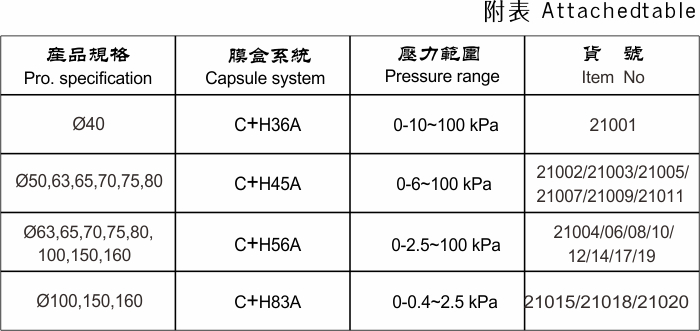
| Pressure Range (PSI) | 0-60 PSI | 0-150 PSI | 0-200 PSI |
| Accuracy (PSI) | ± 2 PSI | ± 1 PSI | ± 0.5 PSI |
| Resolution (PSI) | 1 PSI | 0.1 PSI | 0.01 PSI |
| Operating Temperature (°F) | -20 to 150 °F | -10 to 140 °F | 32 to 104 °F |
| Housing Material | Steel/Plastic | ABS Plastic | Aluminum Alloy |
| Display Type | Analog Dial | LCD | Backlit LCD |
Failure Mode & Maintenance
Tire pressure gauges are susceptible to several failure modes. Mechanical gauges can experience Bourdon tube failure due to fatigue cracking caused by repeated flexing. This is exacerbated by corrosion or exposure to harsh chemicals. Leakage around the gauge head is a common issue, resulting from worn seals or damage to the connection point. Digital gauges can fail due to battery depletion, sensor drift, or damage to the electronic circuitry. Sensor drift occurs when the sensor’s calibration changes over time, leading to inaccurate readings. Delamination of the sensor membrane can also occur, rendering the gauge useless. Oxidation of electrical contacts can lead to intermittent or complete failure. Preventive maintenance includes periodic calibration checks (especially for precision gauges), battery replacement (for digital gauges), and careful handling to avoid dropping or subjecting the gauge to excessive shock. Cleaning the gauge head and valve stem connection regularly prevents dirt and debris from compromising the seal. For mechanical gauges, lubricating the Bourdon tube mechanism can improve its performance and extend its lifespan. A damaged gauge should be replaced rather than repaired, as accurate readings are essential for safety.
Industry FAQ
Q: What is the acceptable tolerance for a tire pressure gauge reading?
A: Typically, a tolerance of ±2 PSI is acceptable for standard tire pressure gauges used for passenger vehicles. However, for high-performance vehicles or applications requiring greater precision (e.g., racing), a tolerance of ±0.5 PSI or better is recommended. Regularly calibrate your gauge to ensure consistent accuracy.
Q: How often should a tire pressure gauge be calibrated?
A: Calibration frequency depends on usage and accuracy requirements. For professional automotive technicians, annual calibration is standard practice. For occasional home use, calibration every 2-3 years is generally sufficient, unless the gauge has been subjected to rough handling or extreme temperatures.
Q: Can temperature affect the accuracy of a tire pressure gauge?
A: Yes, temperature can significantly affect the accuracy of both mechanical and digital gauges. Extreme temperatures can alter the elasticity of the Bourdon tube (mechanical gauges) or influence the sensor’s performance (digital gauges). High-quality digital gauges often incorporate temperature compensation to minimize this effect.
Q: What is the difference between a pencil gauge and a digital tire pressure gauge?
A: A pencil gauge is a simple, mechanical gauge that provides a reading on an analog dial. It’s typically less expensive but also less accurate than a digital gauge. Digital gauges use electronic sensors to measure pressure and display the reading on an LCD screen, offering higher accuracy, resolution, and often features like memory and automatic shut-off.
Q: What are the consequences of using an inaccurate tire pressure gauge?
A: Using an inaccurate tire pressure gauge can lead to underinflated or overinflated tires. Underinflation increases rolling resistance, reduces fuel efficiency, and causes premature tire wear. Overinflation results in a harsh ride, reduced traction, and increased risk of tire damage. In both cases, safety is compromised.
Conclusion
Accurate tire pressure measurement is a cornerstone of vehicle maintenance, directly impacting safety, fuel efficiency, and tire longevity. Understanding the underlying principles of tire pressure gauge operation, from the material science of the Bourdon tube to the engineering of piezoresistive sensors, is crucial for selecting and maintaining a reliable instrument. The choice between mechanical and digital gauges depends on specific application requirements and budget constraints. Regular calibration and proper handling are essential to ensure consistent and accurate readings, mitigating the risks associated with improper tire inflation.
Moving forward, advancements in sensor technology and wireless connectivity are likely to drive further innovation in tire pressure gauge design. Integration with vehicle telematics systems could provide real-time tire pressure monitoring and automated alerts, enhancing safety and convenience. Continued adherence to industry standards and rigorous quality control will remain paramount to ensuring the reliability and performance of these critical automotive tools.
 English
  Arabic
  China
China  China (Taiwan)
  Danish
  Dutch
Dutch  French
  German
  Greek
Greek  Hindi
Hindi  Indonesian
  Italian
  Japanese
  Korean
  Latin
Latin  Polish
  Portuguese
  Russian
  Spanish
  Turkish