
Apr . 01, 2024 17:55 Back to list
Tire Pressure Gauges how to use a pressure gauge for tires Performance Analysis
Introduction
Tire pressure gauges are critical instruments in vehicle maintenance, fundamentally impacting safety, fuel efficiency, and tire lifespan. This guide provides a comprehensive technical overview of tire pressure gauge operation, encompassing underlying principles, material science, manufacturing considerations, performance characteristics, potential failure modes, and relevant industry standards. Accurate tire inflation, achieved through the correct use of a pressure gauge, maintains optimal contact patch geometry, maximizing grip and minimizing rolling resistance. Historically, mechanical gauges were the standard, but digital gauges are increasingly prevalent due to their enhanced accuracy and ease of reading. The core function of any tire pressure gauge is to measure the difference between atmospheric pressure and the air pressure within the tire, typically expressed in pounds per square inch (PSI), kilopascals (kPa), or bar. Understanding the gauge’s operating principle and limitations is crucial for accurate and reliable measurement, avoiding under-inflation which leads to sidewall damage and increased fuel consumption, or over-inflation which reduces grip and ride comfort.
Material Science & Manufacturing
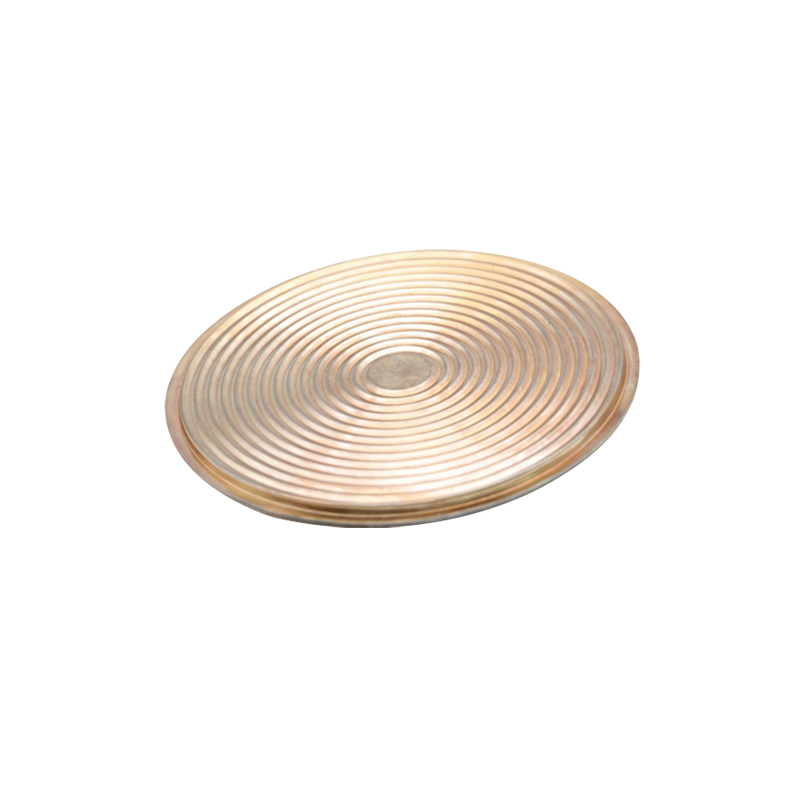
Tire pressure gauges utilize various materials, each selected for specific properties related to accuracy, durability, and corrosion resistance. Mechanical gauges typically employ a Bourdon tube, constructed from a resilient alloy like beryllium copper or spring steel. The Bourdon tube’s C-shape deforms proportionally to the pressure applied, driving a mechanical linkage that moves the indicator needle. Digital gauges often incorporate piezoresistive pressure sensors fabricated from silicon. These sensors change electrical resistance in response to applied pressure. Manufacturing processes vary. Bourdon tubes undergo precise forming and heat treatment to ensure elasticity and linearity. The calibration process for mechanical gauges is critical and involves comparing the gauge’s reading to a known pressure standard, often using a deadweight tester. Digital gauges require electronic component assembly, signal conditioning circuitry, and digital display integration. The housing material for both types is typically high-impact ABS plastic or aluminum alloy for robustness. The valve stem interface is often brass, selected for its corrosion resistance and compatibility with rubber valve cores. Key parameter control during manufacturing centers on dimensional accuracy of the Bourdon tube, sensor linearity, and calibration precision. Material selection considers thermal expansion coefficients to minimize measurement errors due to temperature variations.
Performance & Engineering
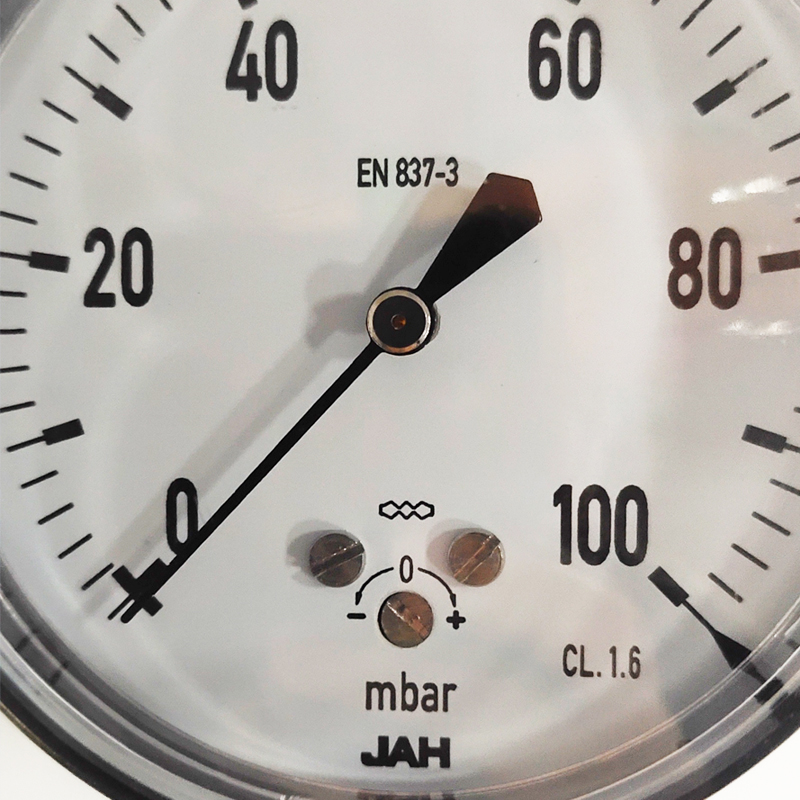
The performance of a tire pressure gauge is assessed based on its accuracy, repeatability, and linearity. Accuracy refers to the deviation between the gauge’s reading and the actual tire pressure. Repeatability evaluates the consistency of readings when measuring the same pressure multiple times. Linearity assesses the consistency of the gauge’s response across its entire pressure range. Engineering considerations include minimizing hysteresis—the difference in readings when approaching a pressure from increasing versus decreasing directions. Force analysis focuses on the force exerted by the Bourdon tube or pressure sensor, ensuring it's sufficient to drive the indicator or generate an accurate electrical signal. Environmental resistance is critical; gauges must operate reliably across a wide temperature range (-20°C to 80°C) and resist moisture ingress. Compliance requirements, particularly for gauges used in commercial vehicle inspection, dictate adherence to specific accuracy standards as defined by national transportation authorities. The valve stem interface design is engineered to minimize air loss during measurement, contributing to efficient and accurate readings. Furthermore, ergonomics play a role, influencing ease of use and minimizing operator error.
Technical Specifications
| Parameter | Typical Range (PSI) | Accuracy (PSI) | Resolution (PSI) |
|---|---|---|---|
| Mechanical Gauge – Low Range | 0-60 | ±2 | 1 |
| Mechanical Gauge – High Range | 0-100 | ±3 | 1 |
| Digital Gauge – Low Range | 0-60 | ±0.5 | 0.1 |
| Digital Gauge – High Range | 0-150 | ±1 | 0.1 |
| Operating Temperature Range | -20°C to 80°C | N/A | N/A |
| Housing Material | ABS Plastic / Aluminum Alloy | N/A | N/A |
Failure Mode & Maintenance
Tire pressure gauges are susceptible to several failure modes. Mechanical gauges can experience Bourdon tube fatigue cracking due to repeated flexing, leading to inaccurate readings. The linkage mechanism can also wear, causing sticking or sluggish needle movement. Digital gauges are prone to sensor drift, resulting in gradual inaccuracy over time. Battery failure is a common issue. Environmental factors, such as corrosion from moisture exposure, can damage electronic components and mechanical linkages. Failure analysis reveals that improper storage, dropping the gauge, and exposure to extreme temperatures accelerate wear and tear. Maintenance involves periodic calibration against a known pressure standard. For mechanical gauges, lubricating the linkage mechanism can improve smooth operation. For digital gauges, replacing the battery and protecting the sensor from physical damage are crucial. Regular visual inspection for cracks, leaks, or corrosion is essential. If a gauge consistently provides inaccurate readings or exhibits erratic behavior, it should be replaced. Proper storage in a clean, dry environment extends the gauge’s lifespan.
Industry FAQ
Q: What is the impact of temperature on tire pressure readings obtained from a gauge?
A: Temperature significantly impacts tire pressure. As ambient temperature decreases, tire pressure decreases, and vice-versa. Gauges themselves can also be affected; electronic components can exhibit temperature-dependent drift. Therefore, it's best to check tire pressure when tires are cold—meaning they haven't been driven on for at least three hours—to obtain the most accurate reading. Correct for temperature variations when necessary, consulting tire manufacturer guidelines.
Q: How frequently should a tire pressure gauge be calibrated?
A: Calibration frequency depends on usage and accuracy requirements. For personal use, annual calibration is generally recommended. For commercial vehicle inspection or applications demanding high precision, calibration should be performed every six months, or more frequently if the gauge is subjected to rough handling or extreme conditions.
Q: What are the differences between a pencil-type gauge and a digital gauge, and which is preferable?
A: Pencil-type gauges are mechanical and relatively inexpensive, but less accurate and offer lower resolution. Digital gauges utilize electronic sensors for higher accuracy, improved readability, and often include features like memory and unit conversion. While digital gauges are generally preferable for precision, pencil-type gauges can serve as a reliable backup.
Q: What should I do if my tire pressure gauge consistently reads differently from the pressure displayed on a vehicle’s TPMS (Tire Pressure Monitoring System)?
A: Discrepancies can arise due to TPMS sensor accuracy limitations, gauge calibration issues, or temperature differences. First, verify the gauge's calibration. Second, ensure the TPMS sensors are functioning correctly. Third, compare readings at the same time and under identical conditions. If discrepancies persist, consider replacing the gauge or having the TPMS sensors checked by a qualified technician.
Q: What safety precautions should be taken when using a tire pressure gauge?
A: Always ensure the gauge is properly seated on the valve stem to prevent air leakage and potential injury. Avoid dropping the gauge, as this can damage the internal components. Wear safety glasses, especially when checking tires on vehicles with high inflation pressures. Never attempt to repair a damaged gauge; replace it. Follow the vehicle manufacturer’s recommended tire pressure specifications.
Conclusion
The accurate measurement of tire pressure, facilitated by a properly functioning and calibrated tire pressure gauge, is paramount to vehicle safety, performance, and longevity. Understanding the underlying principles of gauge operation, encompassing material science, manufacturing processes, and potential failure modes, empowers users to select and maintain appropriate instrumentation. The transition from traditional mechanical gauges to digital variants reflects an industry trend toward enhanced accuracy and user convenience.
Moving forward, advancements in sensor technology and calibration methods will likely further improve the precision and reliability of tire pressure gauges. Integration with vehicle telematics systems could enable automated pressure monitoring and proactive maintenance alerts. Continuous adherence to industry standards and rigorous quality control procedures are crucial to ensure consistent performance and user safety.
 English
  Arabic
  China
China  China (Taiwan)
  Danish
  Dutch
Dutch  French
  German
  Greek
Greek  Hindi
Hindi  Indonesian
  Italian
  Japanese
  Korean
  Latin
Latin  Polish
  Portuguese
  Russian
  Spanish
  Turkish