
Apr . 01, 2024 17:55 Back to list
ashcroft pressure gauge Performance Engineering
Introduction
Ashcroft pressure gauges represent a critical component in industrial process monitoring and control, functioning as localized indicators of pressure within a system. These gauges translate applied force into a readable output, typically utilizing mechanical or electronic transduction methods. Within the industrial chain, they occupy a pivotal role between the pressure source (e.g., pumps, reactors, pipelines) and the control/monitoring system (e.g., PLCs, SCADA, operator interface). Ashcroft’s product portfolio encompasses a wide range of gauge types – Bourdon tube, diaphragm, pressure transmitters – each suited to specific pressure ranges, media compatibility requirements, and environmental conditions. Core performance characteristics include accuracy (expressed as a percentage of span), repeatability, hysteresis, and long-term stability. A key industry pain point is selecting the appropriate gauge material and construction for aggressive media, preventing corrosion and ensuring process safety. Another significant challenge is ensuring accurate readings in environments with significant vibration or temperature fluctuations, requiring robust design and potentially utilizing damping fluids or electronic compensation.
Material Science & Manufacturing
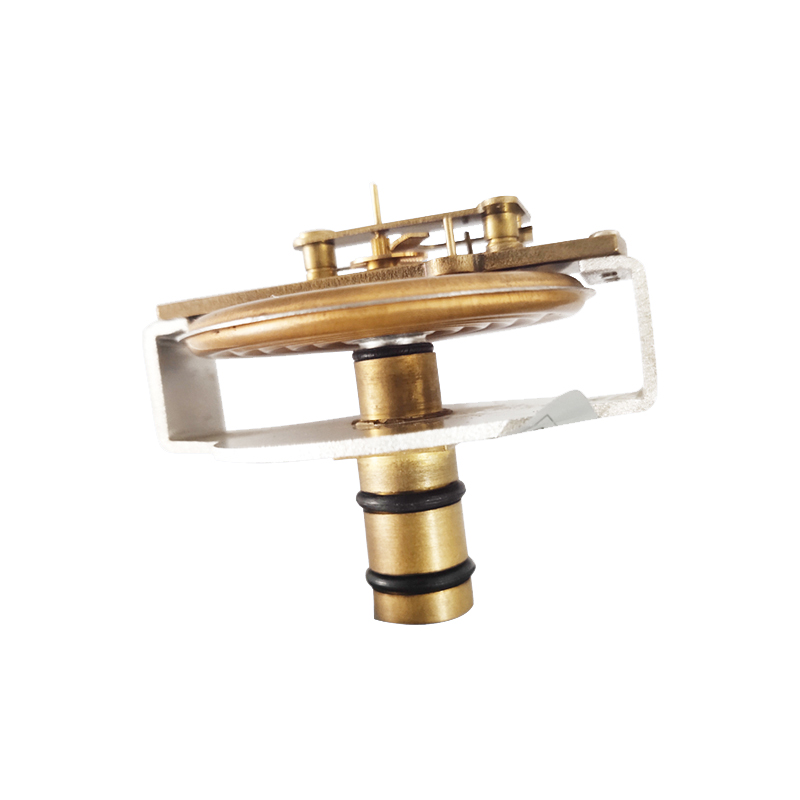
The core material for most Ashcroft pressure gauges is typically stainless steel (304, 316, or duplex grades), selected for its corrosion resistance and mechanical strength. Bourdon tubes, the most common sensing element, are manufactured from pre-coiled and heat-treated stainless steel strips. The material’s yield strength and elastic modulus are critical parameters, directly impacting the gauge’s range and linearity. Diaphragm gauges utilize materials like stainless steel, Hastelloy, or even specialized alloys like Monel, depending on the corrosive nature of the measured fluid. Manufacturing processes vary by gauge type. Bourdon tube gauges involve forming the tube to the desired shape, silver brazing the connection to the movement, and leak testing. Diaphragm gauges require precision welding of the diaphragm to the housing. Pressure transmitters often incorporate a silicon pressure sensor fabricated using micro-electromechanical systems (MEMS) technology. Key parameter control during manufacturing includes precise dimensional tolerances on the Bourdon tube or diaphragm, ensuring accurate calibration, and rigorous quality control to minimize hysteresis and non-linearity. Welding procedures are critical to prevent stress concentrations and ensure leak-tight seals. Surface treatments, such as passivation for stainless steel, enhance corrosion resistance. The selection of gasket materials (e.g., PTFE, Viton) is paramount for media compatibility.
Performance & Engineering
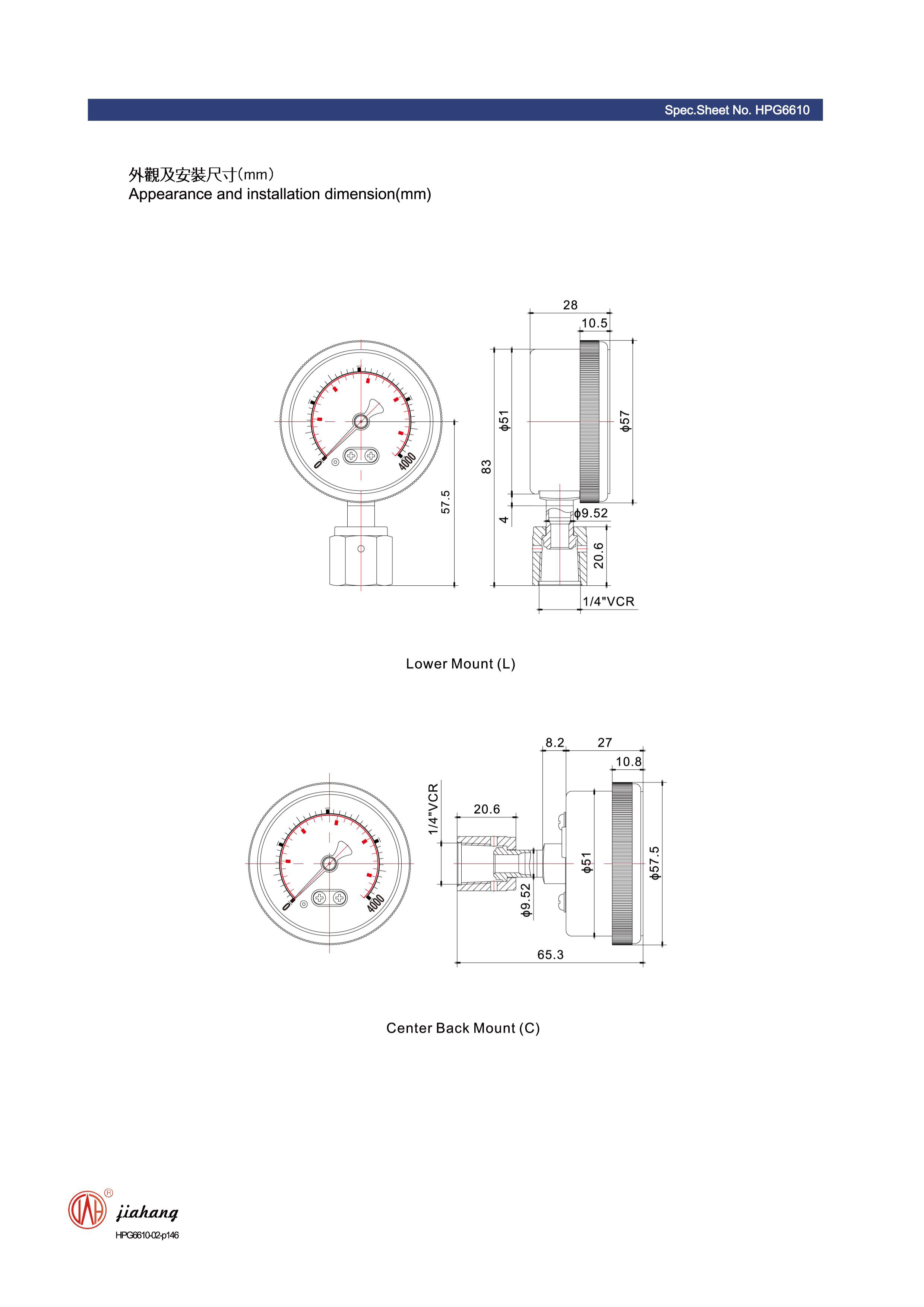
Performance is governed by several engineering considerations. Force analysis focuses on the stress distribution within the Bourdon tube or diaphragm under applied pressure. Finite Element Analysis (FEA) is frequently employed to optimize the design and predict performance under various loading conditions. Environmental resistance is critical; gauges must withstand temperature fluctuations, vibration, and potentially shock. Silicone damping fluid is commonly used in mechanical gauges to minimize pointer oscillation caused by vibration. Pressure transmitters require careful attention to thermal compensation, as temperature variations can affect the sensor’s output. Compliance requirements depend on the application. For example, gauges used in pharmaceutical or food processing must meet stringent sanitary standards (e.g., 3-A Sanitary Standards). In hazardous areas, gauges must be intrinsically safe or explosion-proof, complying with standards like ATEX or IECEx. Functional implementation involves accurate calibration, often traceable to national standards like NIST. Overpressure protection is a crucial design element, preventing gauge failure and potential process upset. The selection of a suitable pressure range is also important; gauges should operate within the middle 60-80% of their span for optimal accuracy.
Technical Specifications
| Parameter | Bourdon Tube Gauge (Typical) | Diaphragm Gauge (Typical) | Pressure Transmitter (Typical) |
|---|---|---|---|
| Pressure Range | 0-100 psi to 0-10,000 psi | 0-10 inH2O to 0-100 psi | 0-1 psi to 0-10,000 psi |
| Accuracy | ±3% of span (ASME B40.100) | ±5% of span (ASME B40.100) | ±0.25% of span (including linearity) |
| Operating Temperature | -40°F to 250°F (-40°C to 121°C) | -60°F to 300°F (-51°C to 149°C) | -40°F to 176°F (-40°C to 80°C) |
| Connection Size | 1/8" NPT, 1/4" NPT | 1/8" NPT, 1/4" NPT | 1/8" NPT, 1/4" NPT, G1/2" |
| Case Material | Steel, Stainless Steel, Plastic | Stainless Steel, Plastic | Stainless Steel, Aluminum |
| Process Connection Material | Brass, Stainless Steel | Stainless Steel, Hastelloy | Stainless Steel, Alloy C-276 |
Failure Mode & Maintenance
Common failure modes include Bourdon tube rupture due to overpressure, diaphragm leakage due to corrosion or fatigue, and zero drift in pressure transmitters due to sensor degradation. Fatigue cracking can occur in Bourdon tubes subjected to cyclic pressure, especially near the welded connection. Corrosion is a significant concern when measuring corrosive fluids, leading to diaphragm failure or Bourdon tube weakening. Hysteresis can increase over time due to friction within the movement or creep in the sensing element. Oxidation can affect electronic components in pressure transmitters, leading to inaccurate readings. Maintenance involves regular visual inspection for leaks or damage, calibration against a known standard (at least annually), and replacement of worn or damaged components. For diaphragm gauges, verifying the diaphragm material’s compatibility with the process fluid is crucial. For pressure transmitters, checking the power supply and signal wiring is essential. Preventative maintenance programs, including regular cleaning and lubrication (where applicable), can extend gauge lifespan. Proper installation, avoiding excessive vibration and temperature extremes, is also critical.
Industry FAQ
Q: What is the impact of media compatibility on gauge lifespan?
A: Incompatible media can lead to corrosion, erosion, or swelling of gauge components, especially the wetted parts (Bourdon tube, diaphragm, process connection). This degrades the gauge’s accuracy, causes leakage, and ultimately leads to failure. Selecting materials specifically resistant to the process fluid is paramount, often requiring costly alloys like Hastelloy or Monel for highly corrosive applications.
Q: How does vibration affect gauge accuracy and what mitigation strategies are available?
A: Vibration can cause pointer oscillation in mechanical gauges, making accurate readings difficult. In pressure transmitters, it can introduce noise into the signal. Mitigation strategies include using liquid-filled gauges (glycerin or silicone oil) to dampen vibrations, selecting gauges with vibration-resistant movements, and implementing vibration isolation mounts.
Q: What are the key differences between absolute, gauge, and differential pressure measurement, and when would each be used?
A: Gauge pressure is relative to atmospheric pressure, making it suitable for most industrial applications. Absolute pressure is referenced to a perfect vacuum, used in applications like vacuum measurement or altitude sensing. Differential pressure measures the difference between two pressures, commonly used to measure flow rate across an orifice plate or filter.
Q: How important is calibration, and what is the recommended calibration frequency?
A: Calibration is essential to ensure gauge accuracy and traceability to national standards. Recommended frequency depends on the application and operating conditions, but generally, annual calibration is considered best practice. More frequent calibration may be necessary in critical applications or harsh environments.
Q: What safety considerations are important when selecting and installing a pressure gauge in a hazardous area?
A: In hazardous areas, gauges must be intrinsically safe or explosion-proof, certified to standards like ATEX or IECEx. Proper grounding is essential to prevent static electricity buildup. The gauge housing must be able to withstand potential ignition sources. Installation must comply with local safety regulations.
Conclusion
Ashcroft pressure gauges are indispensable tools for process monitoring and control, demanding careful material selection, precise manufacturing, and diligent maintenance. The selection process must consider the specific application requirements, including the pressure range, media compatibility, environmental conditions, and safety regulations. Understanding the failure modes and implementing preventative maintenance procedures are vital for maximizing gauge lifespan and ensuring reliable performance.
Future developments in pressure gauge technology will likely focus on improved sensor miniaturization, wireless communication capabilities, and enhanced diagnostic features. Increased reliance on digital pressure transmitters and smart pressure gauges, offering remote monitoring and data analytics, is anticipated. Continuous advancements in material science will also contribute to the development of more corrosion-resistant and durable gauges capable of operating in increasingly challenging environments.
 English
  Arabic
  China
China  China (Taiwan)
  Danish
  Dutch
Dutch  French
  German
  Greek
Greek  Hindi
Hindi  Indonesian
  Italian
  Japanese
  Korean
  Latin
Latin  Polish
  Portuguese
  Russian
  Spanish
  Turkish