
Apr . 01, 2024 17:55 Back to list
best tire pressure gauge Performance Engineering
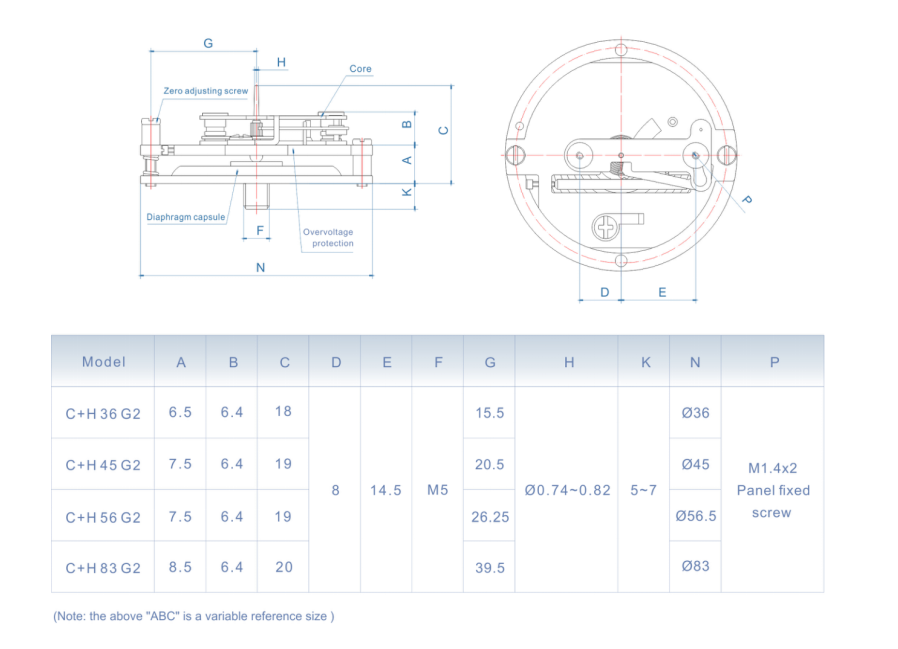
Introduction
Tire pressure gauges are critical tools in vehicle maintenance, falling within the broader automotive testing and measurement equipment industry. They function as precision instruments for determining the air pressure within pneumatic tires, a parameter fundamentally impacting vehicle safety, fuel efficiency, and tire lifespan. While seemingly simple, modern tire pressure gauges employ diverse technologies – mechanical, digital, and hybrid – each with distinct performance characteristics and accuracy levels. This guide provides a comprehensive technical overview of tire pressure gauges, encompassing material science, manufacturing processes, performance engineering, potential failure modes, and relevant industry standards. Core pain points addressed include achieving accurate and repeatable readings across varying environmental conditions, ensuring long-term gauge calibration, and mitigating the risks associated with inaccurate tire pressure, such as tire blowouts and reduced braking performance. The selection of a suitable gauge depends heavily on the intended application, ranging from consumer automotive use to heavy-duty truck and aviation maintenance.
Material Science & Manufacturing
The constituent materials of a tire pressure gauge significantly influence its performance and durability. Mechanical gauges typically utilize a Bourdon tube constructed from beryllium copper or spring steel. Beryllium copper is favored for its high elasticity and corrosion resistance, enabling accurate pressure deflection. Spring steel offers cost-effectiveness but requires precise heat treatment to achieve the necessary resilience. Digital gauges rely on pressure sensors, often employing piezoresistive silicon or capacitive sensing technologies. Silicon exhibits excellent linearity and stability but is susceptible to temperature drift, necessitating compensation circuitry. Housings are commonly manufactured from ABS plastic, stainless steel, or aluminum alloys. ABS provides a balance of cost and impact resistance, while stainless steel and aluminum offer superior durability and corrosion protection. Manufacturing processes vary depending on the gauge type. Mechanical gauges involve precision tube forming, assembly, and calibration. Digital gauges necessitate sensor fabrication (often utilizing micro-electro-mechanical systems - MEMS), circuit board assembly, and software programming. Key parameter control during manufacturing includes dimensional accuracy of the Bourdon tube, sensor sensitivity calibration, and environmental sealing to prevent dust and moisture ingress. The gauge's nozzle, the interface with the tire valve, is typically brass or stainless steel to prevent corrosion and ensure a leak-proof connection. Precision machining is vital for maintaining a consistent diameter and smooth surface finish of the nozzle.
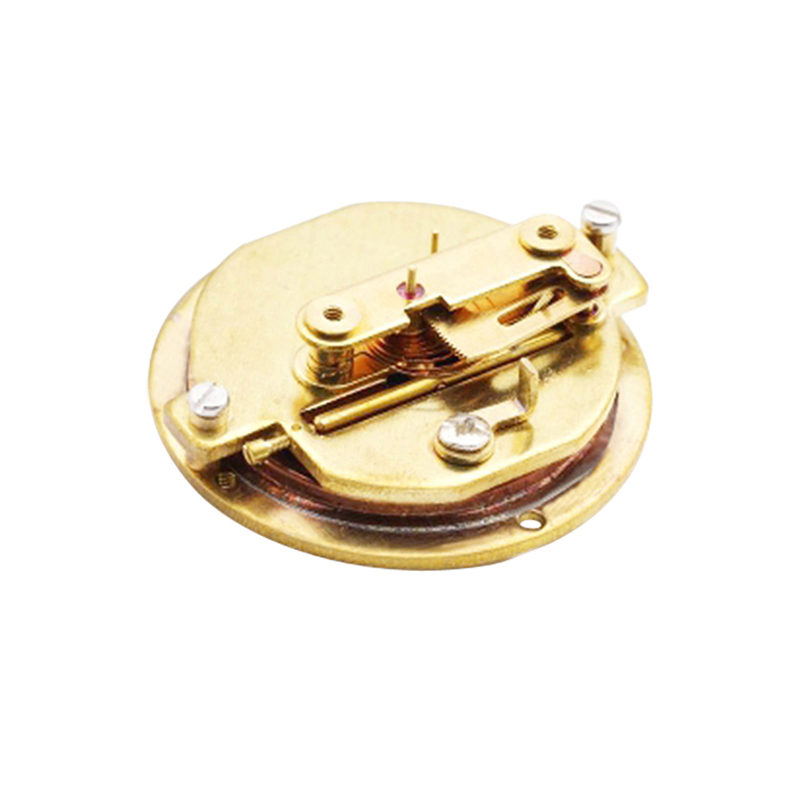
Performance & Engineering
The performance of a tire pressure gauge is governed by several key engineering principles. Accuracy, defined as the deviation between the indicated pressure and the actual pressure, is paramount. Digital gauges generally offer higher accuracy (±1% of full scale) compared to mechanical gauges (±2-3% of full scale). Repeatability, the consistency of readings under identical conditions, is equally important. Force analysis focuses on the stresses induced within the Bourdon tube or pressure sensor under varying pressure loads. Finite Element Analysis (FEA) is frequently employed to optimize the component geometry and material selection for maximum durability. Environmental resistance is a critical consideration. Gauges must withstand temperature fluctuations, humidity, and exposure to automotive fluids. Seal integrity and material compatibility are crucial for preventing corrosion and maintaining accuracy. Compliance requirements dictate the permissible error limits and testing protocols. For example, the National Highway Traffic Safety Administration (NHTSA) in the US mandates minimum accuracy standards for tire pressure gauges sold for automotive use. Functional implementation involves converting the pressure signal into a readable output. Mechanical gauges utilize a geared mechanism to translate tube deflection into pointer movement. Digital gauges employ analog-to-digital converters (ADCs) to transform the sensor signal into a numerical display. Proper calibration, traceable to national standards, is essential for ensuring long-term accuracy.
Technical Specifications
| Parameter | Mechanical Gauge | Digital Gauge (Entry-Level) | Digital Gauge (Professional) |
|---|---|---|---|
| Pressure Range (PSI) | 0-60 | 0-150 | 0-200 |
| Accuracy | ±3% of Full Scale | ±1.5% of Full Scale | ±0.5% of Full Scale |
| Resolution | 1 PSI | 0.1 PSI | 0.01 PSI |
| Operating Temperature (°F) | -20 to 150 | -10 to 140 | -20 to 160 |
| Housing Material | ABS Plastic / Steel | ABS Plastic | Aluminum Alloy / Stainless Steel |
| Sensor Type | Bourdon Tube | Piezoresistive Silicon | Capacitive Silicon |
Failure Mode & Maintenance
Tire pressure gauges are susceptible to various failure modes. Mechanical gauges can experience Bourdon tube fatigue cracking due to repeated stress cycles, leading to inaccurate readings. Corrosion of the tube or gears can also impair functionality. Digital gauges are prone to sensor drift, battery failure, and display malfunction. Environmental factors, such as extreme temperatures and exposure to corrosive substances, accelerate degradation. Failure analysis reveals common root causes, including manufacturing defects, improper handling, and exceeding the specified pressure limits. Maintenance practices are crucial for extending the service life of the gauge. Mechanical gauges require periodic calibration and lubrication of the gears. Digital gauges require battery replacement and periodic sensor recalibration. Regular visual inspection for physical damage, such as cracks or leaks, is also recommended. Avoid dropping the gauge, exposing it to harsh chemicals, or disassembling it without proper training. A common issue with digital gauges is the ingress of moisture, leading to corrosion of the internal electronics. Proper sealing and storage in a dry environment are essential preventative measures. When a gauge consistently provides inaccurate readings or exhibits erratic behavior, it should be replaced or professionally repaired.
Industry FAQ
Q: What is the difference between a pencil-type mechanical gauge and a dial-type mechanical gauge in terms of accuracy and durability?
A: Pencil-type gauges are generally less accurate (±3-4% of full scale) and less durable than dial-type gauges (±2-3% of full scale). The pencil-type relies on a simpler, less precise mechanism. Dial-type gauges utilize a geared mechanism that enhances accuracy and provides a more robust construction, making them less susceptible to damage from vibration or impact.
Q: How does temperature affect the accuracy of digital tire pressure gauges?
A: Temperature fluctuations can significantly impact the accuracy of digital gauges. Silicon-based pressure sensors exhibit temperature drift, causing the output signal to vary with temperature changes. High-quality gauges incorporate temperature compensation circuitry to mitigate this effect, but even then, some error may persist. It’s essential to operate and store the gauge within its specified temperature range.
Q: What is the recommended calibration frequency for tire pressure gauges used in a commercial fleet maintenance facility?
A: For commercial fleet applications, tire pressure gauges should be calibrated at least every six months, or more frequently if subjected to heavy use or harsh environmental conditions. Calibration should be traceable to a recognized national standard, such as NIST (National Institute of Standards and Technology).
Q: What materials are most resistant to corrosion when used in the gauge nozzle that contacts the tire valve stem?
A: Brass and stainless steel are the most corrosion-resistant materials commonly used for gauge nozzles. Stainless steel offers superior corrosion resistance, particularly in environments exposed to road salt or other corrosive substances. The nozzle’s surface finish is also critical; a smooth, polished finish minimizes the risk of corrosion and ensures a leak-proof seal.
Q: Are there specific standards for the allowable error in tire pressure gauges used in aviation maintenance?
A: Yes, aviation maintenance requires highly accurate tire pressure gauges that meet stringent standards. FAR 43.13 (Federal Aviation Regulations) specifies the requirements for inspection and maintenance of aircraft, including tire pressure. Gauges used in aviation must be certified and calibrated to meet these strict accuracy requirements, typically ±0.1 PSI or better.
Conclusion
The selection and maintenance of a tire pressure gauge are integral to ensuring vehicle safety, optimizing fuel efficiency, and maximizing tire lifespan. While mechanical gauges provide a cost-effective solution for basic applications, digital gauges offer superior accuracy and features for professional use. Understanding the underlying material science, manufacturing processes, and performance characteristics is crucial for making informed decisions.
Future developments in tire pressure gauge technology may focus on integrating wireless connectivity (Bluetooth, Wi-Fi) for real-time data logging and remote monitoring, as well as incorporating advanced sensor technologies for improved accuracy and environmental robustness. Adherence to relevant industry standards and regular calibration remain essential for maintaining the reliability and integrity of these critical measurement tools.
 English
  Arabic
  China
China  China (Taiwan)
  Danish
  Dutch
Dutch  French
  German
  Greek
Greek  Hindi
Hindi  Indonesian
  Italian
  Japanese
  Korean
  Latin
Latin  Polish
  Portuguese
  Russian
  Spanish
  Turkish