
Apr . 01, 2024 17:55 Back to list
bicycle tire pressure gauge Performance Analysis
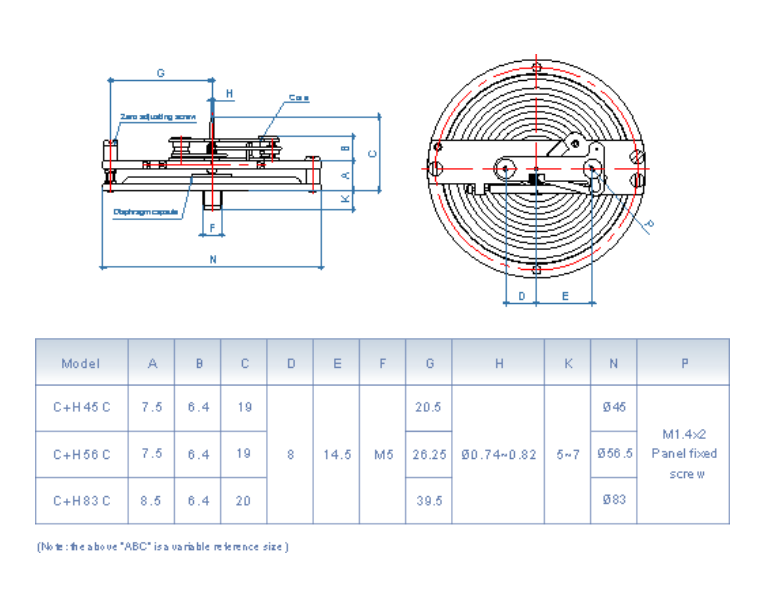
Introduction
The bicycle tire pressure gauge is a critical instrument in cycling maintenance and performance optimization. Positioned within the broader cycling industry supply chain – following tire and valve manufacturers and preceding performance analysis tools – the gauge serves as the primary interface for verifying and adjusting tire inflation. Core performance characteristics revolve around accuracy, repeatability, and durability. Incorrect tire pressure directly impacts rolling resistance, rider comfort, tire wear, and the risk of pinch flats. Historically, gauges ranged from simple stick gauges to complex digital models; modern units increasingly integrate digital displays and automatic bleed valves for precise control. The current market faces challenges in balancing cost with precision, and addressing the increasing demands of tubeless tire systems and high-pressure road applications. Understanding gauge mechanics, calibration methodologies, and error sources is paramount for cyclists and technicians alike.
Material Science & Manufacturing
The construction of a typical bicycle tire pressure gauge involves a combination of materials selected for their mechanical properties, corrosion resistance, and manufacturing feasibility. The gauge body is frequently constructed from brass (typically C36000 brass, offering good machinability and corrosion resistance), stainless steel (304 or 316 for enhanced durability and corrosion resistance in demanding environments), or reinforced polymers (ABS or polycarbonate for lower-cost, lighter-weight options). The Bourdon tube, the core sensing element, is almost exclusively made from spring steel, specifically a high-yield strength alloy like AISI 1095, which undergoes heat treatment to achieve desired elasticity and resilience. The gauge face is often acrylic or polycarbonate for clarity and impact resistance. Manufacturing processes vary based on complexity. Simple stick gauges involve stamping and assembly. Analog gauges utilize a complex process: Bourdon tube forming through bending and welding, precise calibration via mechanical adjustment of the linkage system, and assembly of the housing components. Digital gauges incorporate pressure sensors (piezoresistive or capacitive types), signal conditioning circuitry, an analog-to-digital converter (ADC), and a liquid crystal display (LCD). Critical parameters during manufacturing include the precise shaping of the Bourdon tube to ensure linearity, meticulous calibration to traceable standards (discussed in section 3), and quality control testing for leak tightness and accuracy across the pressure range. The polymer components undergo injection molding, requiring careful control of melt temperature, injection pressure, and cooling rates to minimize warping and ensure dimensional stability.
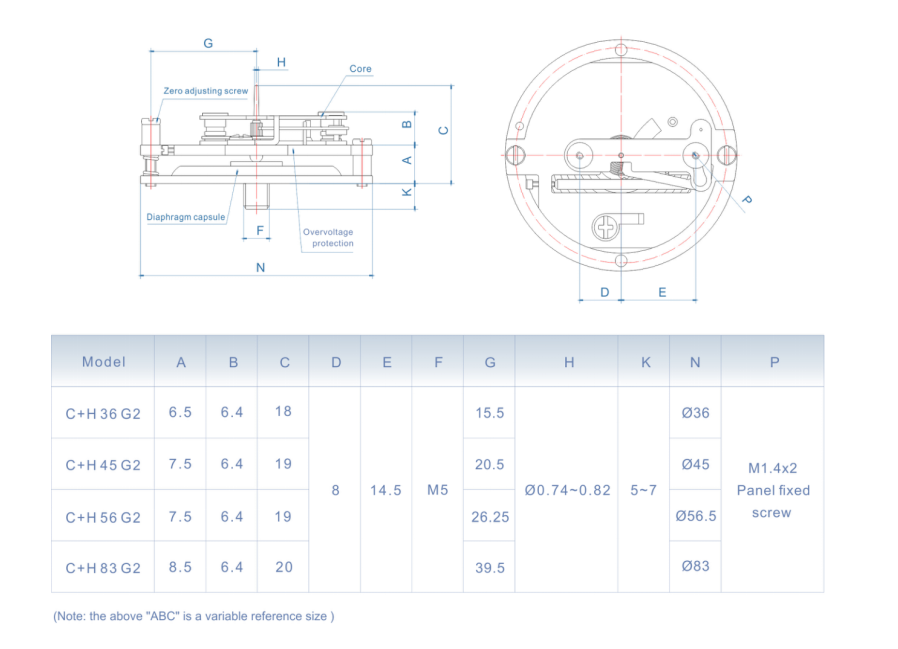
Performance & Engineering
The performance of a bicycle tire pressure gauge hinges on the accurate transduction of tire pressure into a readable output. The underlying principle for analog gauges is the deflection of a Bourdon tube, a curved tube that straightens proportionally to the pressure applied internally. This deflection is mechanically linked to a geared sector and pointer, displaying the pressure on a calibrated scale. Force analysis reveals that the accuracy is dictated by the tube’s material properties (Young’s modulus, yield strength), its dimensions (radius, wall thickness), and the precision of the mechanical linkage. Digital gauges utilize pressure sensors – typically piezoresistive silicon sensors – which change electrical resistance in response to applied pressure. Signal conditioning circuitry amplifies and linearizes the sensor output before digitization via an ADC. Environmental resistance is a crucial factor. Gauges must withstand temperature fluctuations (typically -10°C to 50°C) without significant drift in accuracy. Moisture ingress is also a concern, particularly for analog gauges where corrosion can affect mechanical components. Compliance requirements include adherence to accuracy standards (see section 7) and potentially RoHS directives restricting hazardous substances. Functional implementation dictates the gauge’s range (typically 0-120 PSI or 0-8.3 Bar) and resolution (typically 1 PSI or 0.1 Bar). High-pressure gauges designed for road bikes require more robust Bourdon tubes and tighter manufacturing tolerances to maintain accuracy at elevated pressures.
Technical Specifications
| Pressure Range (PSI) | Pressure Range (Bar) | Accuracy (PSI) | Accuracy (Bar) |
|---|---|---|---|
| 0-120 | 0-8.3 | ±1.5 | ±0.1 |
| 0-160 | 0-11.0 | ±2.0 | ±0.15 |
| 0-200 | 0-13.8 | ±2.5 | ±0.2 |
| 0-80 | 0-5.5 | ±1.0 | ±0.07 |
| 0-60 | 0-4.1 | ±0.75 | ±0.05 |
| 0-40 | 0-2.7 | ±0.5 | ±0.03 |
Failure Mode & Maintenance
Failure modes in bicycle tire pressure gauges typically fall into several categories. For analog gauges, the most common is drift in accuracy due to fatigue cracking in the Bourdon tube, particularly at the welded joints. Corrosion within the Bourdon tube or linkage mechanism can also impede movement and reduce accuracy. Leakage at the connection points (e.g., where the gauge connects to the valve) is another frequent issue, often caused by worn or damaged O-rings or thread sealant. Digital gauges are susceptible to sensor failure, particularly due to overpressure events or physical shock. Battery depletion is a common cause of malfunction. LCD screen failure can occur due to prolonged exposure to UV light or physical damage. Delamination of the LCD layers can lead to unreadable displays. Maintenance for analog gauges primarily involves periodic recalibration against a traceable standard. Cleaning the gauge body with a mild solvent can prevent corrosion. Lubricating the linkage mechanism with a light oil can ensure smooth operation. For digital gauges, replacing the batteries is the most common maintenance task. Avoiding extreme temperatures and physical shock can extend the sensor's lifespan. If the sensor fails, gauge replacement is generally more cost-effective than repair. Regular visual inspection for leaks and damage is crucial for preventing further deterioration. Correct storage (avoiding direct sunlight and extreme temperatures) prolongs the gauge’s life.
Industry FAQ
Q: What is the acceptable tolerance for a bicycle tire pressure gauge used for professional road racing?
A: For professional road racing, a tolerance of ±0.5 PSI (±0.03 Bar) is generally considered acceptable. Accuracy at higher pressures (100-120 PSI) is particularly critical, as small variations can significantly impact rolling resistance and race performance. Regular calibration against a NIST-traceable standard is essential.
Q: How do digital tire pressure gauges compare to analog gauges in terms of long-term reliability?
A: Digital gauges generally offer higher initial accuracy and repeatability, but their long-term reliability can be compromised by sensor drift, battery dependence, and susceptibility to electronic component failure. Analog gauges, while potentially less precise initially, tend to maintain their accuracy over longer periods if properly maintained and calibrated. However, mechanical wear and corrosion can impact analog gauge performance over time.
Q: What is the impact of temperature on the accuracy of a tire pressure gauge?
A: Temperature affects the elasticity of the Bourdon tube in analog gauges and the characteristics of the pressure sensor in digital gauges. Higher temperatures generally lead to increased readings, while lower temperatures can result in decreased readings. High-quality gauges are designed to minimize this temperature-induced drift, but it's still a factor to consider, especially when measuring tire pressure in varying environmental conditions.
Q: How often should a bicycle tire pressure gauge be recalibrated?
A: For recreational use, annual recalibration is recommended. For professional use or frequent, critical applications (e.g., racing, tubeless setup), recalibration every 6 months, or even more frequently, is advisable. Recalibration should be performed by a qualified calibration laboratory using traceable standards.
Q: What are the common causes of inaccurate readings when using a tire pressure gauge on a tubeless tire system?
A: Tubeless tire systems can present unique challenges. Quick bursts of air during inflation can momentarily exceed the gauge’s capacity, potentially damaging the sensor or Bourdon tube. The valve core’s seating and sealing can also affect readings. Ensuring a secure valve core connection and using a gauge specifically designed for tubeless systems (capable of handling rapid pressure changes) is critical.
Conclusion
The bicycle tire pressure gauge, despite its seemingly simple function, is a precision instrument vital to cycling performance and safety. Its functionality relies on a careful interplay of material science – the elasticity of spring steel, the durability of brass – and engineering principles, dictating accuracy and environmental resilience. Understanding the potential failure modes, from Bourdon tube fatigue to sensor drift, is crucial for informed maintenance and calibration procedures.
The ongoing development of tire technology, particularly in the realm of tubeless systems and high-pressure road applications, will continue to drive innovation in gauge design and manufacturing. Future advancements will likely focus on enhancing accuracy, improving durability, and integrating smart features like Bluetooth connectivity for data logging and real-time pressure monitoring. Maintaining awareness of relevant industry standards ensures consistent and reliable performance across diverse cycling disciplines.
 English
  Arabic
  China
China  China (Taiwan)
  Danish
  Dutch
Dutch  French
  German
  Greek
Greek  Hindi
Hindi  Indonesian
  Italian
  Japanese
  Korean
  Latin
Latin  Polish
  Portuguese
  Russian
  Spanish
  Turkish