
Apr . 01, 2024 17:55 Back to list
mechanical oil pressure gauge Performance Analysis
Introduction
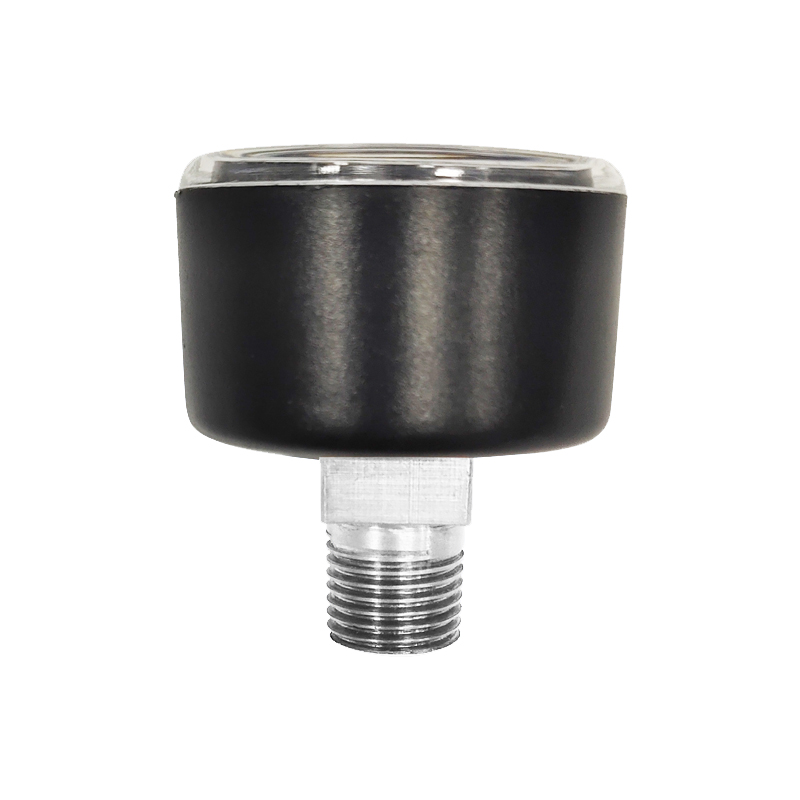
The mechanical oil pressure gauge is a precision instrument used to measure the pressure of fluids in a system, primarily hydraulic oil. Positioned within the broader industrial instrumentation chain, it serves as a crucial component in monitoring and controlling fluid power systems across diverse applications including manufacturing, automotive, aerospace, and marine engineering. Unlike digital pressure transducers which rely on electronic signal conversion, the mechanical gauge functions through purely mechanical principles – typically a Bourdon tube, diaphragm, or piston – offering a reliable, self-contained solution independent of external power. Core performance characteristics include accuracy, repeatability, response time, and resistance to environmental factors such as vibration and temperature fluctuations. Its simplicity and robustness make it a preferred choice in environments where electrical interference or power outages are concerns. A key industry pain point centers on drift over time due to material fatigue and temperature effects, necessitating regular calibration and maintenance to ensure continued accuracy. Furthermore, selecting the appropriate gauge for the specific fluid compatibility and pressure range is critical to avoid premature failure and inaccurate readings.
Material Science & Manufacturing
The construction of a mechanical oil pressure gauge relies on a carefully selected array of materials chosen for their specific mechanical and chemical properties. The Bourdon tube, the core sensing element, is typically fabricated from beryllium copper, brass, or stainless steel, chosen based on the pressure range and fluid compatibility. Beryllium copper offers excellent elasticity and corrosion resistance, making it suitable for high-pressure applications and harsh environments. Brass is a cost-effective option for lower-pressure gauges, but its corrosion resistance is limited. Stainless steel provides superior corrosion resistance and is commonly used in applications involving aggressive fluids. The case is often made of steel or aluminum, providing structural support and protecting the internal components. The window is typically constructed from tempered glass or acrylic, selected for its clarity and impact resistance. The movement mechanism, responsible for translating the tube’s deflection into a readable indication, incorporates gears and linkages made from hardened steel or bronze for durability and precision.
Manufacturing involves several critical processes. The Bourdon tube is formed through a precise bending and shaping process, often utilizing automated forming machines to ensure consistent geometry. Heat treatment is applied to relieve stress and enhance the material’s elasticity. The case is manufactured through machining, stamping, or casting, followed by surface finishing (painting or plating) for corrosion protection. The movement is assembled with meticulous attention to detail, requiring precise alignment and lubrication of the gears and linkages. Calibration is a crucial step, performed using a precision pressure standard to ensure accuracy across the specified range. Key parameter control involves maintaining tight tolerances on tube dimensions, material composition, and assembly alignment. Quality control procedures include leak testing, pressure cycling, and visual inspection to identify defects and ensure reliability. The choice of sealing materials (e.g., nitrile, Viton) is critical for compatibility with the fluid being measured, preventing leaks and ensuring accurate readings.
Performance & Engineering
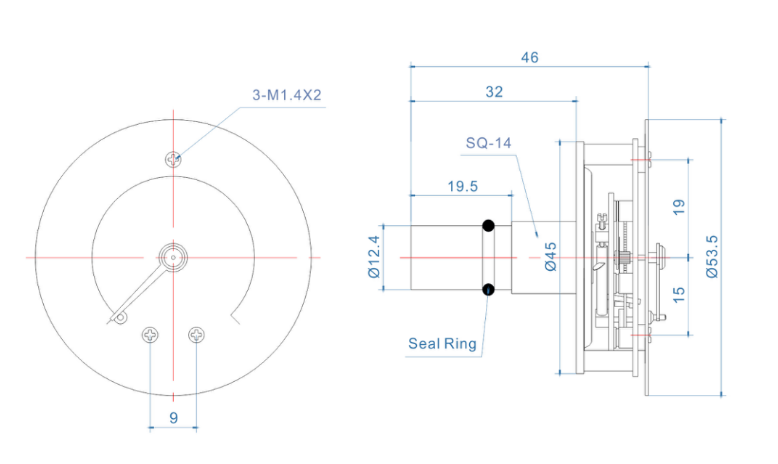
The performance of a mechanical oil pressure gauge is governed by several engineering principles. The fundamental principle relies on the relationship between pressure and the deflection of the sensing element (Bourdon tube, diaphragm, or piston). The deflection is proportional to the applied pressure, as described by Hooke's Law for elastic materials. Force analysis considers the stresses induced within the sensing element under pressure, ensuring it operates within its elastic limit to prevent permanent deformation. Environmental resistance is a critical consideration, particularly regarding temperature effects. Temperature fluctuations can alter the material properties of the sensing element, leading to drift in the reading. Compensation mechanisms, such as bimetallic strips or temperature-compensated movements, are often employed to mitigate these effects. Vibration can also impact accuracy, causing parallax errors and premature wear of the movement. Dampening fluids or internal vibration isolators are used to minimize these effects.
Compliance requirements vary depending on the application and geographical location. In many industries, gauges must meet standards for accuracy, repeatability, and safety. For example, in the oil and gas industry, gauges used in hazardous locations must be intrinsically safe to prevent ignition of flammable gases. Functional implementation dictates the gauge's suitability for specific applications. Factors such as pressure range, fluid compatibility, and mounting configuration are all critical considerations. For example, gauges intended for use with corrosive fluids must be constructed from corrosion-resistant materials. Gauges used in high-vibration environments require robust mounting solutions and dampening mechanisms. A crucial engineering challenge involves minimizing hysteresis – the difference between readings obtained when approaching the maximum pressure from below versus from above – as this directly affects the accuracy of the measurement.
Technical Specifications
| Pressure Range (psi) | Accuracy (±% of full scale) | Case Material | Sensing Element Material | Connection Size (NPT) | Operating Temperature (°F) |
|---|---|---|---|---|---|
| 0-300 | 1.0 | Steel | Brass | 1/8" | -40 to 176 |
| 0-600 | 1.0 | Steel | Brass | 1/4" | -40 to 176 |
| 0-1000 | 1.5 | Steel | Beryllium Copper | 1/4" | -20 to 194 |
| 0-2000 | 2.0 | Steel | Beryllium Copper | 3/8" | -20 to 194 |
| 0-3000 | 2.5 | Stainless Steel | Stainless Steel | 1/2" | -40 to 212 |
| 0-5000 | 3.0 | Stainless Steel | Stainless Steel | 1/2" | -40 to 212 |
Failure Mode & Maintenance
Mechanical oil pressure gauges are susceptible to several failure modes. Fatigue cracking of the Bourdon tube is a common issue, particularly in applications involving cyclical pressure fluctuations. This occurs when the material reaches its fatigue limit after repeated stress cycles. Corrosion, especially in environments with aggressive fluids, can lead to pitting and weakening of the sensing element and case. Delamination of the dial face or window can occur due to UV exposure or mechanical impact. Drift in accuracy over time is a frequent problem, stemming from material creep, temperature effects, or wear of the movement mechanism. Oxidation of internal components can lead to corrosion and seizing of the movement.
Preventive maintenance is crucial for maximizing the lifespan and accuracy of the gauge. Regular visual inspection should be conducted to identify any signs of corrosion, leaks, or physical damage. Periodic calibration, typically every 6-12 months, is essential to ensure accuracy. Lubrication of the movement mechanism can reduce wear and improve response time. Protecting the gauge from extreme temperatures and vibration can extend its service life. In the event of a failure, a thorough failure analysis should be performed to identify the root cause and prevent recurrence. Replacement of the entire gauge is often the most cost-effective solution for major failures, such as a cracked Bourdon tube. For minor issues, such as a loose connection, repair may be possible. It's vital to select replacement parts that are compatible with the original specifications to maintain performance and safety.
Industry FAQ
Q: What is the expected lifespan of a typical mechanical oil pressure gauge?
A: The lifespan varies significantly depending on the application and maintenance schedule. However, a properly maintained gauge can typically last 5-10 years. Harsh environments, frequent pressure fluctuations, and lack of calibration will significantly reduce its lifespan.
Q: How does temperature affect the accuracy of a mechanical oil pressure gauge?
A: Temperature fluctuations can cause expansion or contraction of the Bourdon tube, leading to drift in the reading. Temperature-compensated movements are available to mitigate this effect, but even these have limitations. Operating within the specified temperature range is crucial for maintaining accuracy.
Q: What is the difference between a liquid-filled and a dry mechanical oil pressure gauge?
A: Liquid-filled gauges contain a damping fluid (typically glycerin or silicone oil) that helps to reduce the effects of vibration and pulsation, providing a more stable reading. Dry gauges are more susceptible to vibration but are often preferred in applications where fluid contamination is a concern.
Q: What should I consider when selecting a gauge for a specific hydraulic fluid?
A: Fluid compatibility is paramount. The materials of construction (Bourdon tube, case, seals) must be chemically compatible with the hydraulic fluid to prevent corrosion and leaks. Refer to the fluid’s material safety data sheet (MSDS) for compatibility information.
Q: How often should a mechanical oil pressure gauge be calibrated?
A: Calibration should be performed at least annually, or more frequently if the gauge is subjected to harsh conditions or critical applications. Calibration ensures the gauge continues to meet its specified accuracy.
Conclusion
The mechanical oil pressure gauge remains a vital component in numerous industrial applications due to its simplicity, robustness, and independence from external power sources. Understanding the underlying material science, manufacturing processes, and performance characteristics is crucial for selecting the appropriate gauge for a given application and ensuring long-term reliability. Addressing potential failure modes through preventive maintenance and regular calibration further enhances its operational lifespan and accuracy.
As industries continue to prioritize process monitoring and control, the role of accurate pressure measurement will only increase. While digital pressure transducers offer advanced features, the mechanical gauge provides a dependable and cost-effective solution where simplicity and robustness are paramount. Continuous advancements in material science and manufacturing techniques will likely lead to further improvements in the accuracy, durability, and environmental resistance of these essential instruments.
 English
  Arabic
  China
China  China (Taiwan)
  Danish
  Dutch
Dutch  French
  German
  Greek
Greek  Hindi
Hindi  Indonesian
  Italian
  Japanese
  Korean
  Latin
Latin  Polish
  Portuguese
  Russian
  Spanish
  Turkish