
Apr . 01, 2024 17:55 Back to list
Pressure Gauges Performance Analysis
Introduction
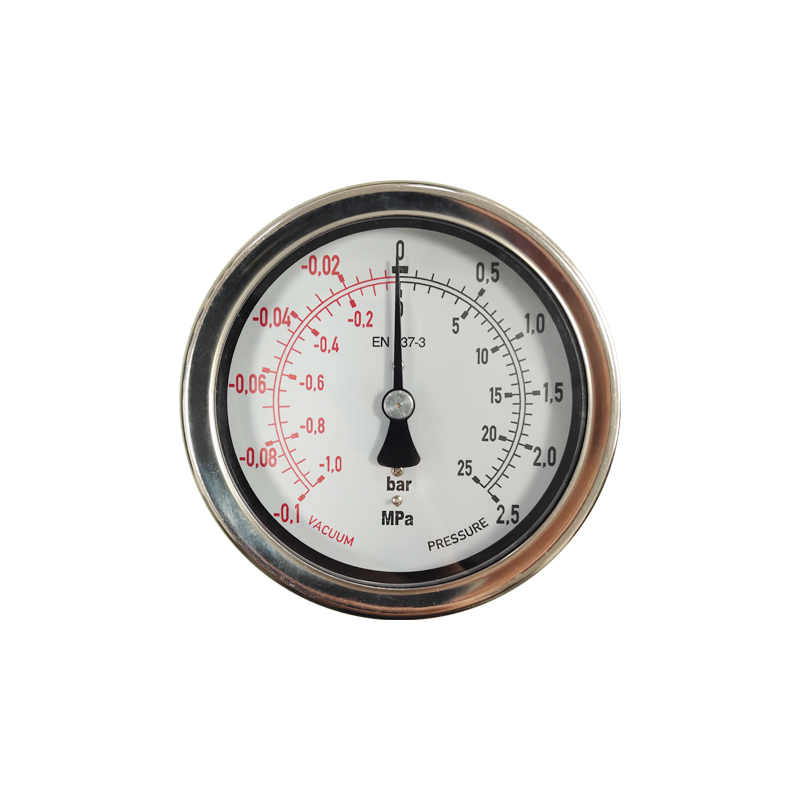
Pressure gauges are fundamental instruments in industrial process control, designed to measure and display the pressure of fluids (liquids or gases). They occupy a critical position within broader instrumentation loops, providing essential data for process monitoring, safety systems, and optimization. Their application spans a vast range of industries, including oil & gas, chemical processing, pharmaceutical manufacturing, power generation, and HVAC. Core performance metrics for pressure gauges include accuracy (expressed as a percentage of span), resolution, repeatability, and response time. Current industry challenges revolve around increasing demands for higher accuracy, improved reliability in harsh environments, wireless connectivity for remote monitoring, and adherence to increasingly stringent safety regulations like SIL (Safety Integrity Level) requirements.
Material Science & Manufacturing
The construction of pressure gauges relies on a selection of materials chosen for their mechanical strength, corrosion resistance, and compatibility with the measured fluid. Bourdon tubes, a common sensing element, are typically manufactured from beryllium copper, phosphor bronze, or stainless steel (316, 304). The choice of alloy dictates the gauge's suitability for specific pressure ranges and fluid types. Cases are often constructed from steel, aluminum, or engineered plastics like polycarbonate. Dial faces are typically aluminum with printed markings. Manufacturing processes vary based on gauge type. Bourdon tube gauges involve a forming process where flat tubing is bent into a C-shape or spiral, followed by heat treatment to impart elasticity and shape memory. Welded construction is critical for ensuring leak tightness, employing techniques like TIG (Tungsten Inert Gas) welding. Diaphragm gauges rely on the fabrication of a flexible diaphragm, often from stainless steel or Hastelloy, using processes like deep drawing and diffusion bonding. Critical parameter control during manufacturing includes maintaining tight tolerances on tube dimensions, ensuring consistent heat treatment profiles, and rigorously testing for leaks using helium leak testing methods. The material's yield strength and fatigue life directly impact the gauge’s operational lifespan.
Performance & Engineering
The performance of a pressure gauge is governed by fundamental engineering principles, particularly relating to stress analysis and material behavior. The Bourdon tube, for example, experiences stress proportional to the applied pressure. Engineers must carefully calculate the tube’s cross-sectional area and wall thickness to ensure it operates within its elastic limit, preventing permanent deformation or rupture. Accuracy is affected by factors such as hysteresis (lag in response to pressure changes), linearity (deviation from a straight-line relationship between pressure and indication), and zero drift (shift in the zero point over time). Environmental factors, like temperature fluctuations, can significantly impact accuracy. Temperature compensation mechanisms, such as bimetallic strips or electronic circuits, are incorporated into high-precision gauges to minimize these effects. Compliance requirements, particularly in safety-critical applications, necessitate rigorous testing and certification to standards like ASME B40.100 (pressure gauges) and EN 837-1 (mechanical pressure gauges). Force analysis considers the tangential stress in the Bourdon tube, influenced by the internal pressure and the radius of curvature. Considerations of creep and relaxation are crucial for long-term performance.
Technical Specifications
| Parameter | Bourdon Tube Gauge | Diaphragm Gauge | Digital Pressure Gauge |
|---|---|---|---|
| Pressure Range | 0-10,000 psi | 0-100 psi | 0-15,000 psi |
| Accuracy (Full Scale) | ±1.0% | ±0.25% | ±0.1% |
| Operating Temperature | -40°F to 150°F | -20°F to 250°F | -4°F to 176°F |
| Process Connection | 1/8" NPT, 1/4" NPT | 1/8" NPT, 1/4" NPT | 1/8" NPT, 1/4" NPT |
| Case Material | Steel, Aluminum | Stainless Steel, Plastic | Aluminum, Plastic |
| Wetted Material | Copper Alloy, Stainless Steel | Stainless Steel, Hastelloy | Stainless Steel, Ceramic |
Failure Mode & Maintenance
Pressure gauges are susceptible to various failure modes. Bourdon tubes can experience fatigue cracking due to cyclical pressure fluctuations, particularly at points of high stress concentration (e.g., bends). Corrosion, especially in aggressive fluid environments, can lead to material degradation and eventual rupture. Diaphragm gauges can suffer from diaphragm rupture or leakage due to overpressure, material fatigue, or chemical attack. Digital gauges are prone to sensor drift, electronic component failure, and display malfunction. Common failure analysis techniques include visual inspection for cracks or corrosion, leak testing, and metallographic examination of failed components. Preventative maintenance involves regular calibration (typically every 6-12 months) to ensure accuracy, periodic inspection for leaks or damage, and lubrication of moving parts (if applicable). For diaphragm gauges, verifying diaphragm integrity is critical. In harsh environments, protective coatings or corrosion inhibitors can extend service life. Routine vibration monitoring can detect early signs of fatigue damage. Proper installation, avoiding excessive vibration and shock, is essential for maximizing gauge lifespan.
Industry FAQ
Q: What is the primary difference between a Bourdon tube gauge and a diaphragm gauge in terms of application suitability?
A: Bourdon tube gauges are generally preferred for higher pressure applications and are more robust in handling pressure spikes. Diaphragm gauges are better suited for lower pressure measurements, particularly those involving corrosive fluids, as the diaphragm can be manufactured from highly corrosion-resistant materials like Hastelloy. They also offer greater sensitivity for detecting small pressure changes.
Q: How does temperature affect the accuracy of a pressure gauge?
A: Temperature fluctuations can cause thermal expansion or contraction of the sensing element and other gauge components, leading to zero drift and span errors. High temperatures can also alter the material properties of the Bourdon tube or diaphragm, affecting its elasticity and accuracy. High-precision gauges employ temperature compensation mechanisms to mitigate these effects.
Q: What is the significance of the 'class' or accuracy rating of a pressure gauge (e.g., Class 1.0)?
A: The class rating indicates the maximum permissible error as a percentage of the gauge’s full-scale range. A Class 1.0 gauge has a maximum error of ±1.0% of full scale. Lower class ratings (e.g., Class 0.25) indicate higher accuracy but typically come at a higher cost.
Q: What are the key considerations when selecting a wetted material for a pressure gauge?
A: The wetted material must be chemically compatible with the fluid being measured to prevent corrosion or degradation. Factors to consider include the fluid's pH, temperature, and presence of corrosive agents. Common wetted materials include stainless steel (316, 304), Hastelloy, and Monel.
Q: How often should a pressure gauge be calibrated, and what is involved in the calibration process?
A: Pressure gauges should typically be calibrated every 6-12 months, depending on the application's criticality and environmental conditions. Calibration involves comparing the gauge's reading to a known standard pressure source and adjusting or replacing the gauge if it falls outside acceptable tolerances. A certified calibration laboratory should perform this process.
Conclusion
Pressure gauges remain indispensable components in countless industrial processes, providing critical pressure monitoring for safety, control, and optimization. The selection of an appropriate gauge necessitates a thorough understanding of the application’s pressure range, fluid compatibility, environmental conditions, and accuracy requirements. Material science and manufacturing processes directly influence gauge performance and longevity, while adherence to relevant industry standards is paramount for ensuring reliability and safety.
Future trends in pressure gauge technology include the development of smart gauges with wireless connectivity, advanced diagnostics, and predictive maintenance capabilities. Miniaturization and increased integration with process control systems are also anticipated. Continued advancements in sensor technology and materials science will drive improvements in accuracy, durability, and performance, ultimately enhancing the efficiency and safety of industrial operations.
 English
  Arabic
  China
China  China (Taiwan)
  Danish
  Dutch
Dutch  French
  German
  Greek
Greek  Hindi
Hindi  Indonesian
  Italian
  Japanese
  Korean
  Latin
Latin  Polish
  Portuguese
  Russian
  Spanish
  Turkish