
Apr . 01, 2024 17:55 Back to list
tire pressure gauge Performance Analysis
Introduction
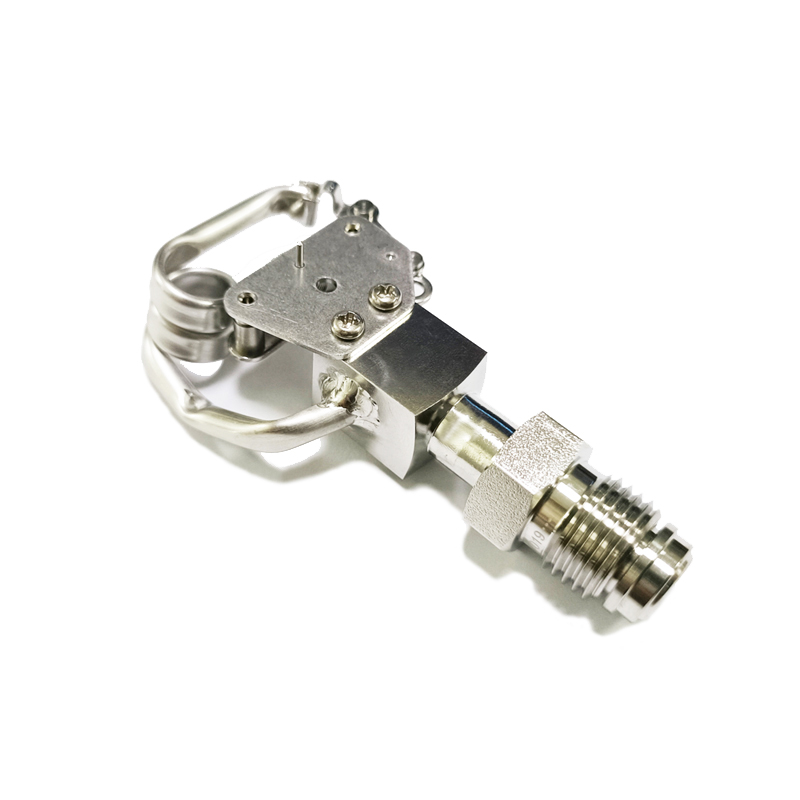
The tire pressure gauge is a critical instrument in automotive maintenance and safety, utilized to measure the air pressure within pneumatic tires. Positioned as a foundational component in vehicle upkeep, it serves both individual vehicle owners and commercial fleets. These gauges are not merely convenience tools; they are essential for optimizing fuel efficiency, extending tire lifespan, and, most importantly, ensuring safe vehicle operation by preventing tire-related failures. Modern gauges range from simple, analog dial designs to sophisticated digital models incorporating features like memory storage and unit conversion. Accuracy is paramount, with gauges generally reporting pressure in pounds per square inch (PSI), kilopascals (kPa), or bar. The core performance metric is the gauge's ability to consistently and reliably provide a reading within a defined tolerance, typically ±1 PSI, reflecting the true pressure within the tire. This guide provides an in-depth examination of the materials, manufacturing, performance characteristics, and potential failure modes associated with tire pressure gauges.
Material Science & Manufacturing
Tire pressure gauges are constructed from a variety of materials chosen for their durability, resilience, and resistance to environmental factors. The gauge body is commonly made from stainless steel (304 or 316 grade), brass (C36000 naval brass for corrosion resistance), or high-impact polymers like ABS plastic. The Bourdon tube, the primary sensing element in analog gauges, is typically fabricated from beryllium copper alloy, owing to its superior elasticity and resistance to fatigue. Digital gauges utilize silicon-based pressure sensors, often encapsulated in epoxy resin for protection. Manufacturing processes vary depending on the gauge type. Analog gauges involve precision forming of the Bourdon tube through processes like bending and heat treatment, followed by assembly with the movement mechanism, dial, and housing. Digital gauges require surface-mount technology (SMT) for sensor integration, printed circuit board (PCB) assembly, and calibration using NIST-traceable standards. Key parameter control includes precise dimensional tolerances for the Bourdon tube (critical for linearity and accuracy), strict material selection to minimize hysteresis, and rigorous quality control procedures during sensor calibration. The sealing of the gauge is critical; O-rings made of nitrile rubber (NBR) or Viton (fluoroelastomer) are used to prevent air leakage and maintain pressure integrity. Surface finishes, particularly on metallic components, are carefully controlled to minimize corrosion and ensure smooth operation of moving parts.
Performance & Engineering
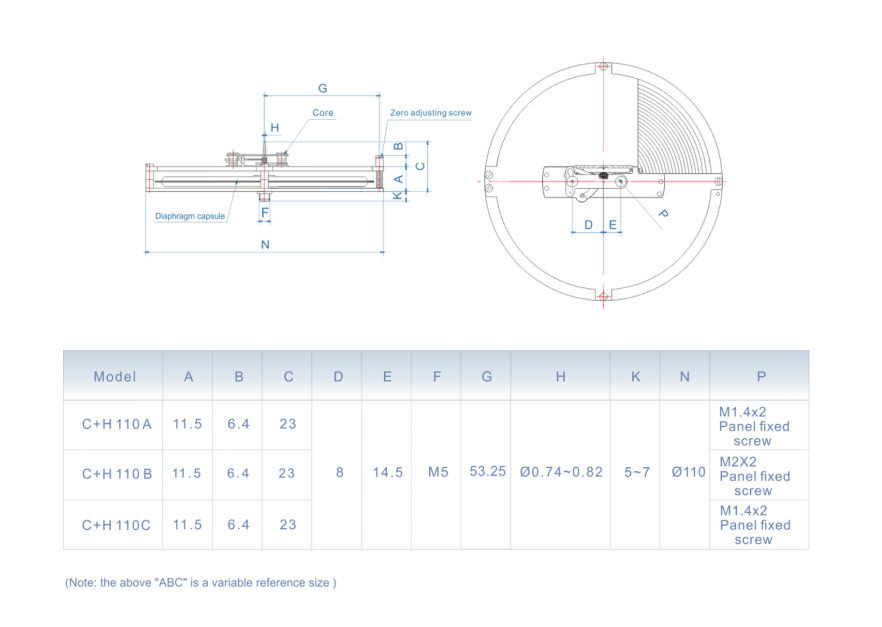
The performance of a tire pressure gauge is fundamentally governed by the principles of elastic deformation and pressure transduction. Analog gauges leverage the relationship between pressure and the deflection of a Bourdon tube. The applied pressure causes the tube to straighten, and this movement is mechanically linked to a pointer on the dial. Engineering considerations include minimizing hysteresis (the difference in readings during increasing and decreasing pressure) and ensuring linearity across the gauge’s operating range. Digital gauges employ piezoresistive or capacitive pressure sensors, where pressure-induced stress alters the sensor’s electrical resistance or capacitance, which is then converted into a digital readout. Force analysis centers on the stress distribution within the Bourdon tube or sensor diaphragm under varying pressure loads. Environmental resistance is vital; gauges must withstand temperature fluctuations, humidity, and exposure to road salts and other corrosive substances. Compliance requirements vary by region, but often align with standards established by organizations like SAE International (J1926 for automotive tire pressure gauges). The ingress protection (IP) rating is a crucial parameter, with IP67 or higher providing resistance to dust and water immersion. Calibration procedures are essential for maintaining accuracy and traceability, typically involving comparison against a calibrated reference standard.
Technical Specifications
| Parameter | Units | Typical Value (Analog Gauge) | Typical Value (Digital Gauge) |
|---|---|---|---|
| Pressure Range | PSI | 0-60 PSI | 0-100 PSI |
| Accuracy | PSI | ±2 PSI | ±0.5 PSI |
| Resolution | PSI | 1 PSI | 0.1 PSI |
| Operating Temperature | °F | -20 to 150 °F | -4 to 140 °F |
| Housing Material | - | Stainless Steel/Brass | ABS Plastic |
| Ingress Protection (IP) Rating | - | IP40 | IP65 |
Failure Mode & Maintenance
Tire pressure gauges are susceptible to several failure modes. Analog gauges can experience Bourdon tube fatigue cracking due to repeated flexing, leading to inaccurate readings or complete failure. Gear train wear within the movement mechanism can also introduce errors. Digital gauges may fail due to sensor drift, PCB component failure, or battery depletion. Corrosion, particularly in gauges exposed to harsh environments, can affect both analog and digital models. Common failure symptoms include inconsistent readings, slow response time, and physical damage to the housing or Bourdon tube. Preventive maintenance involves regular calibration (typically annually) using a NIST-traceable standard. For analog gauges, periodic lubrication of the movement mechanism can reduce wear. Digital gauges should be inspected for battery life and potential water ingress. If a gauge is dropped or subjected to significant impact, it should be recalibrated or replaced. Proper storage in a clean, dry environment can also extend the gauge’s lifespan. Failure analysis often reveals that many inaccuracies stem from improper usage, such as applying excessive force during measurement or exceeding the gauge’s pressure range. Examination of the Bourdon tube under magnification can reveal micro-cracks indicative of fatigue.
Industry FAQ
Q: What is the impact of temperature on the accuracy of a tire pressure gauge?
A: Temperature affects the air pressure within the tire and the gauge's internal components. Lower temperatures decrease tire pressure, while higher temperatures increase it. Analog gauges can exhibit hysteresis due to temperature-induced changes in the Bourdon tube's elasticity. Digital gauges are generally less susceptible to temperature variations, but sensor drift can still occur. Calibration should be performed at the intended operating temperature to minimize errors.
Q: How often should a tire pressure gauge be calibrated?
A: Calibration frequency depends on usage and environmental conditions. For commercial applications, annual calibration is recommended. For personal use, calibration every two years is generally sufficient. If the gauge is subjected to impact or experiences significant temperature fluctuations, recalibration should be performed immediately.
Q: What is the difference between a pencil-type gauge and a digital gauge?
A: Pencil-type gauges are simple, analog devices that provide a visual reading on a calibrated scale. Digital gauges use electronic sensors and displays for more precise readings. Digital gauges often offer features like memory storage and unit conversion, but they require batteries.
Q: How can I verify the accuracy of my tire pressure gauge without a calibration standard?
A: While not a substitute for formal calibration, you can compare your gauge’s reading against another known accurate gauge. If discrepancies are significant, it’s an indication that your gauge may need calibration or replacement. However, this method relies on the accuracy of the reference gauge.
Q: What is the significance of the IP rating on a tire pressure gauge?
A: The IP (Ingress Protection) rating indicates the gauge’s resistance to dust and water. A higher IP rating provides better protection. For example, an IP65 rating indicates protection against dust and water jets, making the gauge suitable for use in harsh environments.
Conclusion
The tire pressure gauge, despite its seemingly simple function, is a precision instrument governed by principles of material science, mechanical engineering, and metrology. Its accurate and reliable operation is paramount to vehicle safety, fuel efficiency, and tire longevity. Understanding the materials used in its construction, the manufacturing processes involved, and potential failure modes is crucial for both manufacturers and end-users. Selecting a gauge with appropriate specifications, performing regular calibration, and employing proper maintenance practices are essential for ensuring optimal performance and maximizing its service life.
Future developments in tire pressure gauge technology will likely focus on wireless connectivity, integration with vehicle telematics systems, and the use of more advanced sensor technologies. Miniaturization and improved durability are also ongoing areas of research. As automotive technology continues to evolve, the role of the tire pressure gauge as a critical component of vehicle safety and maintenance will remain unchanged, necessitating continued attention to its design, manufacturing, and quality control.
 English
  Arabic
  China
China  China (Taiwan)
  Danish
  Dutch
Dutch  French
  German
  Greek
Greek  Hindi
Hindi  Indonesian
  Italian
  Japanese
  Korean
  Latin
Latin  Polish
  Portuguese
  Russian
  Spanish
  Turkish