
Apr . 01, 2024 17:55 Back to list
Cage Accumulator Performance Analysis
Introduction
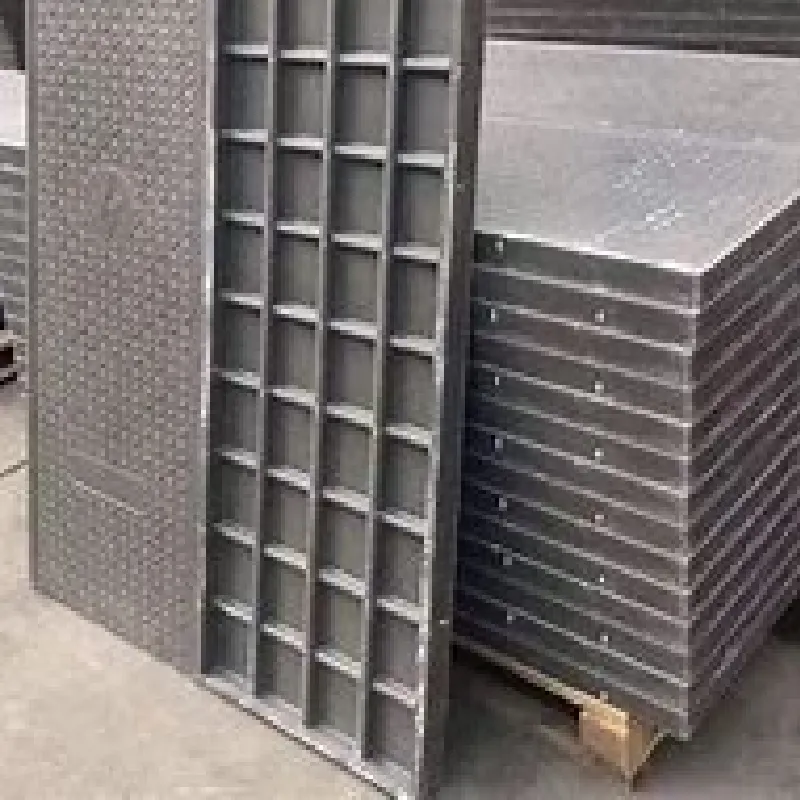
The cage accumulator is a critical component in continuous casting processes, primarily employed in the steel and aluminum industries. Its function is to provide a consistent and controlled supply of molten metal to the casting mold, mitigating fluctuations in casting speed and ensuring a uniform solidified strand. Positioned within the industry chain between the melting/refining stage and the continuous casting machine, the accumulator acts as a hydraulic buffer, decoupling the tapping process from the casting process. Core performance characteristics center around molten metal temperature stability, damping of hydraulic shocks, and the prevention of air entrapment. Fluctuations in metal flow directly impact the quality of the final cast product, leading to defects like porosity, segregation, and surface imperfections. Therefore, accumulator design and operation are paramount to achieving desired metallurgical properties and dimensional tolerances.
Material Science & Manufacturing
The construction of a cage accumulator primarily involves high-strength steel alloys, specifically designed for elevated temperature resistance and corrosion protection against molten metals. Commonly utilized materials include ASTM A36 for structural components, and alloy steels like 4140 or similar, heat-treated for enhanced yield strength and toughness, for the cage itself. Refractory materials, such as alumina (Al2O3) or magnesia (MgO) based linings, are essential for containing the molten metal and minimizing heat loss. The manufacturing process begins with precision cutting and forming of the steel plates for the accumulator shell. Welding is a crucial step, typically employing submerged arc welding (SAW) or gas metal arc welding (GMAW) processes. Welding parameters – current, voltage, travel speed – are rigorously controlled to ensure full penetration welds with minimal porosity and residual stress. The cage itself is fabricated through a combination of machining and assembly. The critical parameters during cage fabrication are dimensional accuracy, ensuring proper alignment of the bars, and the surface finish to minimize friction and wear. Refractory lining installation requires careful application techniques, including ramming or casting, followed by a curing process to achieve optimal bond strength and thermal stability. Material compatibility is paramount; the refractory lining must not chemically react with the molten metal. For example, alumina linings are generally suitable for steel casting, while magnesia linings are preferred for aluminum to prevent the formation of aluminum oxide which compromises lining integrity.
Performance & Engineering
The performance of a cage accumulator is fundamentally governed by principles of fluid dynamics and structural mechanics. The accumulator’s primary function is to dampen hydraulic transients – pressure waves generated by variations in metal flow. This is achieved through the inertia of the molten metal mass within the cage and the damping effect of the cage bars moving through the liquid. Force analysis focuses on the hydrostatic pressure exerted by the molten metal on the accumulator walls, requiring robust structural design to prevent deformation or failure. Finite Element Analysis (FEA) is routinely employed to model stress distribution under various operating conditions, including maximum fill level, rapid tapping, and potential seismic events. Environmental resistance is a significant consideration, particularly thermal cycling. Repeated heating and cooling induce thermal stresses, potentially leading to fatigue cracking. The design incorporates expansion joints and appropriate material selection to mitigate these stresses. Compliance requirements vary by region and casting application. For example, pressure vessel codes like ASME Boiler and Pressure Vessel Code Section VIII, Division 1, are often applicable, dictating material specifications, welding procedures, and non-destructive testing requirements. Functional implementation relies on precise control of the metal inflow and outflow rates. Level sensors and automated valve systems maintain a consistent metal level within the accumulator, ensuring a stable casting process.
Technical Specifications
| Parameter | Unit | Typical Value (Steel Casting) | Typical Value (Aluminum Casting) |
|---|---|---|---|
| Accumulator Capacity | m3 | 5 - 20 | 2 - 10 |
| Maximum Metal Height | m | 3 - 6 | 2 - 4 |
| Cage Bar Diameter | mm | 50 - 150 | 30 - 100 |
| Steel Shell Thickness | mm | 20 - 50 | 15 - 40 |
| Refractory Lining Thickness | mm | 50 - 150 | 50 - 150 |
| Operating Temperature | °C | 1500 - 1600 | 700 - 800 |
Failure Mode & Maintenance
Cage accumulators are susceptible to several failure modes. Fatigue cracking in the steel shell is a common issue, originating from thermal cycling and mechanical stress. Corrosion, particularly pitting corrosion, can occur due to localized attack by molten metal or slag inclusions. Refractory lining failure manifests as cracking, erosion, and spalling, leading to metal leakage and contamination. Air entrapment can cause porosity in the final cast product. Failure analysis often reveals the root cause is a combination of factors, including improper material selection, inadequate welding quality, and insufficient maintenance. Preventative maintenance is crucial. This includes regular visual inspections for cracks, corrosion, and lining damage. Non-destructive testing methods, such as ultrasonic testing (UT) and radiographic testing (RT), are employed to detect subsurface flaws. Refractory lining repairs involve patching or complete replacement, depending on the extent of damage. Periodic cleaning of the accumulator cavity removes slag buildup and prevents metal contamination. Lubrication of the cage bar guides reduces friction and wear. A detailed maintenance schedule, based on operating hours and production volume, is essential for maximizing accumulator lifespan and minimizing downtime. Implementing a robust preventative maintenance program significantly reduces the risk of catastrophic failures and ensures consistent casting quality.
Industry FAQ
Q: What is the primary impact of an improperly sized accumulator on casting quality?
A: An undersized accumulator offers insufficient damping, leading to significant fluctuations in metal flow and increased risk of porosity and segregation in the final cast. An oversized accumulator, conversely, increases the potential for metal solidification within the cage, creating plugs that disrupt flow and introduce defects.
Q: How do refractory lining materials impact metal purity in steel casting applications?
A: The selection of refractory lining materials is critical. Certain refractories can react with the molten steel, introducing inclusions and altering the chemical composition. Alumina-silica refractories are commonly used for steel, but their quality and purity are paramount to prevent unwanted alloying elements from entering the melt.
Q: What are the key considerations for selecting alloy steel for the accumulator cage bars?
A: The alloy steel must exhibit high tensile strength, yield strength, and toughness at elevated temperatures. Creep resistance is also important to prevent deformation under sustained load. The material should also be weldable and possess good corrosion resistance against the specific molten metal being cast.
Q: What non-destructive testing methods are most effective for detecting cracks in the accumulator shell?
A: Ultrasonic testing (UT) and magnetic particle inspection (MPI) are commonly employed. UT can detect subsurface cracks, while MPI is effective for detecting surface and near-surface cracks. Radiographic testing (RT) can also be used, but requires specialized equipment and safety precautions.
Q: How frequently should the refractory lining of a steel casting accumulator be inspected for wear and damage?
A: The frequency of inspection depends on the production rate and the type of steel being cast. As a general guideline, visual inspections should be conducted monthly, with more detailed inspections using UT or other NDT methods performed every 6-12 months. Areas prone to erosion or corrosion should be inspected more frequently.
Conclusion
The cage accumulator represents a vital, yet often underestimated, component within continuous casting systems. Its effective operation is directly correlated to the quality, consistency, and yield of the final cast product. Achieving optimal performance necessitates a holistic understanding of material science, manufacturing processes, fluid dynamics, and structural engineering. Proper material selection, precise fabrication techniques, and a proactive maintenance strategy are all paramount to minimizing the risk of failure and ensuring long-term operational reliability.
Looking forward, advancements in accumulator design will likely focus on optimizing damping characteristics through novel cage geometries and advanced materials. Integration of real-time monitoring systems, utilizing sensors to track metal level, temperature, and pressure, will enable predictive maintenance and further enhance process control. The continued drive towards higher quality, lower cost, and improved sustainability in metal casting will further elevate the importance of the cage accumulator as a critical enabling technology.