
Apr . 01, 2024 17:55 Back to list
Hydro Tester Performance Analysis
Introduction
Hydrostatic testing, commonly employing a hydro tester, is a non-destructive testing (NDT) technique utilized extensively across numerous industries – including pressure vessel manufacturing, pipeline construction, automotive component validation, and aerospace engineering – to verify the pressure integrity of a closed system. The hydro tester facilitates the introduction of a pressurized fluid, typically water, into the system under test (SUT). This process identifies leaks, assesses structural weaknesses, and confirms the SUT's ability to withstand specified design pressures, often exceeding operational requirements by a safety factor. Its position within the industry chain is critical as a quality control step, preceding deployment or certification. Core performance metrics center around accurate pressure control, reliable leak detection down to minute flow rates, and the ability to maintain test pressures for extended durations, adhering to rigorous safety protocols.
Material Science & Manufacturing
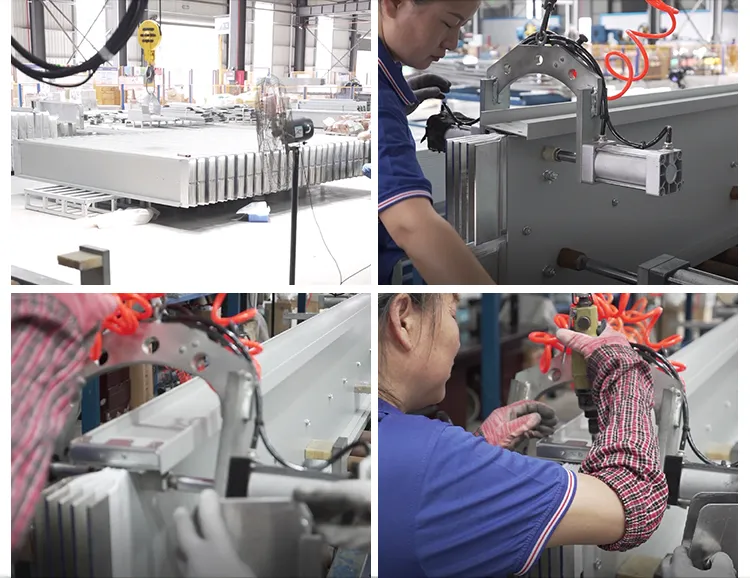
Hydro testers themselves are constructed from materials selected for their high strength, corrosion resistance, and compatibility with the testing fluid. Common materials include carbon steel (ASTM A516 Grade 70) for the pressure vessel and housing, often with internal epoxy coatings to mitigate corrosion. High-pressure fittings and connections are typically made from stainless steel (316 or 304 grade) due to its superior resistance to chloride-induced pitting. Manufacturing processes vary based on the tester’s capacity and design. Smaller, portable units may utilize welded construction with automated seam tracking for enhanced weld integrity. Larger, industrial-scale testers often employ a more complex fabrication process involving machining, forming, and robotic welding. Critical parameter control during manufacturing focuses on weld quality (NDT inspection via radiography and ultrasonic testing), material thickness consistency, and dimensional accuracy of the pressure vessel. The hydrostatic fluid, almost exclusively deionized water, requires rigorous control of dissolved oxygen content and pH levels to minimize corrosion of the SUT during testing. The pump system within the hydro tester is typically a positive displacement pump (e.g., piston or gear pump) selected for its high precision and ability to generate stable, controlled pressures. Seals within the pump and hydraulic circuits are often made from Viton or PTFE, selected for their chemical compatibility with water and hydraulic oil.
Performance & Engineering
The performance of a hydro tester is governed by fundamental principles of fluid mechanics and materials science. Force analysis centers on calculating the stresses induced within the SUT under pressure, utilizing equations derived from thin-walled pressure vessel theory (Lamé's equations). Environmental resistance is crucial; testers operating in harsh environments must incorporate temperature compensation mechanisms to account for fluid viscosity changes and thermal expansion of components. Compliance requirements are dictated by industry-specific standards (see footer). Functional implementation involves several key engineering considerations: pressure regulation utilizing precision relief valves and pressure transducers, leak detection via sensitive flow meters and pressure decay monitoring, and safety features such as overpressure protection and emergency shutdown systems. The hydraulic system's efficiency is paramount, minimizing energy consumption and ensuring stable pressure delivery. System response time—the time to reach a target pressure—is a key performance indicator, influencing testing throughput. Automated data acquisition systems are increasingly integrated, allowing for real-time monitoring of pressure, temperature, and leak rate, and generating comprehensive test reports. Furthermore, the structural integrity of the tester itself is paramount, requiring regular inspections to prevent catastrophic failure due to overpressure or material fatigue.
Technical Specifications
| Pressure Range (PSI) | Maximum Test Pressure (PSI) | Accuracy (+/-%) | Fluid Compatibility |
|---|---|---|---|
| 0-1500 | 2250 | 0.25 | Deionized Water, Hydraulic Oil |
| 0-3000 | 4500 | 0.5 | Deionized Water, Glycol-Water Mixtures |
| 0-5000 | 7500 | 0.75 | Deionized Water |
| 0-10000 | 15000 | 1.0 | Deionized Water |
| 0-20000 | 30000 | 1.5 | Deionized Water |
| 0-30000 | 45000 | 2.0 | Deionized Water |
Failure Mode & Maintenance
Hydro testers, like any pressure system, are susceptible to various failure modes. Fatigue cracking in the pressure vessel or weldments is a common concern, accelerated by cyclic pressurization. Corrosion, particularly pitting corrosion in areas with compromised coatings, can lead to leaks and structural weakening. Seal failures within the pump, valves, and connections result in pressure loss and inaccurate test results. Pump cavitation, caused by low inlet pressure or fluid contamination, damages pump components and reduces efficiency. Pressure transducer drift or failure leads to inaccurate pressure readings. Leak detection system malfunctions, such as flow meter calibration errors, can result in false positives or missed leaks. Maintenance is crucial to prevent these failures. Regular visual inspections for corrosion, cracks, and leaks are essential. Periodic hydrostatic testing of the tester itself, using a calibrated reference pressure, verifies its structural integrity. Lubrication of pump and valve components extends their lifespan. Filter replacement prevents fluid contamination. Calibration of pressure transducers and flow meters ensures accuracy. Seal replacement should be performed proactively, based on manufacturer recommendations. Proper drainage and drying after use prevent internal corrosion. Thorough documentation of all maintenance activities is crucial for traceability and compliance.
Industry FAQ
Q: What is the impact of dissolved oxygen content in the hydrostatic test fluid on test results and component longevity?
A: Dissolved oxygen accelerates corrosion of the SUT, particularly in carbon steel components. Increased oxygen levels promote the formation of rust, leading to inaccurate leak detection and potential structural weakening of the test item. Deionized water with minimal dissolved oxygen (typically <2 ppm) is recommended to mitigate this effect. Oxygen scavengers can be added to the water to further reduce oxygen levels.
Q: How does temperature affect the accuracy of hydrostatic testing and what measures are taken to compensate for it?
A: Temperature variations influence fluid viscosity and material expansion/contraction, impacting pressure readings and leak detection sensitivity. Higher temperatures reduce fluid viscosity, potentially leading to faster leak rates. Thermal expansion of the SUT can alter its internal volume and stress distribution. Testers typically incorporate temperature compensation mechanisms, such as automated temperature monitoring and pressure correction algorithms, to maintain accuracy. Maintaining a consistent test fluid temperature is also crucial.
Q: What are the critical considerations when selecting a pump for a hydrostatic testing system?
A: Pump selection depends on the required pressure, flow rate, and fluid compatibility. Positive displacement pumps (piston or gear) are preferred for their precision and ability to generate stable pressures. Pump materials must be compatible with the test fluid to prevent corrosion. Pump capacity should be sufficient to achieve the desired test pressure within a reasonable timeframe. The pump’s ability to handle fluctuations in system volume is also important.
Q: What safety features are essential in a hydro tester to prevent catastrophic failure?
A: Essential safety features include overpressure protection (e.g., relief valves, rupture discs), emergency shutdown systems, pressure gauges with calibrated accuracy, and robust containment structures to mitigate the consequences of a potential rupture. Regular inspection and maintenance of these safety features are paramount. Operator training on safe operating procedures is equally important.
Q: What are the typical acceptance criteria for a hydrostatic test?
A: Acceptance criteria vary depending on the industry and applicable standards. Generally, a successful test requires the SUT to withstand the specified test pressure for a defined duration without exhibiting any leaks or permanent deformation. Permissible leakage rates are often defined in terms of volume per unit time. Pressure decay monitoring is used to assess the SUT's ability to maintain pressure over time. Any evidence of cracking, bulging, or other structural damage constitutes a failure.
Conclusion
Hydrostatic testing, facilitated by the hydro tester, remains a cornerstone of quality assurance across a multitude of industries demanding stringent pressure integrity. The accuracy and reliability of these systems are intrinsically linked to meticulous material selection, robust manufacturing processes, and diligent maintenance practices. Understanding the underlying principles of fluid mechanics, materials science, and compliance standards is crucial for effective implementation and accurate interpretation of test results.
The continued evolution of hydro testing technology focuses on automation, data acquisition, and improved safety features. Integration with digital twin technologies and predictive maintenance algorithms promises to enhance testing efficiency and reduce downtime. Adherence to evolving international standards and a commitment to ongoing operator training are essential for maintaining the integrity and reliability of hydrostatic testing systems in the face of increasingly complex and demanding applications.