



Introduction
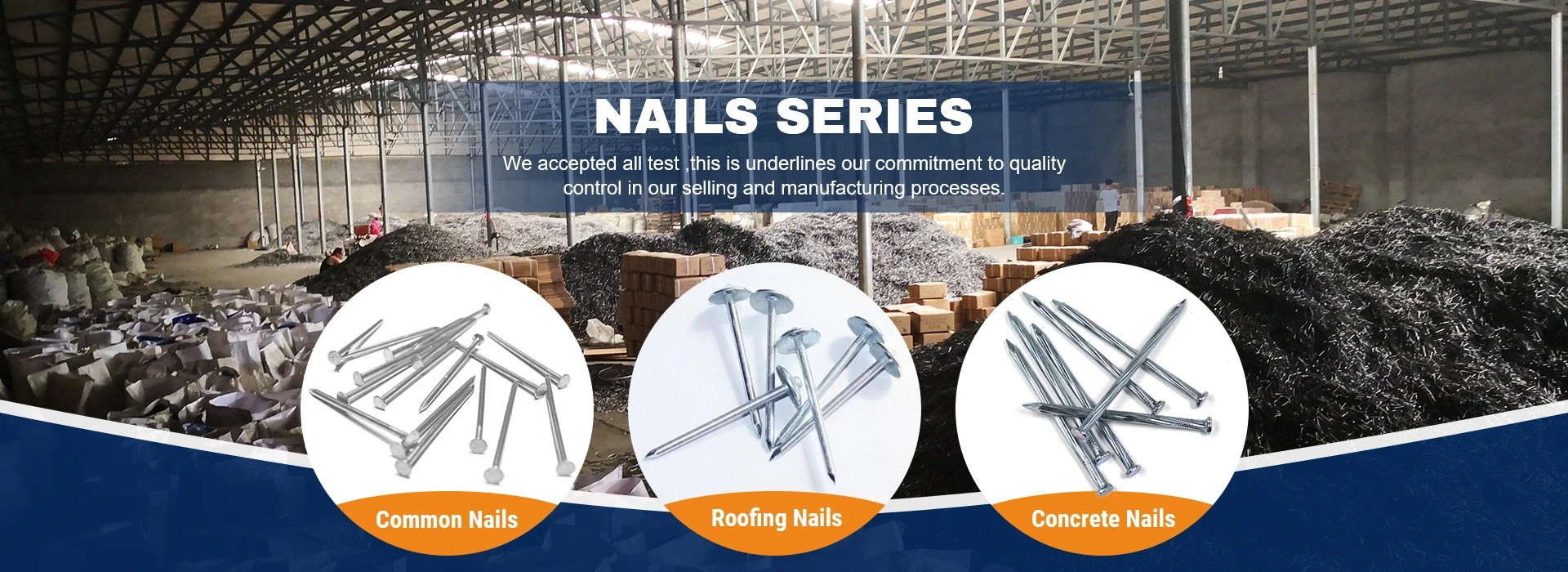
1 1 4 ring shank coil roofing nails represent a critical fastening component within the residential and commercial roofing industries. These nails are specifically designed for the secure attachment of asphalt shingles, roofing felt, and other common roofing materials to wood substrates. Their defining characteristics – a 1 1/4 inch length, ring shank design, and collation for use in coil nailing guns – offer significant advantages in terms of installation speed, holding power, and reduced risk of nail pull-through compared to conventional smooth shank nails. The industry chain positions these nails as a downstream product of steel wire manufacturing, undergoing drawing, heading, and coating processes before collation and packaging. Core performance indicators include shear strength, tensile strength, withdrawal resistance, and corrosion resistance, all of which directly impact the longevity and structural integrity of a completed roofing system. Addressing prevalent industry concerns like nail fatigue, substrate compatibility, and adherence to building codes is paramount when specifying and utilizing these fasteners.
Material Science & Manufacturing
The primary raw material for 1 1/4 ring shank coil roofing nails is typically carbon steel, specifically SAE 1008 or similar low-carbon steel grades. This selection balances cost-effectiveness with sufficient ductility for forming the ring shank and adequate strength for fastening. The steel wire undergoes a cold drawing process to achieve the desired diameter – typically between 0.099 and 0.113 inches. Subsequent heading operations form the nail head, and a crucial step involves the creation of the ring shank. This is accomplished through a specialized forging process that creates a series of annular ridges along the shank’s length. These rings dramatically increase withdrawal resistance by creating a mechanical interlock with the wood fibers. A protective coating, most commonly hot-dip galvanization or electrogalvanization (zinc coating), is applied to enhance corrosion resistance. Electropolyester coatings are also becoming increasingly common, offering superior color retention and corrosion protection. Quality control during manufacturing includes dimensional checks, hardness testing (Rockwell C scale), and coating thickness verification. Key parameters controlled throughout the process include wire tension during drawing, forging pressure, annealing temperature (to maintain ductility), and coating bath composition and temperature. Improper control of any of these parameters can lead to defects such as brittle fractures, inconsistent head formation, or inadequate corrosion protection.
Performance & Engineering
The performance of 1 1/4 ring shank coil roofing nails is fundamentally governed by the principles of mechanics and materials science. Force analysis focuses on both shear and tensile forces acting on the nail when subjected to wind uplift, snow load, and thermal expansion/contraction of the roofing materials. The ring shank significantly increases the nail’s withdrawal resistance (pull-out strength) compared to smooth shank nails, reducing the risk of shingle loss. Engineering considerations include the wood substrate's species and moisture content; denser hardwoods provide greater holding power. The nail's penetration depth is also crucial - insufficient penetration compromises holding power, while excessive penetration can weaken the underlying wood. Environmental resistance is paramount. Galvanization provides sacrificial protection against corrosion, but in harsh environments (coastal regions, areas with high pollution), supplemental coatings like electropolyester are recommended. Compliance requirements are dictated by building codes (IBC, IRC) and industry standards (see section 7). Nail spacing and penetration depth are specified to withstand design wind speeds and snow loads. Proper nail gun settings (air pressure, depth control) are essential to ensure consistent and correct nail placement. Fatigue performance, particularly under cyclical loading from wind gusts, is also a critical consideration. Long-term durability is enhanced by using high-quality steel and coatings.
Technical Specifications
| Parameter | Units | Typical Value | Testing Standard |
|---|---|---|---|
| Nail Length | inches | 1.25 (1 1/4) | ASTM F1667 |
| Shank Diameter | inches | 0.099 - 0.113 | ASTM F1667 |
| Head Diameter | inches | 0.375 | ASTM F1667 |
| Coating Type | - | Hot-Dip Galvanization / Electrogalvanization / Electropolyester | ASTM B695 / ASTM B854 / Proprietary |
| Coating Thickness (Zinc) | µm | 25-50 (depending on coating type) | ASTM B695 / ASTM B854 |
| Withdrawal Resistance | lbs | >180 | ASTM F1667 |
Failure Mode & Maintenance
Several failure modes can compromise the performance of 1 1/4 ring shank coil roofing nails. Corrosion, particularly in coastal environments or with exposure to certain chemicals, can lead to weakening and eventual failure of the nail. This is often manifested as rust formation and a reduction in shank diameter. Fatigue cracking can occur under sustained cyclical loading (wind gusts) leading to incremental crack propagation and eventual nail breakage. Withdrawal failure, while minimized by the ring shank, can still occur if the nail is subjected to excessive uplift forces or if the wood substrate is severely degraded. Shearing failure, where the nail breaks at the point of penetration, can occur if the nail gun is improperly set or if the wood is exceptionally hard. Delamination of the coating can expose the underlying steel to corrosion. Maintenance primarily focuses on preventative measures: proper installation techniques, the selection of appropriate coatings for the environmental conditions, and periodic inspections of the roofing system for signs of nail corrosion or shingle looseness. If corrosion is detected, replacement of the affected nails is recommended. Avoid using abrasive cleaning methods on coated nails as this can damage the protective layer. Regular visual inspections can identify potential issues before they escalate.
Industry FAQ
Q: What is the advantage of a ring shank nail over a smooth shank nail in roofing applications?
A: Ring shank nails offer significantly higher withdrawal resistance compared to smooth shank nails. The annular rings create a mechanical interlock with the wood fibers, resisting pull-through forces generated by wind uplift and thermal movement. This results in a more secure and durable roofing system.
Q: How does the type of wood substrate affect the holding power of these nails?
A: Denser hardwoods generally provide greater holding power than softer woods. The ring shank's effectiveness relies on sufficient friction and mechanical interlock with the wood fibers. Softer woods may require a slightly increased nail density to achieve comparable holding power.
Q: What is the typical lifespan of a galvanized nail in a coastal environment?
A: The lifespan of a galvanized nail in a coastal environment varies depending on the severity of salt spray exposure. Typically, a standard galvanized coating may provide 10-15 years of protection, but can be significantly reduced in highly corrosive environments. Electropolyester coatings offer extended lifespan, potentially exceeding 30 years.
Q: What is the correct air pressure setting for a coil nailer when using 1 1/4 inch ring shank nails?
A: The optimal air pressure setting depends on the nailer model and the wood substrate. Generally, a pressure range of 70-90 PSI is recommended. It's crucial to start with a lower pressure and gradually increase it until the nail is driven flush with the shingle surface without causing damage.
Q: Are there specific building codes that regulate the use of these nails?
A: Yes, building codes such as the International Building Code (IBC) and International Residential Code (IRC) specify nail size, spacing, and penetration depth based on design wind speeds and snow loads. Compliance with these codes is essential for ensuring the structural integrity of the roof.
Conclusion
1 1/4 ring shank coil roofing nails represent a sophisticated fastening solution engineered for demanding roofing applications. Their design, incorporating a ring shank for superior withdrawal resistance and protective coatings for corrosion protection, addresses core industry pain points related to shingle security and long-term durability. Understanding the material science behind their construction, coupled with proper installation techniques and adherence to relevant building codes, is crucial for maximizing performance and minimizing the risk of premature failure.
Looking ahead, advancements in coating technologies, such as self-healing polymers and nano-coatings, hold the potential to further enhance corrosion resistance and extend the service life of these fasteners. Continued research into fatigue performance and substrate compatibility will refine design parameters and installation protocols, ultimately contributing to more resilient and long-lasting roofing systems. The effective utilization of these nails, therefore, requires a holistic understanding of their properties and a commitment to best practices throughout the entire roofing process.