



Introduction
1 3/4 inch galvanized roofing nails are a critical fastening component in residential and commercial construction, specifically employed for securing roofing materials – asphalt shingles, wood shakes, and occasionally metal roofing – to underlying substrates. Their primary function is to provide a secure, weather-resistant connection between the roofing material and the roof deck (typically plywood or OSB). The “galvanized” designation indicates a zinc coating applied to the steel nail, offering enhanced corrosion resistance compared to uncoated steel nails. This is crucial for long-term performance, especially in environments with high humidity, salt spray, or acid rain. These nails differ from common nails in their head size and shank design, featuring a broad head to provide sufficient bearing area and a ring shank for increased withdrawal resistance. Their length ensures adequate penetration into the roof deck, achieving a reliable hold. The industry faces ongoing challenges regarding nail corrosion, particularly with evolving shingle compositions, and the need for nails capable of withstanding extreme weather events.
Material Science & Manufacturing
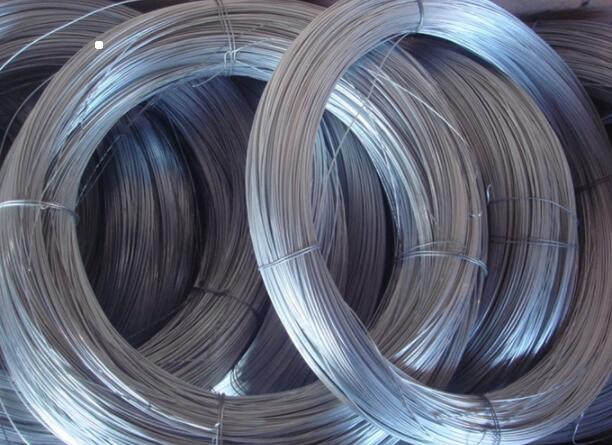
The primary raw material for 1 3/4 inch galvanized roofing nails is typically carbon steel, specifically SAE 1008 or similar low-carbon steel grades. This choice balances cost, ductility, and formability. The steel wire undergoes a cold heading process where it's fed into a machine that cuts and forms the nail shape. Following heading, a galvanizing process is applied. Historically, hot-dip galvanizing was the standard, immersing the nails in molten zinc, creating a metallurgical bond. This results in a relatively thick zinc coating, offering superior corrosion protection but potentially affecting nail surface finish. Increasingly, electrogalvanizing is employed, utilizing an electrolytic process to deposit a thinner, more uniform zinc coating. This offers better control over coating thickness and surface smoothness. Coating thickness is critical, typically ranging from G30 to G90 (grams of zinc per square meter), with G90 providing higher corrosion resistance. The wire’s tensile strength is a crucial parameter, typically exceeding 60,000 PSI. Post-galvanizing, nails may undergo surface treatments like oiling to prevent white rust (zinc oxide formation) during storage and transportation. Quality control includes dimensional checks, zinc coating thickness verification via coulometric titration, and bend testing to ensure nail ductility.
Performance & Engineering
The performance of 1 3/4 inch galvanized roofing nails is governed by several engineering principles. Withdrawal resistance is paramount, ensuring the nail remains securely embedded in the roof deck over its service life. This is primarily achieved through the ring shank design, which increases friction between the nail and the wood fibers. Shear strength determines the nail’s ability to resist lateral forces caused by wind uplift. Finite element analysis (FEA) is often used to model nail performance under various loading conditions, predicting stress distribution and identifying potential failure points. Corrosion resistance is directly related to the zinc coating’s thickness and uniformity. Electrochemical corrosion occurs when dissimilar metals (steel and zinc) are in contact in a conductive environment (moisture). The zinc acts as a sacrificial anode, corroding preferentially to protect the steel. However, this protection diminishes over time, particularly if the zinc coating is compromised. Environmental resistance testing includes salt spray testing (ASTM B117) to assess corrosion rates and cyclic exposure testing to simulate weathering conditions. Nail penetration depth is also critical. Insufficient penetration reduces holding power, while excessive penetration can damage underlying components. Proper nail angle (typically 15-20 degrees) optimizes both holding power and weather sealing. Compliance with building codes (e.g., International Building Code – IBC) dictates nail spacing and fastening patterns.
Technical Specifications
| Parameter | Typical Value | Testing Standard | Unit |
|---|---|---|---|
| Nail Length | 1.75 | ASTM F1667 | inch |
| Shank Diameter | 0.099 | ASTM F1667 | inch |
| Head Diameter | 0.375 | ASTM F1667 | inch |
| Zinc Coating Thickness (G90) | 90 | ASTM B695 | g/m² |
| Tensile Strength | 60,000 | ASTM F1667 | PSI |
| Shear Strength | 35,000 | ASTM F1667 | PSI |
Failure Mode & Maintenance
Common failure modes for 1 3/4 inch galvanized roofing nails include corrosion-induced failure, bending/shear failure, and withdrawal failure. Corrosion occurs when the zinc coating is depleted, exposing the steel to the elements. This is accelerated in coastal environments or areas with acid rain. Red rust formation is a visible indicator of advanced corrosion. Bending or shear failure occurs when the nail is subjected to excessive lateral forces, exceeding its shear strength. This is often caused by high winds or improper installation. Withdrawal failure results from insufficient nail penetration or weakened wood fibers around the nail shank. Signs of withdrawal include loose shingles or visible nail heads. Fatigue cracking can also occur due to repeated stress cycles, particularly in areas prone to vibration. Maintenance typically involves periodic roof inspections to identify corroded or loose nails. Replacing damaged nails with new, appropriately sized galvanized roofing nails is the primary remedial action. Applying a sealant around the nail head can provide additional weather protection. Preventative measures include ensuring proper nail spacing and utilizing high-quality nails with adequate zinc coating thickness. Periodic cleaning of the roof surface to remove debris and corrosive agents can also extend nail service life.
Industry FAQ
Q: What is the difference between hot-dip galvanizing and electrogalvanizing for roofing nails?
A: Hot-dip galvanizing provides a thicker zinc coating and superior corrosion resistance due to the metallurgical bond formed. However, it can result in a less uniform coating and a rougher surface finish. Electrogalvanizing offers a thinner, more uniform coating with a smoother finish, but generally provides less corrosion protection than hot-dip galvanizing. The choice depends on the severity of the environmental conditions and the desired aesthetic appearance.
Q: How does shingle composition affect the longevity of galvanized roofing nails?
A: Newer shingle compositions, particularly those containing algae-resistant granules, can accelerate corrosion of galvanized nails. These granules can release sulfates that promote electrochemical corrosion. Using nails with thicker zinc coatings (e.g., G90) and considering stainless steel nails in highly corrosive environments can mitigate this issue.
Q: What is the recommended nail spacing for asphalt shingles?
A: Recommended nail spacing typically ranges from 6 inches to 12 inches apart, depending on the shingle manufacturer’s specifications and local building codes. Proper nail placement, ensuring consistent penetration and avoiding overdriving, is crucial for optimal performance.
Q: What causes nail pop, and how can it be prevented?
A: Nail pop occurs when nails work their way loose from the roof deck, often due to expansion and contraction of the wood caused by moisture changes. It can also result from improper nail installation (overdriving or angled nailing). Prevention involves using ring shank nails, ensuring proper nail penetration, and maintaining adequate ventilation in the attic to minimize moisture buildup.
Q: Are stainless steel roofing nails a viable alternative to galvanized nails?
A: Stainless steel roofing nails offer superior corrosion resistance compared to galvanized nails, especially in harsh environments. However, they are significantly more expensive. They are a viable alternative in coastal areas, industrial zones, or applications where long-term durability is paramount.
Conclusion
1 3/4 inch galvanized roofing nails remain a foundational element in roofing systems, providing critical fastening capabilities. While offering robust performance, their long-term durability is heavily influenced by material selection (zinc coating thickness), manufacturing processes, and environmental factors. The industry is continuously striving to improve corrosion resistance, addressing the challenges posed by evolving shingle compositions and extreme weather events.
Ongoing research focuses on developing alternative coatings and nail materials, such as zinc-aluminum alloys and stainless steel, to enhance longevity and reduce life-cycle costs. Careful consideration of application-specific requirements, adherence to building codes, and proper installation techniques are essential to maximize the performance and service life of these critical fasteners.