



Introduction
15-degree coil nails galvanized represent a significant advancement in fastening technology, particularly within the construction and woodworking industries. These nails, characterized by their angled collation and continuous strip formation, are designed for use in pneumatic nail guns, enabling rapid and efficient fastening of wood materials. The galvanization process provides a crucial layer of corrosion resistance, extending the service life of the nails, especially in exterior and moisture-prone applications. Their primary function lies in structural framing, sheathing, roofing, and pallet manufacturing where high-speed fastening and robust holding power are paramount. The 15-degree angle offers improved feeding reliability compared to other collation angles, minimizing jams and downtime. Understanding the material science, manufacturing processes, performance characteristics, potential failure modes, and relevant industry standards is critical for ensuring proper application and maximizing the longevity of structures utilizing these fasteners.
Material Science & Manufacturing
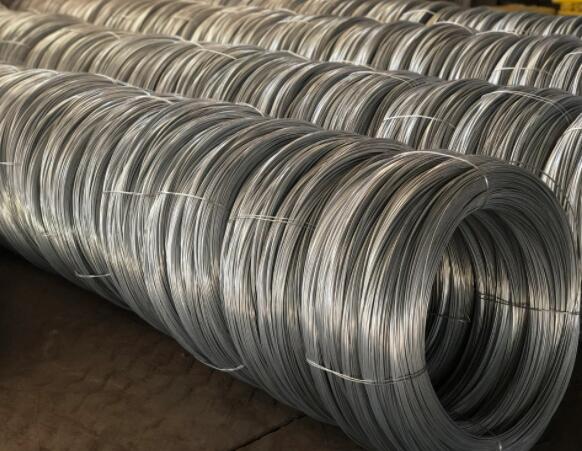
The core material for 15-degree coil nails galvanized is typically carbon steel, specifically SAE 1008 or similar grades offering a balance of ductility and tensile strength. The steel wire undergoes a cold drawing process to achieve the desired diameter, typically ranging from 2.1mm to 3.4mm, depending on the application. Prior to galvanization, the wire is thoroughly cleaned to remove oils, oxides, and other contaminants, preparing the surface for optimal zinc adhesion. The galvanization process itself is most commonly achieved through continuous hot-dip galvanizing, where the wire is passed through a molten zinc bath. This creates a metallurgically bonded zinc coating, providing cathodic protection to the underlying steel. Coating thickness typically ranges from 20 to 50 micrometers, impacting corrosion resistance. The nail collation process involves precisely arranging the nails into a continuous strip using specialized machinery. This requires accurate head placement and shank alignment to ensure reliable feeding within the nail gun. Quality control during manufacturing includes dimensional checks, hardness testing, and coating thickness verification to meet industry specifications. The precision of the wire drawing and collation processes directly impacts the nail's ability to penetrate the wood without bending or breaking.
Performance & Engineering
The performance of 15-degree coil nails galvanized is dictated by several engineering principles. Shear strength is a primary concern, representing the nail's resistance to lateral forces after installation. This is directly related to the nail’s diameter, length, and the wood species being fastened. Withdrawal resistance, the force required to pull the nail out of the wood, is influenced by shank design (smooth vs. ring shank), nail angle, and wood density. The 15-degree angle itself introduces a vector component to the fastening force, contributing to enhanced holding power. A critical design consideration is the nail head geometry. A cupped head provides a larger bearing surface, distributing the fastening force over a wider area, minimizing wood crushing and maximizing holding capacity. Environmental resistance is largely dependent on the galvanization coating. Zinc acts as a sacrificial anode, corroding preferentially to the steel, protecting the underlying metal from rust. However, the effectiveness of this protection diminishes over time, particularly in aggressive environments (e.g., saltwater exposure). Compliance requirements include adherence to industry standards such as those defined by ASTM F1667, which specifies the requirements for steel nails. Load-bearing capacity is also dependent upon building codes and structural engineering calculations, ensuring that the nail system can withstand anticipated loads.
Technical Specifications
| Nail Diameter (mm) | Nail Length (mm) | Coating Thickness (µm) | Shank Type |
|---|---|---|---|
| 2.1 | 30 | 25 | Smooth |
| 2.3 | 40 | 30 | Ring Shank |
| 2.5 | 50 | 35 | Smooth |
| 2.8 | 60 | 40 | Ring Shank |
| 3.1 | 70 | 45 | Smooth |
| 3.4 | 80 | 50 | Ring Shank |
Failure Mode & Maintenance
Several failure modes can affect the performance of 15-degree coil nails galvanized. Hydrogen embrittlement, a consequence of the pickling process prior to galvanizing, can reduce ductility, leading to brittle fracture under stress. Corrosion, particularly in marine or industrial environments, can compromise the zinc coating, exposing the steel to rust and weakening the nail. Fatigue cracking can occur under cyclic loading, particularly in structural applications where nails are subjected to repeated stress. Shear failure, the breaking of the nail shank under lateral force, is common when nails are overloaded or installed into substandard wood. Delamination of the zinc coating, due to poor surface preparation or inadequate galvanizing process control, reduces corrosion resistance. Maintenance primarily focuses on preventative measures. Regular inspection of structures for signs of corrosion or fatigue cracking is crucial. Re-coating exposed nails with zinc-rich paint can provide temporary corrosion protection. Using properly rated nails for the specific application, ensuring correct nail gun settings, and avoiding overdriving are essential for preventing premature failure. Proper storage of nails in a dry environment prevents rust formation before installation.
Industry FAQ
Q: What is the impact of ring shank versus smooth shank nails in terms of holding power?
A: Ring shank nails offer significantly higher withdrawal resistance compared to smooth shank nails. The rings create a mechanical interlock with the wood fibers, requiring substantially more force to pull the nail out. While smooth shank nails are suitable for certain applications where withdrawal resistance is less critical, ring shank nails are generally preferred for structural applications and where long-term holding power is essential.
Q: How does the thickness of the galvanization coating affect the lifespan of the nails in a coastal environment?
A: A thicker galvanization coating provides a longer service life in corrosive environments like coastal areas. The zinc acts as a sacrificial anode, corroding before the steel. However, even a thick coating will eventually be depleted. Regularly inspecting the nails and applying a protective coating after installation can extend their lifespan.
Q: What is the recommended nail gun pressure for optimal performance with 15-degree coil nails?
A: Optimal nail gun pressure depends on the specific nail gun model and the wood species being fastened. Generally, a pressure range of 70-90 PSI is recommended as a starting point. Adjustments should be made based on the penetration depth and the occurrence of bending or incomplete seating of the nails. Always consult the nail gun manufacturer's guidelines.
Q: Are there specific wood types that are incompatible with galvanized nails?
A: While generally compatible with most wood species, certain woods with high tannin content (e.g., redwood, cedar) can react with the zinc coating, leading to staining or accelerated corrosion. Using stainless steel nails is recommended for these wood types. However, for most common construction lumber, galvanized nails perform adequately.
Q: What is the significance of ASTM F1667 in relation to 15-degree coil nails?
A: ASTM F1667 is a standard specification for steel nails. It defines requirements for chemical composition, mechanical properties (such as tensile strength and yield strength), and coating quality. Conformance to ASTM F1667 ensures that the nails meet minimum performance criteria and are suitable for their intended applications.
Conclusion
15-degree coil nails galvanized represent a robust and efficient fastening solution for a wide range of construction and woodworking applications. Their performance is intimately linked to material science, with the carbon steel core and zinc coating playing crucial roles in strength and corrosion resistance. Understanding the nuances of manufacturing processes, from wire drawing to collation and galvanization, is vital for ensuring consistent quality. Careful consideration of performance parameters – shear strength, withdrawal resistance, and environmental durability – allows for appropriate nail selection and application, maximizing structural integrity and longevity.
Looking forward, advancements in coating technologies, such as the development of enhanced zinc alloys and organic coatings, may further extend the lifespan of these fasteners. Continued research into nail shank geometries and head designs will likely yield improved holding power and reduced wood splitting. Adherence to relevant international standards and rigorous quality control procedures remain essential for maintaining the reliability and performance of 15-degree coil nails galvanized in demanding applications.