



Introduction
Brad nails for concrete represent a specialized fastening solution engineered for securing lightweight materials to concrete substrates. Unlike conventional nails relying on wood-to-wood friction, concrete brad nails require specialized materials and driving mechanisms to achieve sufficient holding power. Their primary application lies in interior finishing, particularly the attachment of trim, moldings, and thin paneling to concrete walls and ceilings where minimal damage to the concrete is desired. This technical guide provides an in-depth examination of their material science, manufacturing processes, performance characteristics, potential failure modes, and relevant industry standards. The increasing prevalence of concrete construction in residential and commercial applications has driven demand for less invasive fastening solutions, making concrete brad nails a viable alternative to drilling and screwing. Key performance considerations include shear strength, pull-out resistance, and corrosion protection. Understanding these factors is critical for ensuring long-term structural integrity and preventing premature fastener failure.
Material Science & Manufacturing
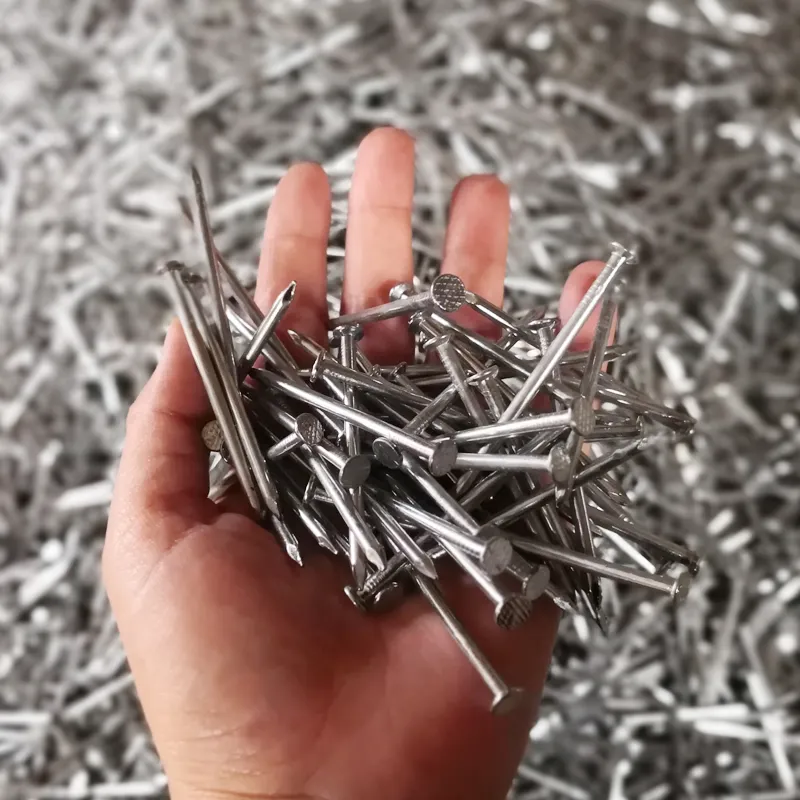
Concrete brad nails are typically manufactured from hardened steel, specifically carbon steel alloys such as 1045 or 1060, selected for their high tensile strength and ductility. The nail’s core properties are significantly altered through heat treatment processes, including hardening and tempering, to maximize hardness while retaining sufficient toughness to resist bending or shattering during installation. The nail’s surface is almost universally coated with a corrosion-resistant layer. Common coatings include hot-dip galvanization, electroplating with zinc or nickel, or the application of polymer coatings like epoxy or polyester. Galvanization provides sacrificial anodic protection, slowing the corrosion rate by corroding before the steel substrate. Electroplating offers a smoother finish and can be combined with passivation treatments for enhanced durability. Polymer coatings provide a barrier to moisture and chemicals, but their effectiveness depends on coating thickness and adhesion. Manufacturing involves a cold heading process, where wire stock is fed into a machine that forms the nail shape through a series of dies. Precise control of die angles and feed rates is crucial for maintaining dimensional accuracy and consistency. Following heading, nails undergo heat treatment in a controlled atmosphere furnace to achieve the desired hardness. Quality control inspections at each stage ensure that nails meet specified tolerances for diameter, length, head size, and coating thickness. The driving pin, often diamond-tipped carbide, is brazed onto the nail head during the final manufacturing stage. This pin is critical for efficient and reliable driving into the concrete.
Performance & Engineering
The performance of concrete brad nails is dictated by the interaction between the nail’s geometry, material properties, and the characteristics of the concrete substrate. Penetration is achieved via a specialized nail gun that delivers a high-impact force, fracturing the concrete surface and embedding the nail. Holding power relies on a combination of friction, shear resistance, and mechanical interlock. The flared head of the nail increases the contact area, enhancing friction. Shear resistance is directly related to the nail’s cross-sectional area and the steel’s yield strength. Mechanical interlock occurs as the nail’s shank creates micro-fractures and voids within the concrete, providing a physical keying effect. Environmental resistance is a significant concern. Concrete is alkaline, and exposure to moisture and chloride ions can accelerate corrosion. Coating selection is therefore paramount. Furthermore, temperature fluctuations can induce thermal stresses, potentially leading to coating cracking and subsequent corrosion. Engineering considerations include assessing the load-bearing capacity of the concrete, selecting the appropriate nail size and spacing, and accounting for dynamic loads such as wind or vibration. Finite element analysis (FEA) can be used to model the stress distribution within the nail and concrete, optimizing fastener design and installation parameters. Pull-out resistance is often tested according to ASTM E1841, which involves applying a tensile load to the nail until failure. Shear strength is evaluated using ASTM E1788, assessing the nail’s resistance to lateral forces.
Technical Specifications
| Nail Length (mm) | Nail Gauge (AWG) | Head Diameter (mm) | Minimum Withdrawal Force (N) |
|---|---|---|---|
| 25 | 18 | 6.35 | 150 |
| 30 | 18 | 6.35 | 200 |
| 35 | 18 | 6.35 | 250 |
| 40 | 16 | 7.94 | 300 |
| 50 | 16 | 7.94 | 350 |
| 63 | 14 | 9.53 | 400 |
Failure Mode & Maintenance
Failure of concrete brad nails typically manifests in one of three primary modes: pull-out, shear failure, or corrosion-induced failure. Pull-out occurs when the nail’s holding power is exceeded, causing it to be extracted from the concrete. This is more prevalent in lower-strength concrete or when nails are overstressed. Shear failure results from excessive lateral forces, causing the nail shank to break or bend. This is more likely to occur in areas subjected to significant vibration or impact. Corrosion-induced failure is a long-term degradation process where the nail material is weakened by oxidation, reducing its strength and ultimately leading to failure. Factors accelerating corrosion include exposure to moisture, chloride ions (e.g., from de-icing salts), and acidic environments. Maintenance is limited, as once installed, the nails are generally inaccessible. However, preventative measures such as selecting appropriate coatings and ensuring proper installation are crucial. Regular inspection of the installed fasteners can identify signs of corrosion or loosening. If corrosion is detected, replacement of the affected nails is recommended. It's essential to avoid applying excessive force or impacting the fasteners during any subsequent construction or renovation activities. Furthermore, proper concrete curing practices are important as premature cracking can lead to decreased nail holding power. Preventative application of a concrete sealer can reduce moisture ingress and slow down corrosion.
Industry FAQ
Q: What concrete compressive strength is required for reliable brad nail installation?
A: A minimum compressive strength of 25 MPa (3600 psi) is generally recommended. Lower strength concrete may not provide sufficient resistance to nail penetration and holding power. Testing on representative concrete samples is advised to verify suitability.
Q: Can brad nails be used for structural applications in concrete?
A: No. Brad nails for concrete are intended for lightweight, non-structural applications such as attaching trim and molding. They do not possess the load-bearing capacity required for structural connections. Utilizing them for structural purposes could lead to catastrophic failure.
Q: What is the best coating for brad nails used in coastal environments?
A: Hot-dip galvanization followed by a powder coat finish offers the most robust corrosion protection in highly corrosive coastal environments. The galvanization provides sacrificial protection, while the powder coat creates a durable barrier against salt spray and moisture.
Q: What type of nail gun is specifically designed for driving brad nails into concrete?
A: Pneumatic nail guns specifically designed for concrete applications are required. These guns deliver the high impact force necessary to fracture the concrete and embed the nail, and utilize specialized driving pins.
Q: How deep should the nail penetrate into the concrete for optimal holding power?
A: A penetration depth of at least 20mm (0.8 inches) is recommended. Insufficient penetration will significantly reduce holding power. However, excessive penetration can also weaken the concrete, so it’s critical to follow manufacturer’s guidelines.
Conclusion
Concrete brad nails offer a viable fastening solution for specific applications requiring minimal concrete disturbance. Their effectiveness hinges on careful material selection, precise manufacturing, and adherence to proper installation techniques. Understanding the underlying principles of concrete mechanics, corrosion science, and fastener engineering is paramount for ensuring long-term performance and preventing premature failure. The selection of appropriate coatings and consideration of environmental factors are crucial for maintaining the integrity of the fastener-concrete interface.
Continued research and development in material science, particularly in advanced coating technologies, will likely lead to further improvements in the durability and performance of concrete brad nails. Future innovations may include the development of self-healing coatings or the incorporation of fiber reinforcement to enhance shear resistance. Ultimately, a holistic approach to fastener selection and installation, coupled with ongoing monitoring and maintenance, is essential for maximizing the service life and reliability of these fasteners in concrete structures.